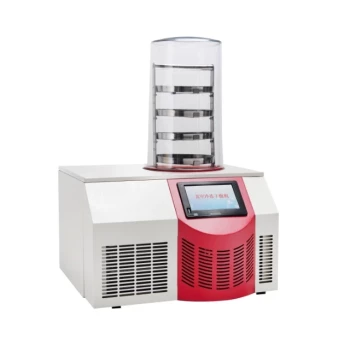
The specific advantages of using a vacuum drying oven for silver-carbon composite current collectors center on the ability to produce a denser, defect-free film at lower processing temperatures. By operating under negative pressure, you can efficiently remove high-boiling solvents like NMP at moderate temperatures (e.g., 80°C), effectively preventing the formation of internal voids and protecting the metallic components from oxidation.
Core Takeaway Vacuum drying decouples the evaporation rate from high thermal requirements, allowing for the complete removal of solvents and trace moisture without subjecting the material to thermal degradation. This process is essential for eliminating micropores and bubbles, ensuring the current collector layer achieves the high density and structural uniformity required for optimal electrical performance.
Optimizing Structural Integrity
Elimination of Internal Defects
The primary mechanical advantage of vacuum drying is the suppression of internal bubbles and micropores. Standard drying methods often trap solvent vapor or air within the slurry as it hardens, creating voids.
The negative pressure of the vacuum oven forces these gases out before the film sets. This results in a significantly more consistent and dense layer, which is critical for maintaining mechanical strength and uniform conductivity across the film.
Efficient Solvent Removal at Lower Temperatures
Solvents used in slurry preparation, such as NMP, have high boiling points that typically require high heat to evaporate. Under vacuum conditions, the boiling point of these solvents drops significantly.
This allows for rapid, efficient drying at lower temperatures (around 80°C) compared to ambient pressure drying. This "gentle" removal accelerates film-forming time while reducing the thermal stress placed on the composite material.
Preserving Chemical and Electrical Properties
Prevention of Component Oxidation
Silver and other metallic nano-fillers used in composites are susceptible to oxidation when exposed to high temperatures in the presence of air. Oxidation forms an insulating layer on the particles, severely degrading the electrical conductivity of the current collector.
The vacuum environment removes oxygen from the drying chamber. This ensures that the metallic components retain their purity and conductive properties throughout the heating process.
Elimination of Trace Moisture
Beyond bulk solvent removal, vacuum drying is highly effective at desorbing trace amounts of water trapped within the electrode slurry.
Thoroughly drying the film is vital for battery applications to prevent residual moisture from reacting with electrolytes. This prevents the formation of harmful by-products, such as hydrofluoric acid, which can corrode electrodes and degrade battery performance.
Understanding the Trade-offs
Process Control vs. Speed
While vacuum drying accelerates solvent evaporation, it requires precise control over pressure and temperature ramp-rates.
If the pressure drops too suddenly, the solvent may "bump" or boil violently, potentially disrupting the film's surface uniformity. The goal is a controlled evaporation that yields a dense film, rather than the porous structure often desired in other applications (such as adsorbents).
Equipment Complexity
Unlike standard convection ovens, vacuum drying requires a sealed system and a pump capable of maintaining consistent negative pressure.
This adds a layer of complexity to the manufacturing process. However, for silver-carbon composites where conductivity and density are non-negotiable, this complexity is a necessary investment to avoid the structural inconsistencies inherent in standard drying.
Making the Right Choice for Your Goal
- If your primary focus is Electrical Conductivity: Prioritize vacuum drying to prevent high-temperature oxidation of the silver fillers and ensure an unimpeded electron path.
- If your primary focus is Mechanical Durability: Use vacuum drying to eliminate internal micropores and bubbles, ensuring the film is dense and structurally sound.
- If your primary focus is Battery Longevity: rely on the vacuum process to remove trace moisture that could otherwise lead to electrolyte degradation and electrode corrosion.
By leveraging the vacuum environment, you transform a standard drying step into a critical quality control measure that guarantees both the physical density and electrochemical stability of your current collector.
Summary Table:
| Advantage | Impact on Silver-Carbon Film | Why it Matters |
|---|---|---|
| Low-Temp Evaporation | Removes high-boiling solvents like NMP at ~80°C | Prevents thermal degradation of the composite |
| Oxygen-Free Environment | Prevents oxidation of silver nano-fillers | Maintains high electrical conductivity |
| Negative Pressure | Forces out trapped gases and solvent vapors | Eliminates internal bubbles and micropores |
| Moisture Desorption | Removes deep-seated trace water | Prevents electrolyte reactions and battery corrosion |
Elevate Your Material Research with KINTEK Precision
Ensure the structural integrity and electrochemical performance of your silver-carbon composites with KINTEK’s advanced vacuum drying solutions. Our high-performance vacuum ovens provide the precise pressure control and temperature uniformity required to eliminate defects and prevent oxidation in sensitive electronic materials.
Beyond drying, KINTEK specializes in a comprehensive range of laboratory equipment including high-temperature furnaces (muffle, tube, CVD), high-pressure reactors, and battery research tools. Whether you are developing next-generation current collectors or optimizing electrode slurries, our expert team is ready to provide the high-quality consumables and equipment your lab deserves.
Ready to optimize your drying process? Contact us today to discuss your project requirements!
Related Products
- 56L Vertical Laboratory Vacuum Drying Oven
- 23L Laboratory Vacuum Drying Oven
- Laboratory Scientific Electric Heating Blast Drying Oven
- Benchtop Laboratory Vacuum Freeze Dryer
- Dental Porcelain Zirconia Sintering Ceramic Vacuum Press Furnace
People Also Ask
- Why is a laboratory vacuum drying oven recommended for rice straw residues? Protect Your Biomass Integrity
- What role does a laboratory vacuum drying oven play in the preparation of modified multi-walled carbon nanotubes?
- What is the importance of using a laboratory vacuum drying oven? Preserving Slow-Release Microcapsule Integrity
- Why is a Laboratory Vacuum Drying Oven recommended for PBAT microspheres? Protect Sensitive Polymer Integrity
- What role does a laboratory vacuum drying oven play in processing nanoparticle powder samples? Protect Sample Integrity