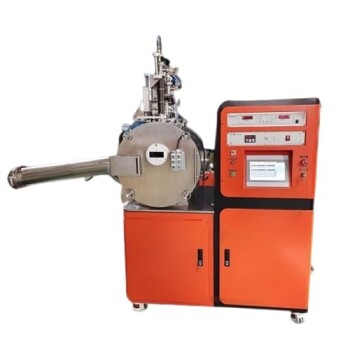
The primary technical advantage of microwave-assisted pyrolysis is its ability to induce localized hot spots within the biomass material. Unlike traditional electric heating, which relies on external conduction, this internal heating mechanism promotes the secondary cracking of tar. This results in significantly higher syngas yields and lower bio-oil residues, all while maintaining a lower overall operating temperature.
Core Insight: Microwave-assisted pyrolysis decouples the internal reaction temperature from the bulk reactor temperature. By generating intense localized heat, it drives the efficient conversion of heavy tars into valuable gas without requiring the energy-intensive macroscopic temperatures of traditional furnaces.
The Mechanism of Heating
Internal vs. External Heating
Traditional electric furnaces operate on conductive heat transfer. Heat must travel from the heating element, through the reactor wall, and into the biomass. This often leads to thermal gradients and slower reaction times.
Creating Localized Hot Spots
Microwave equipment utilizes electromagnetic waves to interact directly with the material. This interaction creates localized hot spots—microscopic regions of intense heat—throughout the biomass sample. This targeted energy delivery is the fundamental driver of the technology's efficiency.
Impact on Product Quality and Yield
Promoting Secondary Cracking
The most critical advantage of these hot spots is their effect on tar. The intense local heat forces secondary cracking and gasification of tar. Instead of condensing into unwanted liquid bio-oil, the heavy hydrocarbons are broken down further into light gases.
Increasing Syngas Yields
Because the tar is effectively converted rather than collected as residue, the total volume of high-value syngas increases. The primary reference confirms that this method results in higher gas yields and lower bio-oil residues compared to conventional heating.
Operational Efficiency
Lower Macroscopic Temperatures
In a traditional furnace, to achieve high tar cracking, the entire reactor must be heated to extreme temperatures. Microwave-assisted systems achieve these reactions at the micro-level while the macroscopic operating temperature remains lower.
Improved Conversion Efficiency
The combination of targeted heating and lower bulk temperatures leads to better overall energy utilization. The system focuses energy on the chemical conversion process rather than heating the surrounding infrastructure.
Understanding the Trade-offs
Process Control Complexity
While localized hot spots drive efficiency, they represent a non-uniform heating profile. Managing these thermal spikes requires precise control to ensure consistent product quality, unlike the uniform (though slower) heat of an electric furnace.
Material Interaction Dependency
The efficiency of this process relies heavily on how well the specific biomass absorbs microwave energy. Traditional electric heating is generally "material agnostic," whereas microwave efficiency can vary based on the dielectric properties of the feedstock.
Making the Right Choice for Your Goal
To determine if microwave-assisted pyrolysis is the correct solution for your syngas project, consider your primary constraints:
- If your primary focus is maximizing gas purity: Choose microwave-assisted pyrolysis to leverage secondary cracking for reduced tar content and higher syngas yields.
- If your primary focus is minimizing bulk operating temperatures: Choose microwave-assisted pyrolysis to achieve high-efficiency conversion without subjecting the entire reactor vessel to extreme thermal stress.
Summary: Microwave-assisted pyrolysis replaces the brute force of external heating with the precision of localized energy, offering a pathway to cleaner syngas at lower bulk temperatures.
Summary Table:
| Feature | Traditional Electric Heating | Microwave-Assisted Pyrolysis |
|---|---|---|
| Heating Mechanism | External Conduction | Internal Localized Hot Spots |
| Energy Focus | Macroscopic (Whole Reactor) | Microscopic (Targeted Reaction) |
| Tar Management | High residue/Low cracking | Efficient secondary cracking |
| Syngas Yield | Standard | Significantly Higher |
| Operating Temp | High bulk temperatures required | Lower macroscopic temperatures |
| Thermal Control | Uniform but slow | Non-uniform but high efficiency |
Revolutionize Your Material Research with KINTEK Advanced Systems
Maximize your syngas production and minimize unwanted residues by leveraging the latest in heating technology. At KINTEK, we specialize in providing researchers and industrial labs with high-performance laboratory equipment, including our state-of-the-art high-temperature furnaces, crushing and milling systems, and chemical reactors.
Whether you are exploring microwave-assisted pyrolysis or require the precision of traditional muffle, tube, or vacuum furnaces, KINTEK delivers the tools you need to achieve superior conversion efficiency. Our extensive portfolio also covers essential high-pressure reactors, autoclaves, and specialized consumables like crucibles and ceramics tailored for extreme environments.
Ready to optimize your pyrolysis yield? Contact our technical experts today to find the perfect equipment solution for your laboratory's unique requirements!
References
- Kaiqi Shi, Tao Wu. Production of H2-Rich Syngas From Lignocellulosic Biomass Using Microwave-Assisted Pyrolysis Coupled With Activated Carbon Enabled Reforming. DOI: 10.3389/fchem.2020.00003
This article is also based on technical information from Kintek Solution Knowledge Base .
Related Products
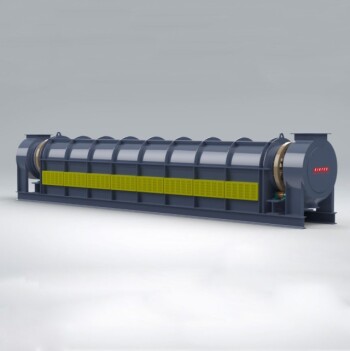
- Electric Rotary Kiln Pyrolysis Furnace Plant Machine Calciner Small Rotary Kiln Rotating Furnace
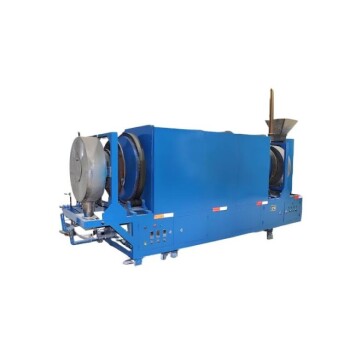
- Electric Rotary Kiln Continuous Working Small Rotary Furnace Heating Pyrolysis Plant
- Electric Rotary Kiln Small Rotary Furnace Biomass Pyrolysis Plant
- Laboratory Sterilizer Lab Autoclave Pulsating Vacuum Desktop Steam Sterilizer
- Spark Plasma Sintering Furnace SPS Furnace
People Also Ask
- What is a rotary kiln electric furnace? Achieve Superior Uniform Heating for Your Materials
- What are the characteristics of the slipping, slumping, and rolling modes of bed motion? Optimize Your Rotary Process
- What are the advantages of rotary kiln furnace? Achieve Superior Uniformity & Efficiency
- What is the temperature of a rotating kiln? It Depends on Your Material and Process Goal
- What are the principles of a rotary kiln? Master the Mechanics of High-Temperature Processing