Silica glass (quartz) is the definitive material choice for high-temperature chlorination experiments due to its unique combination of thermal resilience and chemical inertness. It withstands operating temperatures up to 1000°C while remaining completely non-reactive to corrosive chlorine gas, ensuring the physical vessel does not become a variable in your experiment.
The core value of silica glass is the preservation of data integrity. By eliminating secondary reactions between the vessel and the gas, it ensures that any measured changes—particularly in thermogravimetry—are exclusively attributable to the sample, not the equipment.
The Mechanics of Material Stability
Chemical Inertness Against Chlorine
Chlorine gas is an aggressive oxidizer that degrades many standard laboratory materials. Silica glass remains inert when exposed to this corrosive environment.
This resistance prevents the reaction tube or crucible from chemically bonding with the chlorine. Consequently, the vessel maintains its structural integrity throughout the duration of the experiment.
Thermal Endurance
High-temperature chlorination requires materials that can survive extreme thermal stress without softening. Silica glass offers high-temperature stability that supports operations up to 1000°C.
This thermal ceiling allows researchers to push experiments to necessary activation energies without risking the failure of the containment vessel.
Ensuring Data Integrity
Eliminating Secondary Reactions
In analytical chemistry, the reaction vessel must never participate in the chemical process. Using silica glass ensures that no secondary reactions occur between the hardware and the chemical reagents.
If the vessel were to react, it would introduce foreign compounds into the mix. Silica glass effectively isolates the experiment, ensuring purity.
Preserving Thermogravimetric Accuracy
For experiments relying on thermogravimetric data (measuring mass change over time), the stability of the crucible is paramount. Silica glass protects the baseline data by preventing mass loss or gain associated with vessel corrosion.
This ensures that the weight changes recorded are strictly from the sample's reaction with chlorine. Without this stability, data interpretation would be compromised by "noise" from the degrading equipment.
Understanding Operational Limits
Temperature Ceilings
While silica glass is robust, it is not invincible. The material is explicitly rated for stability up to 1000°C.
Operating beyond this threshold risks compromising the glass's structural integrity. It is critical to verify that your experimental protocols do not exceed this thermal limit to prevent equipment failure.
Making the Right Choice for Your Experiment
To maximize the reliability of your chlorination studies, apply these guidelines:
- If your primary focus is data purity: Utilize silica glass to eliminate background noise caused by vessel-reagent interactions.
- If your primary focus is high-temperature testing: Ensure your experimental parameters remain within the 1000°C safety limit of silica components.
Silica glass transforms the reaction vessel from a potential variable into a reliable constant, securing the fundamental accuracy of your research.
Summary Table:
| Feature | Silica Glass (Quartz) Benefit | Technical Impact |
|---|---|---|
| Chemical Resistance | Inert to Chlorine gas | Prevents vessel corrosion and contamination |
| Thermal Limit | Stable up to 1000°C | Enables high-activation energy experiments |
| Data Integrity | Eliminates secondary reactions | Ensures measured changes apply only to the sample |
| Analytical Precision | Thermogravimetric stability | Protects baseline data by preventing vessel mass loss |
Elevate Your Research Precision with KINTEK
Don’t let your equipment compromise your results. KINTEK specializes in high-performance laboratory solutions designed for the most demanding environments. Whether you need specialized silica glass reaction tubes and crucibles for chlorination or advanced high-temperature furnaces (muffle, tube, vacuum), our equipment ensures your data remains pure and your experiments remain safe.
From high-pressure reactors to precision ceramic consumables, KINTEK provides the tools global researchers trust for accuracy and durability.
Ready to upgrade your laboratory setup? Contact our technical experts today to find the perfect materials for your high-temperature applications!
References
- Gastón G. Fouga, Ana E. Bohé. Kinetic study of Hubnerite (MnWO4) chlorination. DOI: 10.1016/j.tca.2012.02.015
This article is also based on technical information from Kintek Solution Knowledge Base .
Related Products
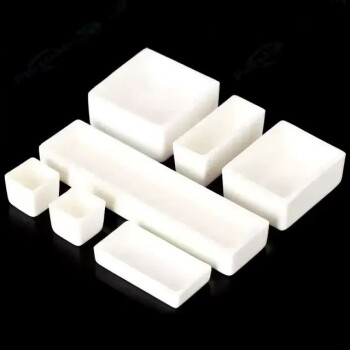
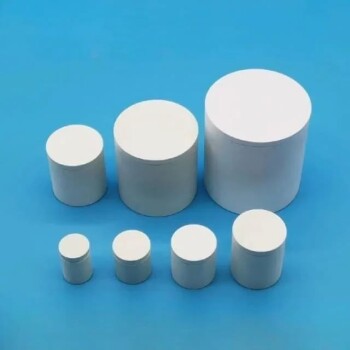
- Engineering Advanced Fine Ceramics Alumina Al2O3 Crucible With Lid Cylindrical Laboratory Crucible
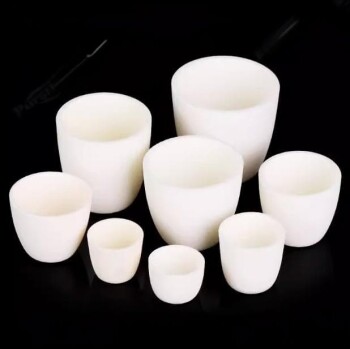
- Engineering Advanced Fine Ceramics Alumina Crucibles (Al2O3) for Thermal Analysis TGA DTA
- Carbon Graphite Boat -Laboratory Tube Furnace with Cover
- Alumina Al2O3 Ceramic Crucible Semicircle Boat with Lid for Engineering Advanced Fine Ceramics
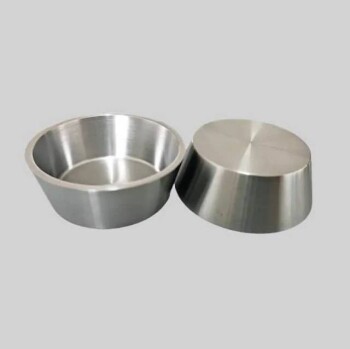
- Electron Beam Evaporation Coating Gold Plating Tungsten Molybdenum Crucible for Evaporation
People Also Ask
- Why are high-purity alumina crucibles used for liquid lead corrosion experiments? Ensure Data Accuracy at 550°C
- Why are alumina crucibles and mother powder essential for LATP sintering? Optimize Your Solid Electrolyte Performance
- What is the primary purpose of using alumina crucibles for LLTO ceramics? Optimize Your High-Temperature Sintering
- Why Use Alumina Crucibles & Powder Burial for NaSICON? Ensure Phase Purity and Prevent Elemental Volatilization
- Why are alumina crucibles used as containers during the tungsten diffusion coating process on diamond surfaces?