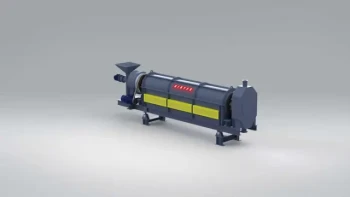
The critical environment provided is a sealed vessel maintained under a high-pressure nitrogen atmosphere, typically pressurized to 4 MPa. This specific environment is engineered to suppress the rapid volatilization of gaseous by-products while simultaneously increasing the partial pressure of nitrogen within the reaction zone to drive synthesis.
The constant pressure combustion reactor acts as a thermodynamic clamp; by sustaining 4 MPa of nitrogen pressure, it forces volatile elements to react rather than escape, ensuring the successful formation of nitride ceramics and salt by-products.
The Role of High Pressure in Synthesis
Suppressing Volatilization
Combustion synthesis involving azides is inherently energetic and produces significant heat. In an uncontrolled environment, this heat would cause gaseous by-products to volatilize and escape immediately.
The 4 MPa environment acts as a physical barrier to this expansion. By keeping the system sealed under high pressure, the reactor mechanically suppresses the vaporization of these gases, retaining them within the reaction zone long enough to participate in chemical bonding.
Enhancing Nitrogen Incorporation
For TiN-BN synthesis, nitrogen must be physically incorporated into the solid lattice structure. The reactor facilitates this by drastically increasing the partial pressure of nitrogen.
This elevated partial pressure creates a thermodynamic driving force. It ensures that nitrogen permeates the reactants deeply, facilitating the formation of the target nitride powders rather than remaining as an inert surrounding gas.
Managing Sodium By-products
Azide decomposition releases sodium, which is highly reactive and volatile. The reactor's environment is critical for managing this byproduct.
The high-pressure atmosphere ensures the sodium does not vaporize uncontrollably. Instead, it forces the sodium to react fully with available halogens. This results in the formation of stable salt by-products, which can be processed later, rather than dangerous metallic vapor.
Operational Constraints and Risks
The Consequence of Pressure Loss
The effectiveness of this synthesis method is entirely dependent on maintaining the 4 MPa threshold. If the pressure drops, the suppression mechanism fails.
Impact on Stoichiometry
Without the high-pressure clamp, the volatilization of gaseous intermediate products becomes unpredictable. This leads to a loss of reactants, altering the stoichiometry of the final product and resulting in incomplete salt formation or nitride deficiencies.
Making the Right Choice for Your Goal
To maximize the quality of TiN-BN powder synthesized via this method, consider the following operational priorities:
- If your primary focus is Phase Purity: Maintain the nitrogen pressure strictly at 4 MPa to maximize the partial pressure, driving the complete nitridation of Titanium and Boron.
- If your primary focus is Process Safety: Prioritize the integrity of the reactor seal to ensure sodium is fully converted into stable halide salts rather than escaping as vapor.
Mastering the pressure environment is the single most important factor in converting chaotic combustion into controlled chemical synthesis.
Summary Table:
| Feature | Environmental Requirement | Impact on TiN-BN Synthesis |
|---|---|---|
| Pressure Level | 4 MPa (Nitrogen) | Prevents volatilization of gaseous by-products |
| Atmosphere | High-Pressure Nitrogen | Increases partial pressure to drive deep nitridation |
| By-product Control | Sealed Reaction Zone | Forces sodium to react into stable halide salts |
| Process Goal | Thermodynamic Clamping | Ensures stoichiometric accuracy and phase purity |
Elevate Your Advanced Material Synthesis with KINTEK
Precise pressure control is the difference between chaotic combustion and high-purity material production. At KINTEK, we specialize in providing the high-performance laboratory equipment required for demanding processes like azide combustion synthesis.
Our extensive portfolio features high-temperature high-pressure reactors and autoclaves designed to maintain critical environments, alongside high-temperature furnaces (muffle, vacuum, and atmosphere) and crushing and milling systems to refine your final nitride powders. Whether you are focused on phase purity or process safety, KINTEK offers the reliable tools and consumables—including ceramics and crucibles—to ensure your research meets the highest standards.
Ready to optimize your synthesis workflow? Contact our experts today to find the perfect reactor solution!
References
- А. П. Амосов, Irina Kerson. Combustion Synthesis of TiN-BN Nanostructured Composite Powder with the Use of Sodium Azide and Precursors of Titanium and Boron. DOI: 10.5539/mas.v9n3p133
This article is also based on technical information from Kintek Solution Knowledge Base .
Related Products
- Customizable Laboratory High Temperature High Pressure Reactors for Diverse Scientific Applications
- Electric Rotary Kiln Small Rotary Furnace Biomass Pyrolysis Plant
- Customer Made Versatile CVD Tube Furnace Chemical Vapor Deposition Chamber System Equipment
- Customizable High Pressure Reactors for Advanced Scientific and Industrial Applications
- Stainless High Pressure Autoclave Reactor Laboratory Pressure Reactor
People Also Ask
- How do high-pressure and high-temperature reactors ensure the effective treatment of lignocellulosic wastewater in WAO?
- What equipment is required for high-pressure high-temperature reactions? Master Extreme Chemistry Safely
- How do you control high pressure in a reactor? A Guide to Safe & Stable Operation
- How does initial oxygen pressure affect the wet oxidation of pharmaceutical sludge? Master Your Oxidation Depth
- Why is argon better than nitrogen for inert atmosphere? Ensure Absolute Reactivity & Stability