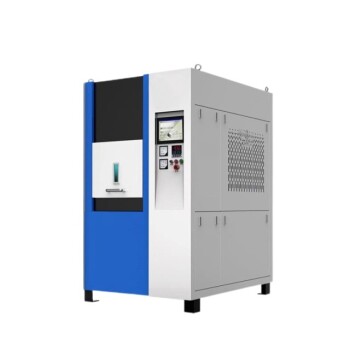
The primary function of a high-temperature sintering furnace is to execute pyrolysis, a thermal decomposition process that converts raw biomass into carbonized anode material. By maintaining a stable high-temperature environment within an inert atmosphere, the furnace fundamentally alters the chemical and physical structure of organic materials like bamboo, coffee grounds, or sugarcane bagasse to make them suitable for microbial fuel cells (MFCs).
Converting organic waste into effective electronic components requires precise thermal engineering. The sintering furnace acts as the transformative vessel, stripping away non-essential chemical groups to leave behind a conductive, highly porous carbon skeleton optimized for microbial interaction.
The Mechanism of Transformation
Facilitating Pyrolysis
The core operation performed by the furnace is pyrolysis. This is not simple burning; it is the thermal decomposition of material in the absence of oxygen.
Maintaining an Inert Atmosphere
To prevent the biomass from combusting into ash, the furnace creates an inert atmosphere.
This controlled environment ensures that the biomass carbonizes rather than oxidizes, preserving the material necessary for the anode.
Ensuring Thermal Stability
The furnace provides a stable high-temperature environment.
Uniform heat distribution is critical for consistent carbonization throughout the biomass sample, preventing structural defects in the final anode.
enhancing Material Properties
Removal of Functional Groups
The intense heat drives off volatile components and breaks down complex organic structures.
This process facilitates the removal of internal functional groups that would otherwise act as insulators or unwanted chemical reactants.
Formation of Conductive Frameworks
Once the non-carbon elements are removed, what remains is a carbon-rich lattice.
The furnace ensures this lattice forms a conductive carbon framework, allowing the anode to efficiently collect and transport electrons generated by microbes.
Creating Microporous Structures
As gases escape the biomass during heating, they create a vast network of tiny voids.
This results in highly developed microporous structures. These pores maximize surface area, providing ample space for bacteria to colonize and attach to the anode.
Critical Process Parameters
Selecting the Right Equipment
The reference highlights tube furnaces or atmosphere furnaces as the standard tools for this application.
These specific furnace types are designed to maintain the strict atmospheric and thermal control required for high-quality carbonization.
The Role of Feedstock
The process is effective on various natural precursors, including bamboo charcoal, coffee grounds, and sugarcane bagasse.
The furnace converts these low-cost waste products into high-value, biocompatible components.
Making the Right Choice for Your Goal
To maximize the efficiency of your microbial fuel cell project, consider how the furnace parameters align with your specific objectives.
- If your primary focus is Electrical Performance: Ensure the furnace can reach and maintain the temperatures necessary to create a fully conductive carbon framework, minimizing internal resistance.
- If your primary focus is Microbial Colonization: Prioritize heating profiles that maximize gas release to develop high-porosity structures, giving microbes more surface area to attach.
By precisely controlling the sintering environment, you turn agricultural waste into a high-performance bio-electrochemical interface.
Summary Table:
| Function | Description | Impact on MFC Anode |
|---|---|---|
| Pyrolysis Execution | Thermal decomposition in an oxygen-free environment. | Converts raw biomass into stable carbon material. |
| Inert Atmosphere Control | Prevents combustion and oxidation of feedstock. | Preserves material integrity and carbon content. |
| Functional Group Removal | Drives off volatile non-carbon elements. | Increases electrical conductivity and purity. |
| Pore Development | Facilitates gas release during the heating process. | Maximizes surface area for microbial colonization. |
Elevate Your Bio-Electrochemical Research with KINTEK
Transform agricultural waste into high-performance electronic components with KINTEK’s precision thermal engineering. As a leader in laboratory equipment, KINTEK provides the advanced tube furnaces, atmosphere furnaces, and CVD systems essential for the precise carbonization of biomass into conductive anodes.
Whether you are developing microbial fuel cells, advanced battery materials, or porous carbon frameworks, our equipment ensures uniform heating and strict atmospheric control for consistent, high-quality results. Our extensive portfolio also includes high-temperature high-pressure reactors, electrolytic cells, and precision crushing systems to support every stage of your material synthesis.
Ready to optimize your carbonization process? Contact our technical experts today to find the perfect furnace solution for your laboratory needs.
References
- Luis Alberto Estudillo‐Wong, Nicolás Alonso‐Vante. Revisiting Current Trends in Electrode Assembly and Characterization Methodologies for Biofilm Applications. DOI: 10.3390/surfaces6010002
This article is also based on technical information from Kintek Solution Knowledge Base .
Related Products
- 2200 ℃ Tungsten Vacuum Heat Treat and Sintering Furnace
- Vacuum Heat Treat and Pressure Sintering Furnace for High Temperature Applications
- High Temperature Muffle Oven Furnace for Laboratory Debinding and Pre Sintering
- 2200 ℃ Graphite Vacuum Heat Treat Furnace
- Ultra-High Temperature Graphite Vacuum Graphitization Furnace
People Also Ask
- What is the melting point of tungsten in a vacuum? The Real Limit is Sublimation, Not Melting
- What happens to tungsten when heated? Discover Its Extreme Heat Resistance and Unique Properties
- How does a high-temperature vacuum sintering furnace facilitate the post-treatment of Zirconia coatings?
- Why is it necessary to use sintering aids for PLS? Achieve Full Density in Ultra-High Temperature Ceramics
- How does a high-temperature vacuum sintering furnace contribute to the formation of Fe-Cr-Al porous materials?