Ultrasonic dispersion equipment serves as the primary mechanism for breaking down particle agglomerates within ceramic-polymer composite electrolyte slurries. By generating high-frequency vibrations that induce the cavitation effect, this equipment forcefully disintegrates clusters of ceramic particles (such as LLZTO) suspended in solvents and polymer solutions. This process is distinct from simple stirring; it actively shatters particle clumps to create a homogeneous mixture essential for functional electrolyte membranes.
The core function of ultrasonic dispersion is to ensure the uniform distribution of ceramic fillers within the polymer matrix. Without this step, localized agglomeration compromises the material's integrity, leading to inconsistent ionic conductivity and mechanical failure in the final composite electrolyte.
The Mechanism: How Cavitation Optimizes Slurries
Breaking Down Agglomerates
Ceramic particles, particularly fine powders like LLZTO, naturally tend to clump together due to surface energy. Ultrasonic dispersion overcomes this by utilizing the cavitation effect—the rapid formation and collapse of microscopic bubbles in the liquid.
Creating Shear Forces
When these cavitation bubbles collapse, they generate intense, localized mechanical shear forces. These forces are strong enough to break the bonds holding ceramic particle clusters together, effectively dispersing them into the surrounding acetonitrile or polymer solvents.
Ensuring Homogeneity
The result is a slurry where the ceramic filler is evenly suspended rather than bunched in "islands." This homogeneity is the foundation for a defect-free electrolyte membrane.
Impact on Electrolyte Performance
Consistent Ionic Conductivity
For a composite electrolyte to function correctly, lithium ions need a uniform pathway through the material. Uniform dispersion ensures that the conductive ceramic fillers are spread evenly, preventing "dead zones" where ion transport would be blocked by pure polymer or voids.
Mechanical Reinforcement
Agglomerated particles often act as stress concentrators, making the final membrane brittle or prone to cracking. By ensuring the ceramic is uniformly distributed, ultrasonic dispersion allows the filler to reinforce the polymer matrix consistently, maintaining the membrane's mechanical flexibility and strength.
Defect Prevention and Quality Control
Eliminating Micro-bubbles
Beyond breaking particles, ultrasonic treatment serves a secondary function: degassing. As noted in supplementary contexts regarding casting solutions, ultrasonic waves help release trapped micro-bubbles from the slurry.
Preventing Pinholes
If left in the mixture, these micro-bubbles can result in pinholes or voids in the dried membrane. Removing them prior to casting is critical for preventing physical defects that could cause short circuits or structural failure.
Understanding the Trade-offs
Dispersion vs. Suspension
It is crucial to distinguish between breaking agglomerates and keeping them suspended. While ultrasonic equipment excels at shattering clusters (dispersion), it does not always provide the continuous agitation needed to prevent heavy particles from settling over time (precipitation).
The Role of Complementary Techniques
For slurries containing high-density powders, ultrasonic dispersion is often most effective when paired with mechanical or magnetic stirring. While ultrasonication ensures the particles are fine and separated, continuous stirring prevents them from sinking to the bottom of the container during long processing windows.
Making the Right Choice for Your Goal
To optimize the preparation of your ceramic-polymer composite electrolyte, apply the technology based on your specific slurry challenges:
- If your primary focus is Ionic Conductivity: Prioritize high-intensity ultrasonic dispersion to break down LLZTO agglomerates, ensuring a uniform percolation network for ion transport.
- If your primary focus is Membrane Integrity: Use ultrasonic treatment to degas the solution, removing micro-bubbles that lead to pinholes and dielectric breakdown.
- If your primary focus is Long-term Stability: Combine ultrasonic dispersion with mechanical stirring to ensure that once particles are dispersed, they remain suspended and do not precipitate before casting.
Ultrasonic dispersion is not merely a mixing step; it is the structural definition phase that dictates the final electrochemical and mechanical quality of the electrolyte.
Summary Table:
| Feature | Function in Slurry Preparation | Benefit to Final Electrolyte |
|---|---|---|
| Cavitation Effect | Disintegrates ceramic clusters (e.g., LLZTO) | Ensures uniform ionic conductivity |
| High Shear Force | Creates a homogeneous particle mixture | Enhances mechanical reinforcement |
| Degassing | Removes trapped micro-bubbles | Prevents pinholes and structural defects |
| Surface Energy Reduction | Prevents localized agglomeration | Minimizes dielectric breakdown risk |
Elevate Your Battery Research with KINTEK Precision
Achieving the perfect ceramic-polymer composite requires more than just mixing—it requires precise control over particle dispersion. KINTEK specializes in high-performance laboratory equipment designed for advanced material science. From our powerful ultrasonic homogenizers that eliminate LLZTO agglomerates to our crushing and milling systems, vacuum furnaces, and hydraulic pellet presses, we provide the end-to-end solutions your lab needs.
Whether you are developing solid-state electrolytes or refining battery research, our team is ready to support your workflow with durable consumables like PTFE products, ceramics, and crucibles.
Ready to optimize your slurry preparation? Contact KINTEK today for expert guidance and tailored equipment solutions!
Related Products
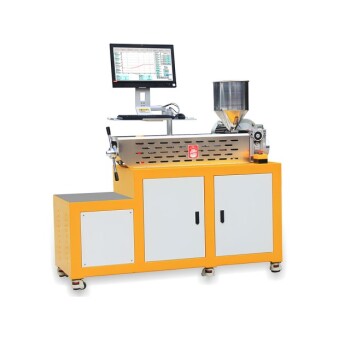
- Filter Testing Machine FPV for Dispersion Properties of Polymers and Pigments
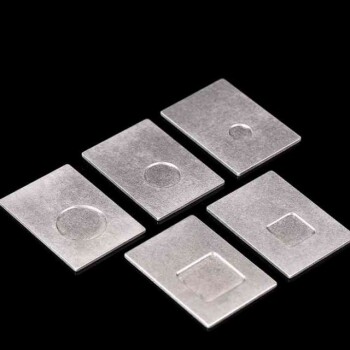
- Customizable XRD Sample Holders for Diverse Research Applications
- Lab Sterile Slapping Type Homogenizer for Tissue Mashing and Dispersing
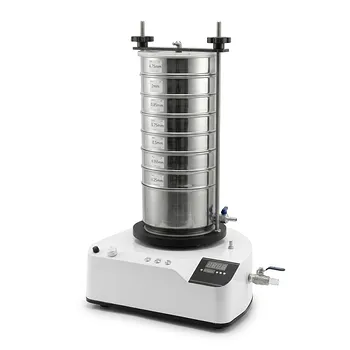
- Laboratory Test Sieves and Vibratory Sieve Shaker Machine
- Three-dimensional electromagnetic sieving instrument
People Also Ask
- What is a filter tester? A Guide to Measuring Filtration Efficiency & Performance
- What is the role of high-purity nitrogen in a supercritical water test loop? Ensure Test Data Integrity
- Why are porous ceramic filters utilized in methane pyrolysis? Protect Your Assets with High-Precision Filtration
- How is a laboratory analytical balance utilized in studies of capillary water absorption kinetics? | Precision Data
- What is the best solvent for FTIR? Master Solvent Selection for Clear, Accurate Spectra