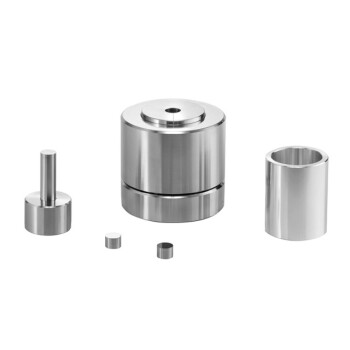
Graphite molds function as the structural and thermal engine of the sintering process for LLZO ceramics. They simultaneously contain the loose powder, transmit critical mechanical pressure, and act as the primary heat source—converting electrical or electromagnetic energy into thermal energy that drives densification.
In Spark Plasma Sintering and Hot Pressing, the mold is not just a vessel; it is an active participant in the process. Because LLZO is electrically non-conductive, the graphite mold bridges the gap, serving as the necessary heating element to ensure rapid and uniform sintering.
The Triple-Function Role of the Mold
Acting as the Mechanical Container
The most fundamental role of the graphite mold is to serve as the shaping vessel. It creates the physical boundary for the LLZO powder, defining the final geometry of the ceramic pellet.
Transmitting Uniaxial Pressure
During densification, the mold acts as the medium for pressure transmission. It transfers significant force (commonly around 25 MPa) from the press rams directly to the powder.
This mechanical pressure is essential for breaking down agglomerates and removing pores. The graphite's high-temperature strength ensures it can sustain these loads without deforming.
Generating the Process Heat
Unlike conventional sintering where the furnace heats the air, the mold itself generates the heat in these advanced techniques.
In Spark Plasma Sintering (SPS), the mold acts as a resistance heating element when current passes through it. In induction Hot Press (HP) systems, the mold functions as a susceptor (induction receptor), converting electromagnetic energy into heat.
Overcoming Material Limitations
Transferring Heat to Non-Conductive LLZO
LLZO ceramics are electrically non-conductive and can be poor thermal conductors initially. The graphite mold compensates for this by leveraging its own high thermal and electrical conductivity.
It rapidly transfers the heat it generates to the enclosed sample. This allows the non-conductive ceramic to reach sintering temperatures quickly, which is key for rapid processing.
Ensuring Microstructural Uniformity
The mold facilitates the uniform distribution of both temperature and pressure.
By surrounding the sample with a highly conductive material, thermal gradients are minimized. This leads to better dimensional accuracy and microstructural uniformity in the final ceramic pellet.
Operational Trade-offs and Considerations
The Necessity of Protective Atmospheres
Graphite is highly susceptible to oxidation at sintering temperatures. Therefore, these processes must occur in a vacuum or inert atmosphere.
While vacuum processing minimizes oxidative loss and extends the mold's service life, it adds complexity to the equipment compared to air sintering.
The Reducing Micro-Environment
Graphite creates a local reducing environment around the sample. For LLZO, this is generally beneficial as it helps inhibit the volatilization of lithium, a common issue at high temperatures.
However, technicians must be aware of this chemical interaction. While it protects the sample's stoichiometry, it requires careful handling to prevent unwanted surface reactions or sticking.
Optimizing Your Sintering Strategy
Graphite molds are critical consumables that define the efficiency of the SPS and HP processes. Understanding their multi-faceted role allows for better process control.
- If your primary focus is rapid densification: Leverage the graphite mold's role as a resistance heater (SPS) to achieve fast heating rates, minimizing grain growth in the LLZO.
- If your primary focus is dimensional precision: Rely on the mold's high-temperature strength to maintain uniform pressure distribution, ensuring the ceramic pellet retains its intended shape.
Ultimately, the graphite mold serves as the essential interface that translates raw energy and force into a dense, high-quality ceramic material.
Summary Table:
| Function | Description | Impact on LLZO Sintering |
|---|---|---|
| Containment | Shapes the loose LLZO powder | Defines final pellet geometry and dimensions |
| Pressure Medium | Transmits ~25 MPa uniaxial force | Eliminates pores and breaks down agglomerates |
| Heat Source | Acts as resistance heater (SPS) or susceptor (HP) | Provides rapid, uniform heating for non-conductive LLZO |
| Atmosphere Control | Creates a local reducing environment | Inhibits lithium volatilization and preserves stoichiometry |
Maximize Your Material Density with KINTEK Precision Solutions
Achieving perfect densification in LLZO ceramics requires the right equipment and consumables. KINTEK specializes in high-performance laboratory solutions, including advanced Spark Plasma Sintering (SPS) components, induction melting systems, and robust hydraulic presses (pellet, hot, and isostatic).
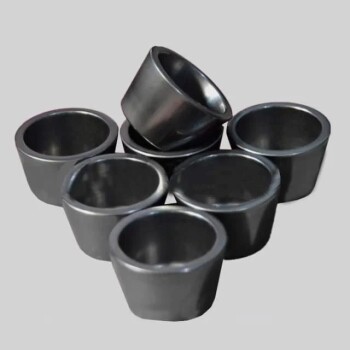
Our expertise in high-temperature technology ensures you have the reliable graphite molds, crucibles, and vacuum furnace systems needed for uniform microstructures and superior dimensional accuracy.
Ready to elevate your battery research and ceramic processing? Contact our technical experts today to find the ideal sintering and milling solutions for your lab!
Related Products
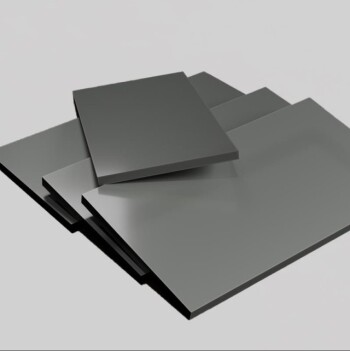
- Carbon Graphite Plate Manufactured by Isostatic Pressing Method
- High Purity Pure Graphite Crucible for Evaporation
- High Purity Pure Graphite Crucible for Electron Beam Evaporation
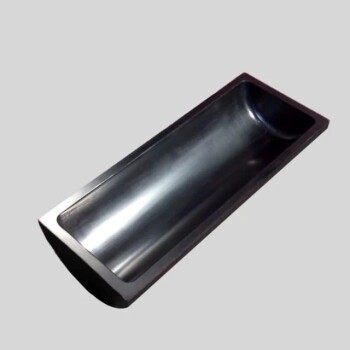
- Carbon Graphite Boat -Laboratory Tube Furnace with Cover
- Vertical High Temperature Graphite Vacuum Graphitization Furnace
People Also Ask
- What is the process of isostatic graphite manufacturing? Achieve Unmatched Material Uniformity and Performance
- What is isostatic graphite? The Ultimate Material for High-Tech and High-Temperature Applications
- What is the density of isostatic graphite? Unlock Superior Performance for Demanding Applications
- How big is the isostatic pressing market? A Deep Dive into the $1.2B+ Advanced Manufacturing Enabler
- Why Use an Isostatic or High-Precision Hydraulic Press for Li/LLZO/Li Batteries? Master Solid-State Interfaces