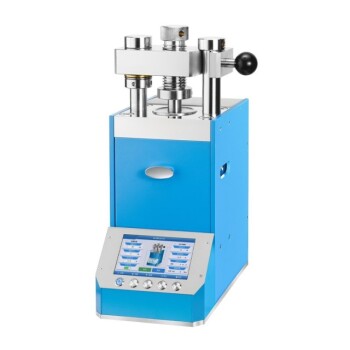
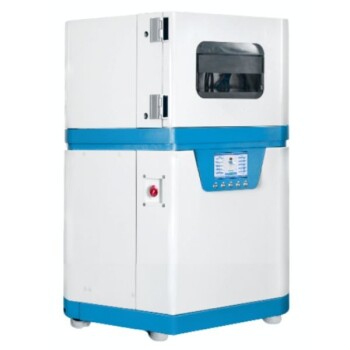
Hot Isostatic Pressing (HIP) is a sophisticated manufacturing and heat treatment process that utilizes a combination of elevated temperatures and high, uniform pressure to eliminate internal microporosity in metals and ceramics. By placing components in a pressure vessel filled with an inert gas (typically Argon), the process densifies materials, significantly enhancing their mechanical properties, structural integrity, and workability.
The Core Insight: HIP is not merely about heating a part; it is about forcing material perfection. By applying extreme pressure from every direction simultaneously, it forces solid material to flow and bond at the atomic level, effectively healing internal voids that would otherwise lead to component failure.
The Mechanisms Behind the Process
The Role of Isostatic Pressure
Unlike standard pressing, which applies force from one or two directions, HIP applies isostatic pressure. This means the pressure is applied uniformly from all directions via a gas medium.
The Physics of Densification
The combination of high heat and pressure triggers three distinct physical mechanisms: plastic deformation, creep, and diffusion.
Eliminating Voids
These mechanisms cause the material to yield and flow into internal gaps. This compresses gas bubbles or voids within the part until they collapse, resulting in a fully dense material.
The Operational Cycle
Loading and Environment
Components are loaded into a specialized unit consisting of a resistance-heated furnace inside a pressure vessel. The environment is strictly controlled using high-purity inert gas, usually Argon, to prevent chemical reactions.
Simultaneous Heating and Pressurization
Once sealed, the unit generally increases temperature and pressure simultaneously. The gas acts as the transmission medium, ensuring the force is distributed evenly across the complex geometries of the part.
The Dwell and Cooling Phase
The material is held at a specific temperature and pressure for a set duration to allow diffusion bonding to occur. Afterward, the vessel is cooled, and the treated parts are removed.
Why Manufacturers Use HIP
Maximizing Material Density
The primary goal is the reduction or elimination of porosity. For castings and powder metallurgy, this results in a material that is virtually 100% dense.
Enhancing Mechanical Properties
By removing internal defects, HIP improves fatigue life, ductility, and impact strength. This is why it is standard for high-integrity applications like aircraft engine components and medical implants.
Salvaging and Bonding
HIP can be used to bond dissimilar materials together or to "heal" casting defects that would otherwise cause a part to be scrapped.
Understanding the Trade-offs
Specialized Tooling Requirements
The process requires tooling that is compatible with extreme HIP cycle parameters. This can introduce additional engineering complexity and upfront costs.
Strict Purity Standards
The inert gas used must adhere to stringent purity standards. Contamination in the gas supply can compromise the material properties, necessitating rigorous process control.
Processing Time and Cost
HIP adds a distinct step to the manufacturing chain. While it improves quality, it increases the total cycle time and cost per part compared to non-HIPed components.
Making the Right Choice for Your Goal
To determine if Hot Isostatic Pressing is the correct solution for your application, consider your specific performance requirements.
- If your primary focus is Reliability: HIP is essential for mission-critical parts (like aerospace turbines) where internal voids could lead to catastrophic fatigue failure.
- If your primary focus is Material Density: Use HIP to consolidate metal powders or ceramics into solid, fully dense components that cannot be achieved through standard sintering.
- If your primary focus is Cost Reduction: Evaluate if the cost of HIP processing is justified by the reduction in scrap rates and the ability to salvage cast parts.
By effectively erasing internal defects, Hot Isostatic Pressing transforms standard materials into high-performance components capable of withstanding the most demanding environments.
Summary Table:
| Feature | Mechanism/Detail | Benefit to Manufacturer |
|---|---|---|
| Pressure Type | Isostatic (Uniform from all directions) | Uniform densification of complex geometries |
| Medium | High-purity Inert Gas (Argon) | Prevents oxidation and chemical reactions |
| Key Mechanisms | Plastic deformation, creep, and diffusion | Eliminates microporosity and internal voids |
| Target Materials | Metals, Ceramics, Powder Metallurgy | Reaches near 100% theoretical density |
| Mechanical Impact | Healing of internal defects | Increased fatigue life, ductility, and strength |
Elevate your material performance with KINTEK’s advanced processing solutions. Whether you are looking to eliminate casting defects or consolidate high-performance powder metals, KINTEK specializes in laboratory equipment and consumables designed for precision. From our robust isostatic presses and high-temperature furnaces to specialized crushing, milling, and cooling solutions, we provide the tools necessary for mission-critical reliability in aerospace, medical, and industrial research. Contact KINTEK today to discover how our high-pressure technology can transform your components and reduce scrap rates.
Related Products
- Warm Isostatic Press for Solid State Battery Research
- Electric Split Lab Cold Isostatic Press CIP Machine for Cold Isostatic Pressing
- Manual Cold Isostatic Pressing Machine CIP Pellet Press
- Automatic High Temperature Heated Hydraulic Press Machine with Heated Plates for Lab
- Isostatic Molding Pressing Molds for Lab
People Also Ask
- What is the temperature of a warm isostatic press? Achieve Optimal Densification for Your Materials
- What is the function of a Warm Isostatic Press (WIP) in all-solid-state pouch cells? Optimize Battery Density
- Why are Warm Isostatic Presses (WIP) necessary for solid-state batteries? Achieve Atomic-Level Contact
- What advantages does a warm isostatic press offer over a traditional uniaxial press for Li6PS5Cl electrolyte sheets?
- How do warm isostatic presses improve dry electrode performance? Enhance ASSB Conductivity with Heat & Pressure