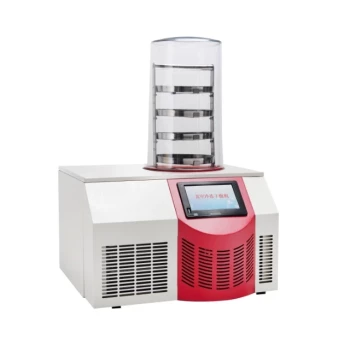
In the production of electrodes containing Li3InCl6 halide electrolytes, a vacuum drying oven is the primary tool used to solidify and stabilize the electrolyte within the electrode structure.
Specifically, it is used to treat electrodes after they have been coated with Li3InCl6 precursor solutions. By maintaining a temperature of approximately 150°C under negative pressure, the oven efficiently removes solvents to drive the in-situ formation of the solid electrolyte directly inside the electrode’s pores.
The core value of vacuum drying in this context is the simultaneous removal of solvents and prevention of hydrolysis. By lowering the boiling point of liquids, the oven ensures the electrolyte remains chemically stable and highly conductive, avoiding the degradation often caused by residual moisture or excessive heat.
The Mechanism of In-Situ Formation
Penetration and Solidification
When precursor solutions are applied, they permeate the porous structure of the electrode.
The vacuum drying oven facilitates the transition from liquid precursor to solid electrolyte. As solvents evaporate under vacuum, the Li3InCl6 crystallizes in-situ, ensuring intimate contact between the active material and the electrolyte.
Efficient Solvent Removal
Standard drying methods often trap solvents deep within complex electrode structures.
The negative pressure significantly lowers the boiling point of the solvent. This allows for rapid, complete evaporation from deep within the micropores without requiring dangerously high temperatures that could damage other electrode components.
Critical Quality Control Functions
Preventing Hydrolysis
Halide electrolytes like Li3InCl6 are highly sensitive to moisture.
Even trace amounts of water can cause the material to hydrolyze, leading to structural degradation. The vacuum oven removes not only free solvents but also coordination water (such as from intermediate hydrates like Li3InCl6·xH2O) to preserve the chemical integrity of the halide.
Ensuring Ionic Conductivity
Residual moisture or solvents act as insulators or barriers to ion movement.
By ensuring the final electrode is thoroughly dry, the process guarantees the high ionic conductivity necessary for the battery to function. This step is the "gatekeeper" for electrochemical performance.
Minimizing Side Reactions
Residual solvents are not just passive impurities; they are chemically active.
If left in the electrode, these residues can trigger parasitic side reactions during battery operation. Vacuum drying eliminates these volatile compounds, thereby expanding the electrochemical stability window of the final device.
Understanding the Trade-offs
Temperature Sensitivity
While heat is necessary for drying, excessive heat can induce material decomposition.
The vacuum oven allows you to operate at lower effective temperatures (e.g., 150°C or lower depending on the specific hydrate). However, strictly adhering to the optimal temperature window is critical; exceeding it may degrade the electrolyte or oxidize the current collectors.
Process Timing
Vacuum drying is rarely an instantaneous process.
Because the goal is to remove tightly bound coordination water and deep-pore solvents, the duration must be sufficient to achieve total dryness. Rushing this step often results in "surface drying" while moisture remains trapped internally, leading to eventual battery failure.
Optimizing Your Drying Protocol
To maximize the performance of Li3InCl6 electrodes, tailor your drying parameters to your specific stability goals.
- If your primary focus is Ionic Conductivity: Prioritize a deep vacuum level to ensure total solvent evacuation from the smallest electrode pores, maximizing the active surface area.
- If your primary focus is Chemical Stability: Focus on precise temperature control (around 150°C) to remove coordination water without thermally degrading the halide structure.
The vacuum drying oven is not merely a drying tool; it is a synthesis reactor that defines the final quality and lifespan of the solid-state interface.
Summary Table:
| Feature | Role in Li3InCl6 Electrode Production |
|---|---|
| In-Situ Formation | Solidifies liquid precursors directly within electrode pores at ~150°C. |
| Solvent Removal | Lowers boiling points under vacuum to extract solvents from deep micropores. |
| Moisture Control | Eliminates coordination water to prevent halide hydrolysis and degradation. |
| Electrochemical Impact | Maximizes ionic conductivity and prevents parasitic side reactions. |
Optimize Your Battery Research with KINTEK
Elevate your solid-state battery development with KINTEK’s precision-engineered laboratory solutions. As specialists in high-performance equipment, we provide the tools necessary for critical processes like the in-situ formation of halide electrolytes.
From advanced vacuum drying ovens and high-temperature furnaces (muffle, tube, vacuum) to specialized battery research tools, consumables, and hydraulic presses, KINTEK ensures your electrodes achieve peak chemical stability and ionic conductivity.
Ready to refine your electrode drying protocol? Contact us today to find the perfect equipment for your lab!
Related Products
- 56L Vertical Laboratory Vacuum Drying Oven
- 23L Laboratory Vacuum Drying Oven
- Laboratory Scientific Electric Heating Blast Drying Oven
- Benchtop Laboratory Vacuum Freeze Dryer
- Vacuum Heat Treat Sintering Brazing Furnace
People Also Ask
- Why is a laboratory vacuum drying oven recommended for rice straw residues? Protect Your Biomass Integrity
- What role does a laboratory vacuum drying oven play in the preparation of modified multi-walled carbon nanotubes?
- What is the importance of using a laboratory vacuum drying oven? Preserving Slow-Release Microcapsule Integrity
- Why is a Laboratory Vacuum Drying Oven recommended for PBAT microspheres? Protect Sensitive Polymer Integrity
- What role does a laboratory vacuum drying oven play in processing nanoparticle powder samples? Protect Sample Integrity