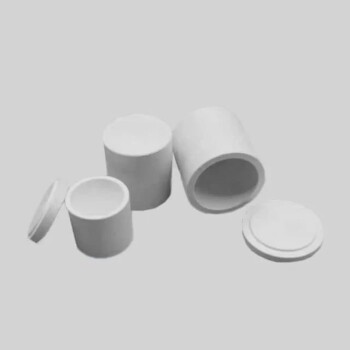
The primary function of a crucible with a lid during the preparation of graphitic carbon nitride (g-C3N4) is to create a controlled, semi-in-situ atmospheric environment. This covered setup suppresses the rapid sublimation of raw materials (such as melamine) during the 550°C calcination process, ensuring the precursors undergo thermal polycondensation rather than escaping as vapor or burning off.
Core Insight: The lid does not merely cover the sample; it acts as a vapor barrier that maintains a high local concentration of reaction intermediates. This leads to significantly higher yields and ensures the structural integrity of the final yellow powder by allowing the polymerization process to complete before the material volatilizes.
The Mechanism of the Semi-Closed System
Creating a Self-Regulating Micro-Atmosphere
When heated to temperatures required for polymerization (approx. 550°C), precursors like melamine have a tendency to sublime (turn directly to gas) before they fully react.
The lid traps these vapors, increasing the partial pressure of the reactant gases within the crucible.
This "semi-in-situ" environment forces the gaseous intermediates to interact and condense into the desired graphitic structure rather than dissipating into the furnace exhaust.
Suppressing Mass Loss
Without a lid, a significant portion of the raw material would be lost to volatilization.
By physically limiting the escape path of these vapors, the lid suppresses mass loss.
This retention of material is the primary factor in ensuring a viable production yield of the final g-C3N4 product.
Regulating Reaction Conditions
Promoting Complete Polycondensation
The formation of g-C3N4 involves a complex series of condensation reactions involving intermediate products.
The covered crucible maintains the necessary thermal and chemical environment for these intermediates to polymerize fully.
This results in a final product with better structural integrity and crystallinity, rather than incomplete or defective distinct phases.
Limiting Oxidative Combustion
While the primary goal is retention of vapors, the lid also serves as a barrier against the external environment.
It limits the excessive entry of ambient oxygen into the reaction zone.
This prevents the precursors from undergoing complete oxidative combustion (burning up), which would result in ash or volatile oxides rather than the desired polymeric semiconductor.
Understanding the Trade-offs
The Importance of "Relatively" Closed
It is critical to understand that the crucible creates a relatively closed system, not a hermetically sealed one.
A completely sealed vessel would turn into a pressure bomb at these temperatures, altering the reaction thermodynamics or causing an explosion.
The lid allows for the slow release of non-essential byproducts while retaining the heavier intermediates required for the graphitic structure.
Consequence of an Open System
Omitting the lid completely changes the reaction kinetics.
In an open crucible, sublimation outpaces polymerization, leading to extremely low yields and a product with potential structural defects due to rapid, unregulated volatilization.
Making the Right Choice for Your Goal
To maximize the efficiency of your synthesis, consider how the lid configuration impacts your specific parameters:
- If your primary focus is Yield: Ensure the lid fits well to maximize the vapor retention of intermediates, as this is the primary defense against mass loss due to sublimation.
- If your primary focus is Purity: Recognize that the lid creates a barrier against external oxygen, protecting your sample from combustion and ensuring the final powder retains the correct chemical composition.
The proper use of a lid is not a minor detail; it is a fundamental control mechanism that dictates whether you produce high-quality graphitic carbon nitride or simply burn off your starting materials.
Summary Table:
| Feature | Function of Crucible Lid in g-C3N4 Synthesis | Impact on Final Product |
|---|---|---|
| Atmospheric Control | Creates a "semi-in-situ" micro-environment | Ensures consistent structural polymerization |
| Vapor Retention | Traps sublimated precursor gases (e.g., melamine) | Significantly increases production yield |
| Oxygen Barrier | Limits entry of ambient oxygen into the crucible | Prevents oxidative combustion and burning |
| Pressure Regulation | Maintains high partial pressure of intermediates | Promotes high crystallinity and integrity |
| Byproduct Management | Allows slow release of non-essential gases | Prevents pressure buildup while retaining reactants |
Achieve high-yield synthesis of graphitic carbon nitride with KINTEK's precision thermal equipment. From high-quality ceramic crucibles and lids to advanced muffle and tube furnaces, we provide the tools necessary for perfect thermal polycondensation. Whether you are conducting battery research or developing new catalysts, our comprehensive range of high-temperature solutions, hydraulic presses, and specialized consumables ensures your lab achieves superior results. Contact KINTEK today to optimize your material processing with our expert laboratory solutions!
References
- Ruki̇ye Özteki̇n, Deli̇a Teresa Sponza. The Use of a Novel Graphitic Carbon Nitride/Cerium Dioxide (g-C3N4/CeO2) Nanocomposites for the Ofloxacin Removal by Photocatalytic Degradation in Pharmaceutical Industry Wastewaters and the Evaluation of Microtox (Aliivibrio fischeri) and Daphnia magna A. DOI: 10.31038/nams.2023621
This article is also based on technical information from Kintek Solution Knowledge Base .
Related Products
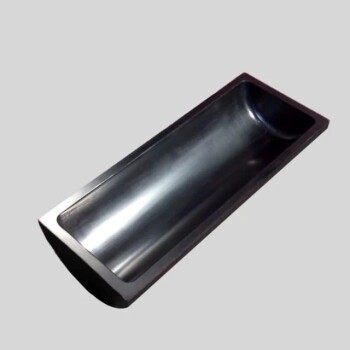
- Carbon Graphite Boat -Laboratory Tube Furnace with Cover
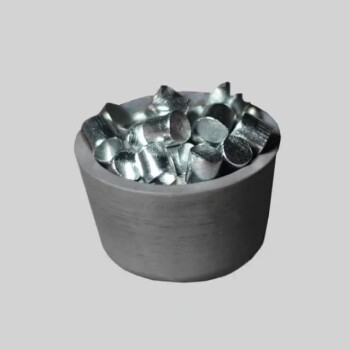
- High Purity Pure Graphite Crucible for Electron Beam Evaporation
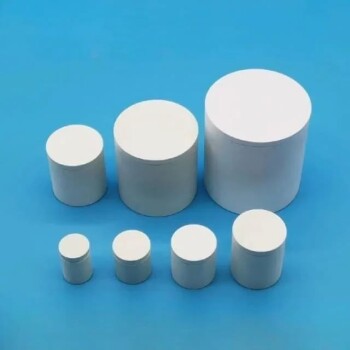
- Engineering Advanced Fine Ceramics Alumina Al2O3 Crucible With Lid Cylindrical Laboratory Crucible
- High Purity Pure Graphite Crucible for Evaporation
- Boron Nitride (BN) Crucible for Phosphorous Powder Sintered
People Also Ask
- What is the use of graphite furnace? Achieve Extreme-Temperature Processing for Advanced Materials
- Why is graphite used in furnaces? For Extreme Heat, Purity, and Efficiency
- What core conditions do high-temperature graphite tube furnaces provide during the pressureless sintering of Boron Carbide (B4C)?
- What is the use of graphite tube? Essential for Extreme Heat & Corrosive Environments
- What is the disadvantage of graphite furnace? Managing Reactivity and Contamination Risks