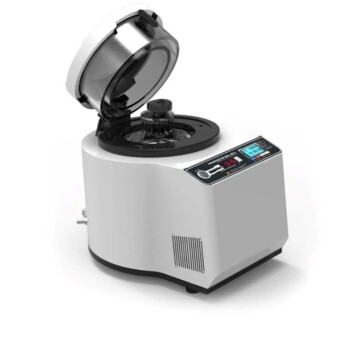
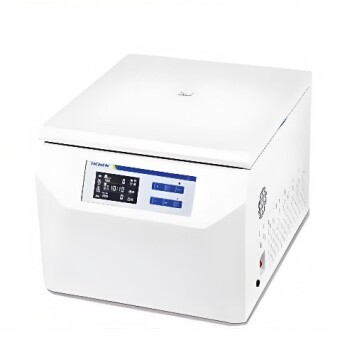
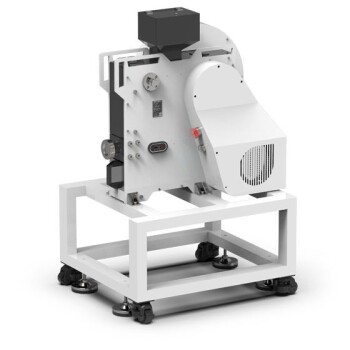
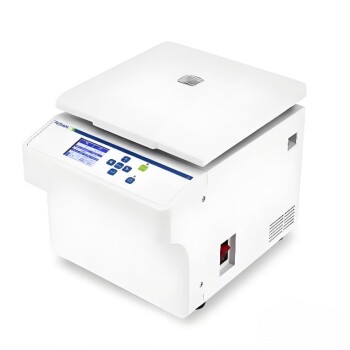
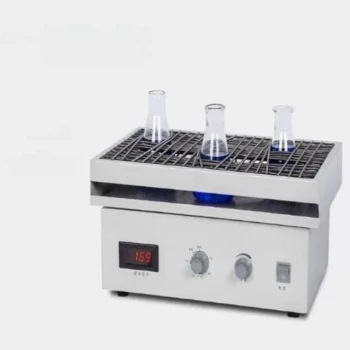
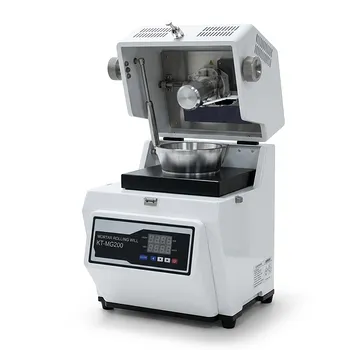
The primary function of a high-speed laboratory crusher is to mechanically transform dried plant leaves into a fine, uniform powder. This physical breakdown maximizes the material's surface area, which is the critical prerequisite for ensuring a highly efficient chemical extraction process.
By significantly increasing the surface area of plant material, the crusher ensures the rapid and complete release of bioactive compounds. This creates a potent aqueous extract capable of acting as both a reducing and stabilizing agent, which is essential for synthesizing high-quality nanoparticles.
The Mechanics of Extraction Efficiency
Maximizing Surface Area
The core utility of the crusher is the physical modification of the raw material. By utilizing high-speed rotation, the device pulverizes dried leaves that would otherwise have limited contact with solvents.
Enhancing Solvent Interaction
Turning leaves into powder ensures that a significantly larger portion of the plant material comes into direct contact with the solvent, typically deionized water. This allows for a more thorough penetration of the solvent during subsequent steps, such as boiling.
Accelerating the Process
A fine powder reduces the time required for extraction. Because the solvent does not need to penetrate thick cell structures, the release of target components happens rapidly, streamlining the overall synthesis workflow.
The Chemical Impact on Synthesis
Releasing Bioactive Compounds
The ultimate goal of crushing is to liberate specific phytochemicals trapped within the leaf structure. The process facilitates the high-concentration extraction of alkaloids, flavonoids, and saponins.
The Dual Role of the Extract
These specific bioactive compounds are not just byproducts; they are the functional agents of the synthesis. The crusher ensures enough of these compounds are released to serve two distinct roles:
- Reducing Agents: They chemically reduce metal ions to form nanoparticles.
- Stabilizing Agents: They cap the nanoparticles to prevent agglomeration.
Direct Influence on Nanocatalyst Quality
The efficiency of the initial grinding step directly correlates to the quality of the final product. A poorly ground sample yields a weak extract, resulting in unstable or poorly formed nanocatalysts. Conversely, a fine powder leads to a high-concentration solution that produces superior nanoparticles.
Critical Process Considerations
Requirement for Dry Material
It is essential to note that this equipment is designed for dried plant leaves (such as Silybum marianum). Attempting to crush fresh, moisture-rich leaves in a high-speed impact crusher can result in a paste rather than a powder, defeating the purpose of increasing surface area.
Uniformity is Key
The effectiveness of the subsequent extraction depends on the consistency of the powder. Inconsistent particle sizes can lead to uneven extraction rates, making it difficult to reproduce specific nanoparticle characteristics in future batches.
Optimizing Your Preparation Protocol
To ensure your extraction process supports robust nanoparticle synthesis, consider the following approach:
- If your primary focus is Extract Potency: Ensure the crusher operates at sufficient speed to produce a fine, dust-like powder, maximizing the release of flavonoids and saponins.
- If your primary focus is Reproducibility: Standardize the drying time of the leaves and the duration of the crushing cycle to maintain consistent particle size across experiments.
The quality of your mechanical preparation defines the chemical potential of your final nanoparticle synthesis.
Summary Table:
| Feature | Function in Synthesis | Impact on Final Product |
|---|---|---|
| High-Speed Rotation | Mechanical pulverization of dried leaves | Consistent, fine powder for even extraction |
| Surface Area Maximization | Increases solvent contact area | Faster, more thorough release of bioactive compounds |
| Bioactive Liberation | Extracts alkaloids, flavonoids, and saponins | Provides essential reducing and stabilizing agents |
| Particle Uniformity | Standardizes the raw material input | Ensures reproducibility of nanoparticle characteristics |
Elevate Your Material Preparation with KINTEK
At KINTEK, we understand that the quality of your nanoparticle synthesis starts with the precision of your mechanical preparation. Our robust crushing and milling systems are engineered to provide the uniform particle size distribution essential for maximizing the release of bioactive compounds.
Beyond sample preparation, KINTEK offers a comprehensive suite of laboratory solutions tailored for advanced research, including:
- High-Temperature Furnaces: Muffle, tube, and vacuum systems for precise thermal processing.
- Material Synthesis Tools: CVD, PECVD, and MPCVD systems for cutting-edge material science.
- Sample Processing: Hydraulic presses (pellet, isostatic), sieving equipment, and high-performance homogenizers.
- Specialized Reactors: High-temperature high-pressure reactors and autoclaves for complex chemical reactions.
- Consumables & Cooling: Premium PTFE products, ceramics, crucibles, and ULT freezers.
Ready to optimize your lab's efficiency and ensure reproducible results? Contact us today to find the perfect equipment for your research goals!
References
- Madasamy Sundar, Selvaraj Muthukumar. Phyto-Mediated Green Synthesis of Silver Nanoparticles Using an Aqueous Leaf Extract of Momordica cymbalaria: Antioxidant, Cytotoxic, Antibacterial, and Photocatalytic Properties. DOI: 10.3390/separations11020061
This article is also based on technical information from Kintek Solution Knowledge Base .
Related Products
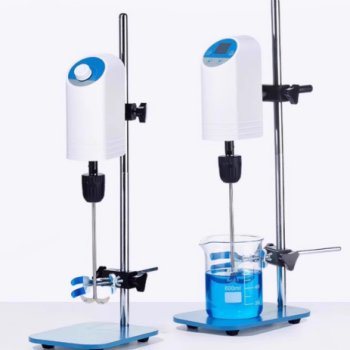
- High Performance Laboratory Stirrers for Diverse Applications
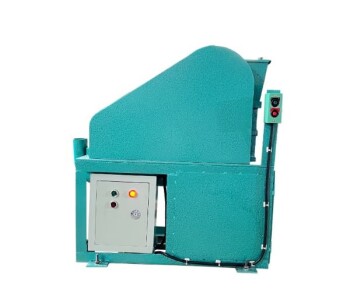
- Sealed Jaw Crusher High Efficiency Environmental Protection Safe and Reliable
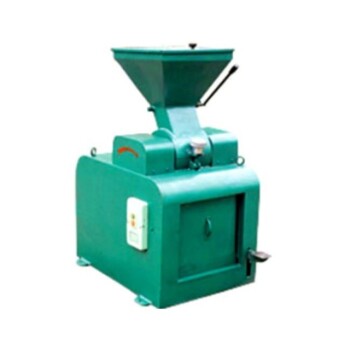
- Laboratory Sealed Hammer Crusher for Efficient Sample Preparation
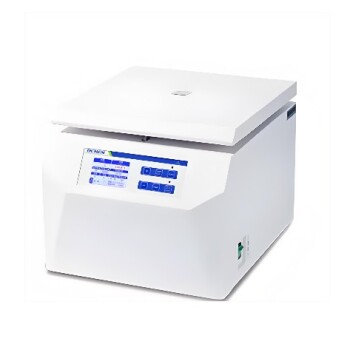
- Benchtop High Speed Small Lab Centrifuge for Serum Separation and Low Temperature Dehydration
- Laboratory High Throughput Tissue Grinding Mill Grinder
People Also Ask
- How does a laboratory stirrer influence MOF product quality? Master Precision in Non-Solvothermal Synthesis
- What critical role does a Laboratory Stirrer play during leaching? Enhance Titanium-Magnesium Waste Recovery
- What is the primary function of laboratory stirring equipment in the preparation of compost leachate? Optimize Extraction
- What is a laboratory mixer? A Guide to Achieving Perfect Sample Homogeneity
- What is a laboratory mixer used for? Choose the Right Tool for Liquids or Solids