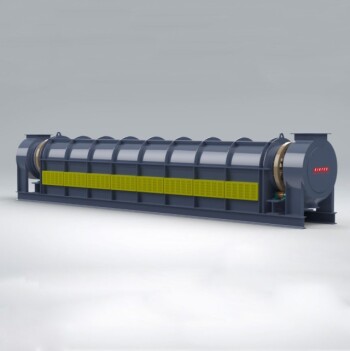
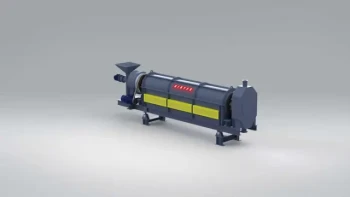
The primary function of the laboratory electric furnace in this context is thermal activation and dehydration. Specifically, it is used to preheat and dry raw oxide powders—such as iron, chromium, and manganese oxides—to prepare them for processing. This step ensures the removal of residual moisture and modifies the physical state of the powder to optimize it for subsequent chemical reactions.
Core Takeaway The laboratory electric furnace acts as a critical preparation stage that transforms raw, potentially damp oxides into dry, high-activity precursors. By removing moisture and increasing the specific surface area of the particles, it creates the necessary conditions for a successful Self-Propagating High-Temperature Synthesis (SHS) reaction.
The Mechanics of Powder Pretreatment
To understand the value of this equipment, one must look beyond simple heating. The furnace performs two distinct physical changes to the raw material.
Elimination of Residual Moisture
Raw material powders often contain trace amounts of water absorbed from the environment.
The electric furnace applies controlled heat to drive off this residual moisture. This is not merely for cleanliness; moisture acts as a heat sink. In later stages, specifically during Self-Propagating High-Temperature Synthesis (SHS), the presence of water can absorb the exothermic energy required to sustain the reaction, leading to process failure.
Enhancement of Surface Area
The heating process does more than dry the material; it alters its physical structure.
Thermal treatment in the furnace increases the specific surface area of the oxide components. A larger surface area increases the contact points between particles. This physical modification is essential for maximizing chemical reactivity in the subsequent processing stages.
Enabling the SHS Reaction
The ultimate goal of using the laboratory electric furnace is to ensure the reliability of the synthesis process that follows.
Creating High-Activity Raw Materials
The Self-Propagating High-Temperature Synthesis (SHS) method relies on rapid, self-sustaining reactions.
By delivering high-activity raw materials, the furnace ensures the powders are chemically eager to react. "Lazy" or low-activity powders (often caused by moisture or low surface area) result in incomplete synthesis or structural defects in the final composite.
Ensuring Process Consistency
Uniformity in the raw materials leads to uniformity in the final product.
The furnace standardizes the condition of the iron, chromium, and manganese oxides. This standardization minimizes variables, ensuring that the SHS reaction proceeds predictably every time.
Common Pitfalls to Avoid
While the function of the furnace is straightforward, neglecting this step has significant downstream consequences.
The Risk of Incomplete Drying
If the furnace cycle is shortened or the temperature is too low, residual moisture remains.
This can lead to erratic combustion during the SHS phase. The energy that should be used to bond the materials is instead wasted vaporizing water, potentially quenching the reaction before it spreads through the entire sample.
Overlooking Surface Activation
Treating the furnace solely as a dryer ignores the importance of surface area.
If the thermal profile is not optimized to increase the specific surface area, the reaction kinetics will be sluggish. The resulting composite may suffer from poor homogeneity because the raw ingredients did not interact intimately enough during the critical reaction window.
Optimizing Your Pretreatment Strategy
To get the most out of your raw material processing, align your furnace usage with your specific production goals.
- If your primary focus is Reaction Reliability: Ensure the drying cycle is sufficient to remove all traces of moisture, as this is the leading cause of SHS propagation failure.
- If your primary focus is Material Homogeneity: Optimize the heating temperature to maximize the specific surface area of the oxides, promoting better particle-to-particle contact.
Proper use of the laboratory electric furnace converts variable raw powders into a consistent, reactive foundation for high-performance composites.
Summary Table:
| Pretreatment Stage | Primary Function | Impact on Composite Synthesis |
|---|---|---|
| Dehydration | Removal of residual moisture | Prevents heat sink effects and ensures stable SHS reactions |
| Thermal Activation | Increasing specific surface area | Enhances chemical reactivity and particle contact points |
| Standardization | Physical state modification | Ensures process consistency and material homogeneity |
| Pre-heating | Preparing oxide precursors | Creates high-activity raw materials for rapid synthesis |
Elevate Your Material Synthesis with KINTEK Precision
Don’t let moisture or low-activity powders compromise your Fe-Cr-Mn-Mo-N-C composite research. KINTEK specializes in advanced laboratory equipment designed to deliver the precise thermal profiles required for high-performance material pretreatment.
From our high-precision muffle and tube furnaces for thermal activation to our robust crushing and milling systems for particle refinement, we provide the tools researchers need to ensure successful Self-Propagating High-Temperature Synthesis (SHS).
Our value to you:
- Comprehensive Range: High-temperature furnaces, vacuum systems, and CVD/PECVD solutions.
- Process Reliability: Equipment engineered for uniform heating and repeatable results.
- Expert Support: Tailored solutions for battery research, high-pressure reactors, and specialized ceramics.
Ready to optimize your lab’s pretreatment strategy? Contact KINTEK today to discuss our full range of laboratory furnaces and consumables!
References
- Konovalov Maksim, Ovcharenko Pavel. Effect of Carbon on Wear Resistance, Strength and Hardness of a Composite with a Matrix of the Fe-Cr-Mn-Mo-N-C System. DOI: 10.15350/17270529.2023.1.8
This article is also based on technical information from Kintek Solution Knowledge Base .
Related Products
- Vertical Laboratory Tube Furnace
- 1200℃ Split Tube Furnace with Quartz Tube Laboratory Tubular Furnace
- 1200℃ Muffle Furnace Oven for Laboratory
- 1400℃ Muffle Oven Furnace for Laboratory
- 1700℃ Muffle Oven Furnace for Laboratory
People Also Ask
- What is the function of a laboratory vertical tube furnace in microalgae catalytic pyrolysis? Optimize Your Bio-Fuel.
- How does a laboratory tube furnace provide atmospheric control during the sintering of glass-ceramics? Achieve Precision
- How does a laboratory tube furnace provide precise temperature control? Expert Simulation for Steam Cracking
- Why is a laboratory tube furnace required for LMTP0.1/CA materials? Achieve Precise Carbon Coating & Crystal Growth
- How does the temperature control precision of a laboratory tube furnace affect the quality of grown single crystals?