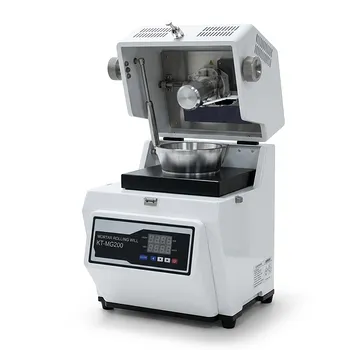
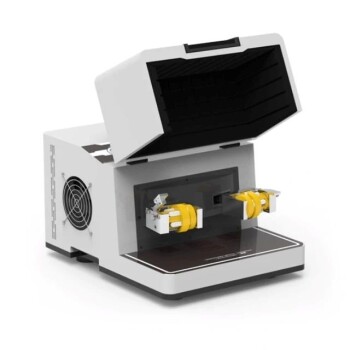
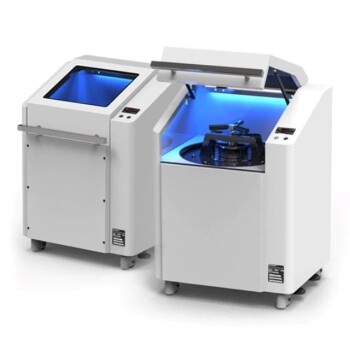
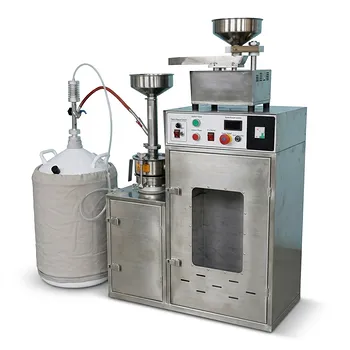
The primary function of a micronized mill is to mechanically reduce raw Hubnerite (manganese tungstate) into a fine powder with micrometer-level dimensions. By crushing and grinding the material to this specific fineness, the mill drastically increases the specific surface area of the sample. This physical transformation is a strict prerequisite for both accurate analytical characterization and effective kinetic experimentation.
Ideally prepared Hubnerite samples require maximized specific surface area to ensure data reliability. The micronized mill achieves this by reducing particle size, enabling precise laser diffraction analysis and optimizing gas-solid reactivity for high-temperature studies.
The Role of Surface Area in Characterization
To understand the Hubnerite sample, researchers must first accurately define its physical state. The micronized mill is the gateway to this data.
Achieving Micrometer-Level Fineness
Raw Hubnerite exists in a coarse state that is unsuitable for sensitive analytical equipment. The mill applies mechanical force to crush these structures down to the micrometer level.
Enabling Laser Diffraction Analysis
Accurate particle size distribution analysis relies on laser diffraction systems. These systems require particles to be fine enough to scatter light predictably.
Without the specific fineness achieved by the micronized mill, the diffraction data would be unreliable or skewed toward coarser fractions.
Impact on Kinetic Studies
Beyond simple sizing, the preparation of the sample directly dictates how it behaves during chemical reactions, specifically in kinetic studies.
Enhancing Gas-Solid Interfaces
Kinetic studies often examine how the solid mineral interacts with a gas environment. The rate of this interaction is heavily dependent on the specific surface area.
By grinding the Hubnerite into a fine powder, the mill exposes a significantly larger surface area per unit of mass. This maximizes the contact points between the gas and the solid.
Optimizing Thermogravimetric Experiments
Researchers use high-temperature thermogravimetric experiments to measure mass changes under heat. The reactivity of the sample during these tests is critical.
A micronized sample ensures that the reaction proceeds efficiently and uniformly. This allows for the collection of precise kinetic data that truly reflects the material's properties, rather than its preparation limitations.
The Risks of Improper Preparation
Skipping or rushing the micronization process introduces significant variables that can compromise your entire study.
Skewed Particle Distribution Data
If the milling process fails to achieve uniform micrometer-level fineness, the resulting particle size distribution will be inaccurate. This creates a false baseline for any subsequent physical analysis.
Compromised Reactivity Data
In kinetic studies, a low specific surface area leads to sluggish reactions. This results in poor gas-solid contact, potentially masking the intrinsic kinetic properties of the Hubnerite and yielding misleading thermogravimetric results.
Making the Right Choice for Your Goal
Whether you are characterizing the material's physical form or testing its chemical behavior, the preparation step is foundational.
- If your primary focus is Physical Characterization: Ensure the mill reduces the Hubnerite to a fineness compatible with laser diffraction systems to guarantee accurate distribution mapping.
- If your primary focus is Kinetic Reactivity: Prioritize the maximization of specific surface area to ensure optimal gas-solid interface behavior during high-temperature experiments.
Proper micronization transforms raw Hubnerite from a coarse mineral into a scientifically reactive candidate for high-precision analysis.
Summary Table:
| Feature | Function in Hubnerite Preparation | Impact on Study |
|---|---|---|
| Particle Size Reduction | Crushes raw mineral to micrometer-level fineness | Enables accurate laser diffraction analysis |
| Surface Area Maximization | Increases specific surface area per unit mass | Optimizes gas-solid reactivity in kinetics |
| Mechanical Grinding | Ensures uniform powder distribution | Prevents skewed data in thermogravimetry |
| Interface Optimization | Enhances contact points for gas interaction | Ensures data reflects intrinsic material properties |
Elevate Your Mineral Research with KINTEK Precision
Don't let improper sample preparation compromise your analytical accuracy. KINTEK specializes in advanced crushing and milling systems designed to achieve the precise micrometer-level fineness required for high-stakes kinetic studies and characterization.
From high-performance mills to high-temperature furnaces and thermogravimetric tools, we provide the comprehensive laboratory equipment needed to ensure your Hubnerite samples deliver reliable, repeatable data.
Ready to optimize your lab's workflow? Contact our technical experts today to find the perfect milling solution for your research goals.
References
- Gastón G. Fouga, Ana E. Bohé. Kinetic study of Hubnerite (MnWO4) chlorination. DOI: 10.1016/j.tca.2012.02.015
This article is also based on technical information from Kintek Solution Knowledge Base .
Related Products
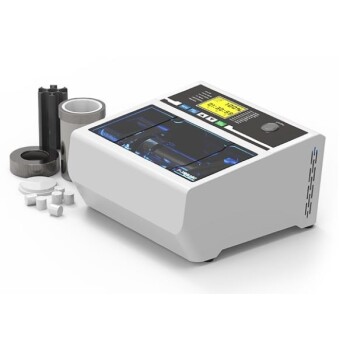
- Laboratory Micro Tissue Grinding Mill Grinder
- Laboratory Micro Horizontal Jar Mill for Precision Sample Preparation in Research and Analysis
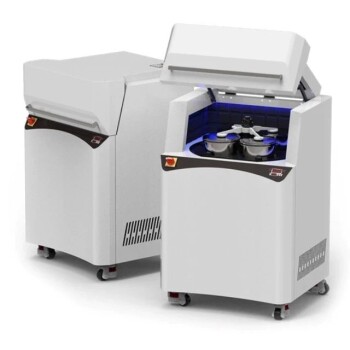
- Mini Planetary Ball Mill Machine for Laboratory Milling
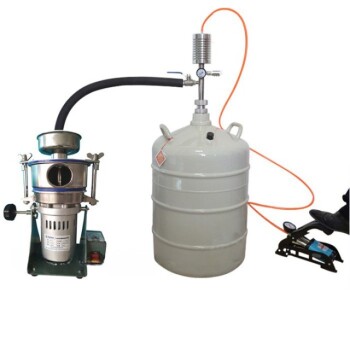
- Small Cryogenic Grinder Cryomill Cryogrinder with Liquid Nitrogen for Laboratory Use
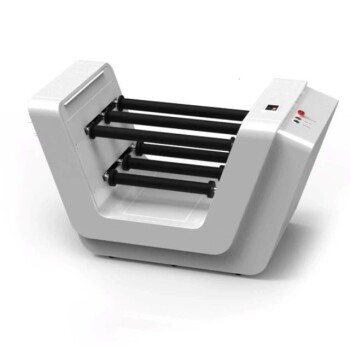
- Laboratory Single Horizontal Jar Mill
People Also Ask
- What is the function of a laboratory grinding mill? Achieve Precise Sample Preparation for Accurate Results
- What laboratory apparatus is used for grinding? Match the Right Mill to Your Sample Material
- What is the function of a laboratory ball mill in the preparation of AMMCs? Optimize Dispersion & Grain Refinement
- In what way does a laboratory ball mill affect material properties when modifying PHBV/pulp fiber composites?
- What is the function of a laboratory ball mill in the pretreatment of waste tire char (WTC)? Optimize Material Reactivity