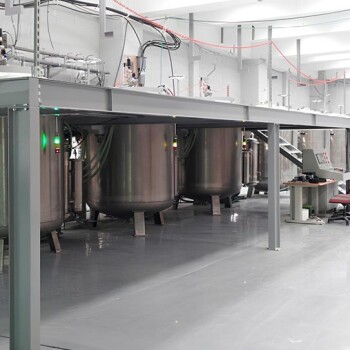
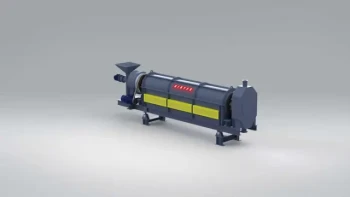
A sample carbonization and ashing furnace functions as a specialized volume-reduction instrument. By utilizing strictly programmed temperature increases, it systematically decomposes the complex organic structure of dairy products like cheese, whey, or raw milk. This thermal process converts the bulk sample into a residue of inorganic ash, effectively isolating the target radionuclides for analysis.
The primary value of this pre-treatment is the elimination of organic matrix interference, which allows subsequent scintillation spectroscopy to achieve the extremely low Minimum Detectable Activity (MDA) levels required for safety compliance.
The Mechanism of Pre-treatment
Eliminating Matrix Interference
Dairy products are chemically complex matrices dominated by fats, proteins, and carbohydrates.
These organic components absorb or scatter radiation, essentially "blinding" sensitive detection instruments.
The furnace removes these barriers by combusting the organic material, leaving only the mineral content behind.
Concentrating Target Radionuclides
Radioactive isotopes like Strontium-90 often exist in trace amounts within a large sample volume.
To detect them, you must increase their density relative to the sample size.
By reducing a large volume of liquid or solid dairy into a small quantity of inorganic ash, the furnace significantly concentrates the radionuclides.
Facilitating Scintillation Spectroscopy
The output of the furnace is designed specifically for high-sensitivity downstream analysis.
Techniques like scintillation spectroscopy require samples with high clarity and low quenching effects.
The clean, mineralized ash produced by the furnace meets these strict criteria, ensuring the spectrometer reads the radiation, not the background noise of the food product.
Operational Control
Programmed Temperature Gradients
This process is not a simple incineration; it requires precision.
The furnace uses programmed temperature increases rather than a sudden application of maximum heat.
This ramped approach prevents the sample from boiling over or splattering, ensuring 100% of the sample remains in the vessel for analysis.
Complete Decomposition
The goal is total oxidation of carbon-based matter.
Any remaining organic residue can alter the chemical yield or interfere with the separation chemistry used later.
The furnace ensures a complete conversion to inorganic ash, providing a consistent baseline for measurement.
Understanding the Trade-offs
Process Duration vs. Accuracy
Carbonization and ashing is a time-intensive pre-treatment method compared to rapid screening techniques.
It prioritizes measurement accuracy and sensitivity over speed.
Rushing the temperature ramp can lead to incomplete combustion, rendering the sample unsuitable for low-level detection.
Thermal Volatility Risks
While the goal is to remove organics, the temperature profile must be carefully managed.
If the temperature exceeds specific thresholds, there is a risk of volatilizing certain semi-volatile isotopes.
The programmed nature of the furnace is the critical safeguard against losing the very data you are trying to measure.
Making the Right Choice for Your Goal
To maximize the effectiveness of your radioactive isotope detection, consider your specific analytical requirements.
- If your primary focus is achieving the lowest possible detection limit (MDA): Prioritize a complete ashing cycle to fully eliminate organic interference and maximize radionuclide concentration.
- If your primary focus is sample integrity: Adhere strictly to programmed temperature ramps to prevent sample loss through splattering or volatilization.
Precision in the physical pre-treatment is the prerequisite for precision in the final data.
Summary Table:
| Feature | Function in Dairy Pre-treatment | Benefit for Analysis |
|---|---|---|
| Volume Reduction | Converts bulk milk/cheese into mineral ash | Concentrates trace isotopes like Strontium-90 |
| Organic Elimination | Combusts fats, proteins, and carbohydrates | Removes matrix interference & quenching effects |
| Programmed Ramping | Precise, incremental temperature increases | Prevents sample loss via splattering/volatilization |
| Inorganic Residue | Produces clean, mineralized output | Ideal for high-sensitivity scintillation spectroscopy |
Enhance Your Lab's Detection Sensitivity with KINTEK
Precision in radioactive isotope detection starts with flawless sample preparation. KINTEK specializes in advanced laboratory equipment designed for the most demanding analytical workflows. Our high-performance muffle and atmosphere furnaces provide the exact programmed temperature control required to eliminate organic matrices without losing volatile isotopes.
Whether you are processing dairy products for Strontium-90 detection or conducting complex material research, our range of high-temperature furnaces, crushing systems, and specialized ceramics ensure consistent, contamination-free results.
Ready to achieve lower MDA levels and superior data accuracy? Contact KINTEK today for a tailored solution
References
- О. І. Aksimentyeva, O. S. Dzendzeliuk. Graphene based nanostructures for ionizing radiation sensing. DOI: 10.21175/rad.abstr.book.2023.32.7
This article is also based on technical information from Kintek Solution Knowledge Base .
Related Products
- Graphite Vacuum Furnace Negative Material Graphitization Furnace
- Graphite Vacuum Furnace Bottom Discharge Graphitization Furnace for Carbon Materials
- Large Vertical Graphite Vacuum Graphitization Furnace
- Graphite Vacuum Continuous Graphitization Furnace
- Electric Rotary Kiln Small Rotary Furnace for Activated Carbon Regeneration
People Also Ask
- What is the use of graphite furnace? Achieve Extreme-Temperature Processing for Advanced Materials
- What is the disadvantage of graphite furnace? Managing Reactivity and Contamination Risks
- What is the purpose of a graphite furnace? Achieve Extreme Temperatures for Advanced Materials
- What is the application of graphite furnace? Essential for High-Temp Material Processing & Synthesis
- What are the disadvantages of graphite furnace? Key Limitations and Operational Costs