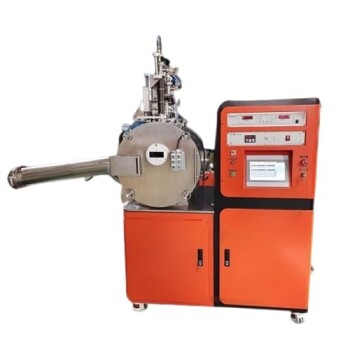
The primary function of a Spark Plasma Sintering (SPS) system is to facilitate the rapid densification of LLZTO powder into a solid ceramic electrolyte by simultaneously applying high mechanical pressure and a pulsed electric current. Operating at 1100°C with 50 MPa of pressure, the system compacts the material in approximately 10 minutes, significantly faster than conventional methods.
Core Takeaway While standard heating methods often result in porous materials, the SPS system leverages simultaneous pressure and Joule heating to achieve a relative density of over 98%. This process is essential for inhibiting excessive grain growth, which directly translates to lower resistance and higher performance in solid-state batteries.
The Mechanism of Rapid Densification
Simultaneous Heat and Pressure
The defining feature of the SPS system is the application of a pulsed direct current combined with uniaxial force. Rather than relying solely on external heating elements, the system generates Joule heat directly through the assembly to reach 1100°C rapidly. Simultaneously, a mechanical pressure of 50 MPa is applied to physically compact the powder particles.
The Role of Graphite Components
The process relies on a graphite mold that serves a dual purpose: it acts as the container for powder shaping and the conductive medium for the electrical current. Because graphite withstands extreme conditions, it ensures that both the thermal energy and the mechanical force are transferred uniformly to the LLZTO powder.
Speed and Efficiency
Unlike conventional sintering, which may require long dwell times, the SPS process completes densification in approximately 10 minutes. This speed is achieved because the pulsed current promotes rapid diffusion between particles without requiring prolonged exposure to heat.
Why SPS is Critical for LLZTO Performance
Inhibiting Grain Growth
One of the most significant challenges in ceramic processing is that long heating times cause grains to grow too large, which can degrade mechanical properties. The rapid processing time of the SPS system effectively inhibits excessive grain growth, preserving a fine microstructure that is favorable for battery electrolytes.
Maximizing Relative Density
Standard cold pressing typically achieves a relative density of only about 76%, leaving voids that hinder ion movement. The SPS system drastically improves this, increasing the material density to over 98%.
Reducing Grain Boundary Resistance
By eliminating voids and tightening the contact between grains, the SPS process significantly reduces grain boundary resistance. This reduction is the primary driver for improving the macroscopic ionic conductivity of the solid electrolyte, making it viable for high-performance applications.
Understanding the Operational Trade-offs
Dependence on Consumables
The SPS process is heavily dependent on the quality and durability of the graphite molds. These components act as essential consumables that must endure significant hydraulic pressure (37.5 to 50 MPa) and high current loads during every cycle.
Process Specificity
While a tube furnace might be used for initial phase formation or atmospheric control, the SPS is a specialized tool strictly for densification. It does not replace the need for precise precursor preparation; it requires the powder to be ready for final compaction.
Making the Right Choice for Your Goal
To maximize the effectiveness of the SPS system in your workflow, consider these specific objectives:
- If your primary focus is maximizing ionic conductivity: Utilize the SPS capabilities to push density above 98%, as eliminating voids is the most effective way to lower grain boundary resistance.
- If your primary focus is microstructural control: Leverage the short 10-minute sintering window to prevent grain coarsening, ensuring the ceramic retains optimal mechanical integrity.
By utilizing Spark Plasma Sintering, you convert loose powder into a dense, highly conductive electrolyte capable of meeting the rigorous demands of modern solid-state batteries.
Summary Table:
| Feature | Conventional Sintering | Spark Plasma Sintering (SPS) |
|---|---|---|
| Sintering Time | Hours to Days | ~10 Minutes |
| Relative Density | ~76% (Cold Pressing) | >98% |
| Grain Growth | Excessive/Coarse | Inhibited/Fine Microstructure |
| Heating Method | External Thermal Transfer | Internal Joule Heating (Pulsed DC) |
| Typical Pressure | Minimal/Ambient | 37.5 - 50 MPa |
| Primary Benefit | Simple Setup | Low Grain Boundary Resistance |
Elevate Your Solid-State Battery Research with KINTEK
Precision matters when developing high-performance LLZTO electrolytes. KINTEK specializes in advanced laboratory solutions, providing the high-temperature systems and precision tools necessary for rapid material densification. From high-pressure sintering components to specialized graphite consumables and crushing systems, we empower researchers to achieve superior material density and ionic conductivity.
Our core expertise includes:
- High-Temperature Systems: Muffle, tube, and vacuum furnaces for precursor preparation.
- Sintering Support: Specialized graphite molds, crucibles, and ceramics designed for extreme conditions.
- Sample Preparation: Precision crushing, milling, and hydraulic presses for uniform powder processing.
Contact KINTEK today to optimize your material synthesis workflow!
Related Products
- Spark Plasma Sintering Furnace SPS Furnace
- Vacuum Heat Treat and Pressure Sintering Furnace for High Temperature Applications
- Vacuum Heat Treat and Sintering Furnace with 9MPa Air Pressure
- Small Vacuum Heat Treat and Tungsten Wire Sintering Furnace
- Vacuum Dental Porcelain Sintering Furnace
People Also Ask
- What is SPS sintering method? A Guide to High-Speed, High-Performance Material Fabrication
- Why are Spark Plasma Sintering (SPS) furnaces or hot presses utilized in the preparation of Li3PS4 solid electrolytes?
- What is the difference between spark plasma sintering and flash sintering? A Guide to Advanced Sintering Methods
- What technical advantages does a Spark Plasma Sintering (SPS) furnace offer for LZP ceramics? Enhance Ionic Conductivity
- What is the theory of spark plasma sintering? A Guide to Rapid, Low-Temperature Densification