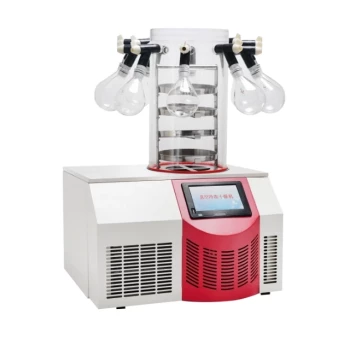
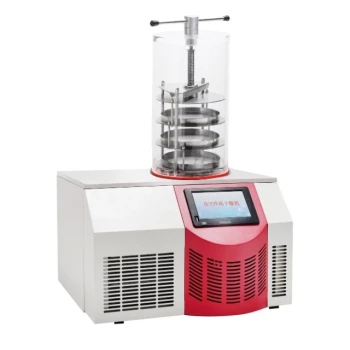
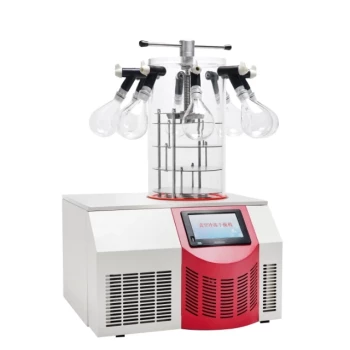
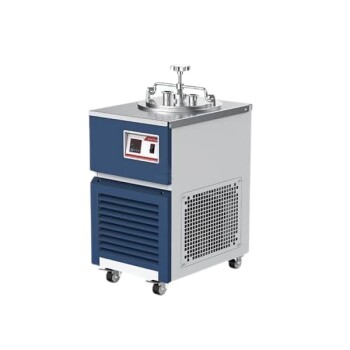
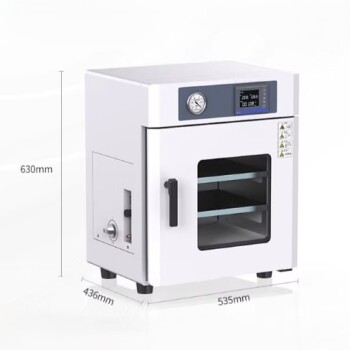
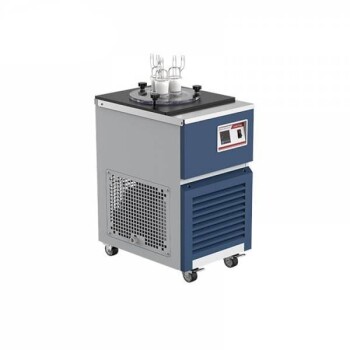
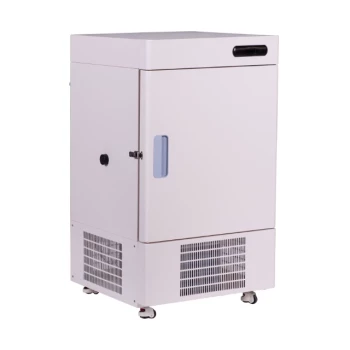
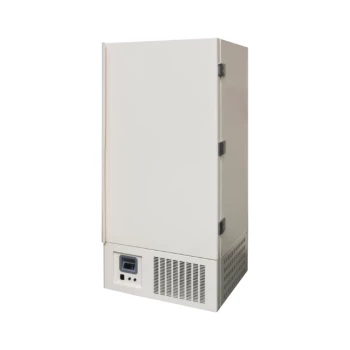
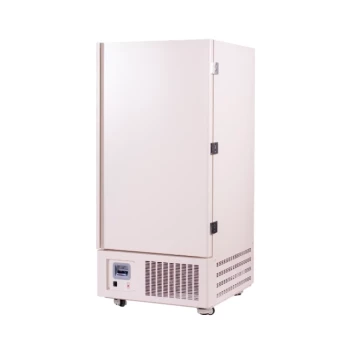
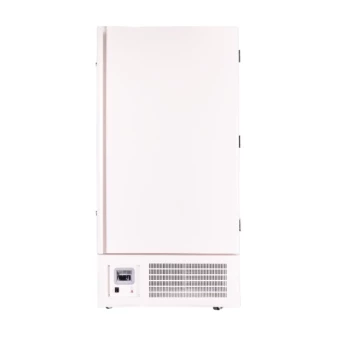
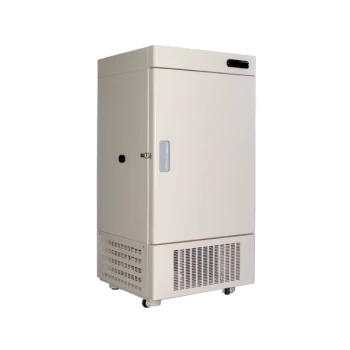
The primary function of a Vacuum Freeze Dryer in seaweed biomass pretreatment is to dehydrate the material at extremely low temperatures, specifically around -55°C. This process prepares the raw seaweed for fractionation by removing moisture without utilizing damaging heat. It serves a dual purpose: preserving the chemical integrity of the biomass and altering its physical structure to facilitate downstream processing.
Core Takeaway Vacuum freeze drying is a critical pretreatment step that protects heat-sensitive biochemicals from degradation while simultaneously rendering the biomass brittle enough to be pulverized into a fine powder, directly enhancing the efficiency of subsequent chemical hydrolysis.
Preserving Biochemical Integrity
Avoiding Thermal Degradation
The most immediate benefit of using a vacuum freeze dryer is the avoidance of high temperatures. Standard drying methods often rely on heat, which can destroy or alter the chemical composition of the biomass.
Protecting Heat-Sensitive Substances
By operating at -55°C, the freeze dryer ensures that heat-sensitive substances within the seaweed remain intact. This maximizes the preservation of valuable biochemical components prior to fractionation.
Enhancing Physical Structure for Processing
Facilitating Pulverization
Beyond simple preservation, freeze drying changes the physical properties of the seaweed. The removal of moisture in a frozen state leaves the biomass in a condition that is significantly easier to pulverize.
Creating Fine Powder
Because the material is easily pulverized, it can be processed into a much finer powder than other drying methods might allow. This mechanical advantage is crucial for the steps that follow.
Maximizing Surface Area
The creation of a fine powder drastically increases the contact surface area of the biomass. A larger surface area ensures that subsequent chemical treatments penetrate the material more effectively.
Improving Hydrolysis Efficiency
The ultimate goal of increasing surface area is to optimize chemical hydrolysis. By ensuring better contact between the biomass and chemical agents, the freeze drying process directly improves the overall conversion efficiency.
Understanding the Operational Context
The Necessity of Low Temperatures
It is important to recognize that the benefits described above rely strictly on maintaining extremely low temperatures, such as -55°C. Deviating from these specific thermal parameters can compromise the preservation of biochemicals.
The Link to Fractionation
This equipment is not a standalone solution but a preparatory stage. Its value is fully realized only when followed by fractionation and hydrolysis, where the preserved structure and increased surface area are utilized.
Optimizing Biomass Pretreatment
To determine if vacuum freeze drying is the right pretreatment for your specific application, consider your end goals for the seaweed biomass.
- If your primary focus is Biochemical Purity: The freeze dryer is essential for maintaining the stability of heat-sensitive compounds that would otherwise degrade.
- If your primary focus is Conversion Efficiency: The ability to pulverize the dried biomass into fine powder is the key factor that will drive higher yields during hydrolysis.
By integrating vacuum freeze drying, you ensure your raw material is chemically potent and physically primed for high-efficiency processing.
Summary Table:
| Feature | Function in Pretreatment | Benefit to Seaweed Processing |
|---|---|---|
| Low-Temp Dehydration | Operates at -55°C to remove moisture | Protects heat-sensitive biochemicals from thermal degradation |
| Physical Modification | Renders biomass brittle and dry | Facilitates pulverization into ultra-fine powders |
| Surface Area Optimization | Increases particle surface-to-volume ratio | Enhances chemical penetration and hydrolysis efficiency |
| Structural Preservation | Maintains chemical integrity | Ensures high-quality feedstock for downstream fractionation |
Maximize Your Research Yield with KINTEK Precision Solutions
Unlock the full potential of your seaweed biomass with KINTEK’s advanced laboratory solutions. Whether you are focusing on biochemical purity or optimizing conversion efficiency, our high-performance vacuum freeze dryers and cold traps are engineered to preserve the integrity of your most sensitive samples.
Beyond drying, KINTEK offers a comprehensive range of equipment to support your entire workflow—from crushing and milling systems to produce fine powders, to high-temperature high-pressure reactors for efficient hydrolysis. Our portfolio also includes ultrasonic homogenizers, PTFE consumables, and specialized ceramics designed for the rigors of modern biomass research.
Ready to elevate your laboratory's processing capabilities? Contact our technical experts today to find the perfect equipment tailored to your specific seaweed fractionation and biomass pretreatment needs.
References
- Edward Jones, Christopher J. Chuck. Saltwater based fractionation and valorisation of macroalgae. DOI: 10.1002/jctb.6443
This article is also based on technical information from Kintek Solution Knowledge Base .
Related Products
- Benchtop Laboratory Vacuum Freeze Dryer
- High Performance Laboratory Freeze Dryer
- High Performance Laboratory Freeze Dryer for Research and Development
- Benchtop Laboratory Freeze Dryer for Lab Use
- Vacuum Cold Mounting Machine for Sample Preparation
People Also Ask
- What are the technical advantages of using a laboratory freeze dryer for porous carbon precursors? Preserve 3D Networks
- How do laboratory freeze dryers support scientific research? Preserve Sample Integrity for Reproducible Results
- Why is a laboratory freeze dryer preferred over traditional heating? Preserve Biochar Structure & Maximize Porosity
- What types of liquid samples can be processed using a laboratory freeze dryer? Preserve Your Sensitive Materials
- What role do laboratory freeze dryers play in the food industry? Unlock Superior Food Preservation