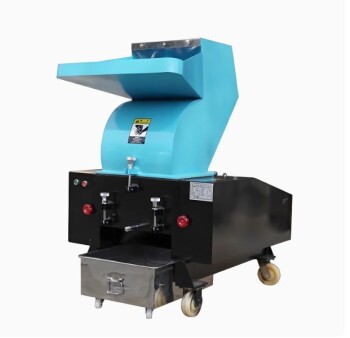
The fundamental function of a Wiley grinding mill is to mechanically reduce raw elephant grass into smaller particles of various sizes to prepare it for chemical analysis. This physical transformation is a mandatory precursor to laboratory testing, as it alters the biomass's structure to allow for effective chemical interaction.
By significantly increasing the specific surface area of the elephant grass, the Wiley mill ensures that chemical reagents can penetrate the lignocellulosic structure fully and uniformly. This step is essential for maximizing both the accuracy of analytical data and the efficiency of extraction processes.
The Physical Transformation of Biomass
Reducing Particle Size
The primary mechanical action of the Wiley mill is the comminution (grinding) of raw elephant grass.
This process breaks down the tough, fibrous material into finer particles. Creating these smaller particles provides the necessary physical foundation for all subsequent testing phases.
Increasing Specific Surface Area
The most critical outcome of this grinding process is the drastic increase in specific surface area.
By exposing more of the material's internal structure, the mill removes physical barriers that would otherwise hinder chemical reactions. This expanded surface area is the key variable that allows for successful chemical processing.
Impact on Chemical Analysis and Extraction
Ensuring Reagent Penetration
For chemical analysis to be valid, reagents must be able to reach the core of the biomass.
The grinding process ensures that chemical agents can penetrate the lignocellulosic structure completely. Without this uniform penetration, the interior of the grass fibers would remain untreated, leading to skewed results.
Facilitating Critical Reactions
Specific chemical procedures, such as acid hydrolysis and cold alkaline extraction, rely heavily on this preparation.
The Wiley mill enables these reactions to occur efficiently by ensuring the reagents have sufficient contact with the biomass material. This direct interaction is what allows for the successful isolation or measurement of chemical components.
Understanding the Trade-offs
The Risk of Inadequate Preparation
It is important to recognize that omitting this step or grinding significantly affects data integrity.
If the elephant grass is not ground to increase its surface area, chemical interactions will be superficial and incomplete. This results in poor extraction efficiency and unreliable analytical data.
Managing Particle Size Distribution
The primary reference notes that the mill produces particles of "various sizes."
While this variation is generally acceptable for bulk extraction, users should be aware that extreme inconsistency in particle size can theoretically introduce variability in reaction rates. However, the overarching benefit of increased surface area outweighs this variance for general processing.
Making the Right Choice for Your Goal
To get the most out of your elephant grass analysis, consider your specific objectives when using a Wiley mill:
- If your primary focus is Analytical Accuracy: Ensure the grinding process is thorough to allow for uniform reagent penetration, eliminating "blind spots" in your data.
- If your primary focus is Extraction Efficiency: Prioritize maximizing the specific surface area to ensure the highest possible yield during acid hydrolysis or alkaline extraction.
Proper mechanical preparation is the single most effective way to guarantee the reliability of your chemical characterization.
Summary Table:
| Process Aspect | Wiley Mill Function | Impact on Chemical Analysis |
|---|---|---|
| Mechanical Action | Comminution (Grinding) | Reduces fibrous material to manageable particle sizes. |
| Surface Area | Drastic Increase | Maximizes contact points for chemical reagents. |
| Structure Alteration | Lignocellulosic Breakdown | Facilitates full penetration of internal biomass structures. |
| Chemical Readiness | Uniformity Preparation | Enables efficient acid hydrolysis and alkaline extraction. |
| Data Quality | Physical Optimization | Eliminates superficial reactions for higher analytical accuracy. |
Maximize Your Analytical Precision with KINTEK
Ensure the integrity of your biomass research with high-performance preparation tools. KINTEK specializes in laboratory equipment and consumables, providing the robust crushing and milling systems necessary to achieve the perfect particle size for your chemical characterization.
Whether you are performing acid hydrolysis on elephant grass or conducting complex battery research, our comprehensive portfolio—ranging from Wiley-style mills and sieving equipment to high-temperature furnaces, reactors, and planetary ball mills—is designed to meet the rigorous demands of modern laboratories.
Ready to elevate your extraction efficiency? Contact us today to discover how KINTEK's precision-engineered solutions can optimize your lab's workflow and deliver more reliable results.
References
- J.C. Garcı́a, F. López. Cold alkaline extraction of Elephant grass for optimal subsequent extraction of hemicelluloses and energy production. DOI: 10.1007/s13399-022-03054-3
This article is also based on technical information from Kintek Solution Knowledge Base .
Related Products
- Laboratory Grinding Mill Mortar Grinder for Sample Preparation
- Vibrating Disc Mill Small Laboratory Grinding Machine
- Laboratory Hybrid Tissue Grinding Mill
- Laboratory High Throughput Tissue Grinding Mill Grinder
- Laboratory Jar Mill with Agate Grinding Jar and Balls
People Also Ask
- What laboratory apparatus is used for grinding? Match the Right Mill to Your Sample Material
- What is the function of a laboratory grinding mill? Achieve Precise Sample Preparation for Accurate Results
- What is the purpose of using a laboratory grinder and standard sieves? Unlock Precise Rice Husk Pretreatment
- What is the role of laboratory-grade grinders and sieves in sample prep? Ensure High-Precision Corrosion Analysis
- What is the purpose of using a laboratory grinder with specific mesh sieves for oat straw? Optimize Pellet Quality