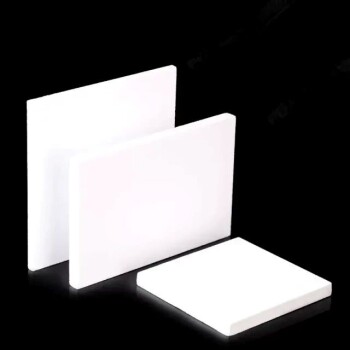
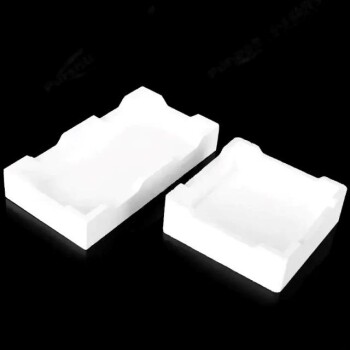
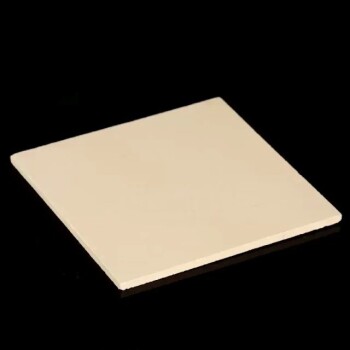
High-purity alumina plates serve as electrical insulators and chemical buffers. In electric field-assisted treatment of Strontium Titanate, these plates are positioned between the electrodes and the sample to function as a current blocking layer. By preventing the flow of free charges through the specimen, they eliminate Joule heating, allowing researchers to isolate and observe the pure effects of the electric field on microstructural evolution and ionic migration.
Core Takeaway: The primary function of alumina plates is to decouple electrical effects from thermal effects by blocking current flow, thereby ensuring that observed material changes are caused by the electric field itself rather than unintended heat generation.
Decoupling Electrical and Thermal Effects
Elimination of Joule Heating
The most critical role of the alumina plate is to act as a dielectric barrier that stops electrical current from passing through the Strontium Titanate sample. Without this layer, the resistance of the sample would generate internal heat—known as Joule heating—which would mask the specific influence of the electric field.
Isolating Microstructural Evolution
By removing thermal interference, researchers can precisely study how an electric field drives ionic migration and grain boundary movement. This isolation is essential for determining whether changes in the material's microstructure are a result of electromigration or simply a secondary effect of high temperatures.
Establishing a Controlled Electric Field
The plates allow the application of a high-voltage potential across the sample without the risk of a short circuit. This setup ensures that the electric field strength remains the primary variable being tested, providing a cleaner data set for theoretical modeling.
Structural and Chemical Stability
High-Temperature Refractory Support
Alumina is chosen for its exceptional refractory properties, maintaining its structural integrity at temperatures as high as 1700 K. It acts as a stable platform or fixture that supports the sample and ensures precise positioning within the furnace during high-temperature diffusion.
Prevention of Chemical Contamination
High-purity alumina is chemically inert and does not react with Strontium Titanate under standard experimental conditions. This ensures that the purity of the specimen is maintained and that no external elements leach into the sample during the thermal treatment process.
Maintaining Localized Environments
In some configurations, alumina components help maintain a specific micro-environment, such as a reducing atmosphere. They can be used to hold sacrificial powders or protective sheets that shield the Strontium Titanate from direct thermal shock or atmospheric degradation.
Understanding the Trade-offs
Risk of Solid-State Reactions
While alumina is generally stable, it can undergo solid-state reactions with Strontium Titanate at extreme temperatures, typically around 1450 °C. If these temperatures are reached, the alumina can contaminate the sample, altering its electrochemical properties and ruining the experiment.
The Need for Interfacial Barriers
To mitigate the risk of reaction at very high temperatures, researchers often introduce a layer of coarse zirconia powder between the alumina and the sample. Zirconia acts as a secondary chemical isolation membrane, providing a higher level of protection than alumina alone in aggressive thermal environments.
How to Apply This to Your Project
Recommendations Based on Experimental Goals
- If your primary focus is isolating field-driven migration: Ensure the alumina plates are of the highest purity (99.9%+) to prevent any leakage current that could cause localized heating.
- If your primary focus is treatment above 1400 °C: Integrate a thin layer of zirconia powder to act as a chemical buffer between the alumina fixture and your Strontium Titanate sample.
- If your primary focus is precise microstructural control: Use alumina fixtures to apply a stable, light pre-pressure to ensure consistent contact interfaces throughout the heating cycle.
Using high-purity alumina plates correctly transforms a standard thermal process into a precision tool for isolating the complex interactions between electricity and matter.
Summary Table:
| Function | Description | Key Experimental Benefit |
|---|---|---|
| Electrical Insulation | Acts as a dielectric current blocking layer | Eliminates Joule heating to isolate pure electric field effects |
| Refractory Support | Maintains structural integrity up to 1700 K | Provides a stable platform for high-temperature diffusion |
| Chemical Buffer | High-purity, chemically inert material | Prevents specimen contamination and maintains sample purity |
| Field Stabilization | Enables high-voltage potential across samples | Ensures electric field strength remains the primary test variable |
Elevate Your Materials Research with KINTEK Precision
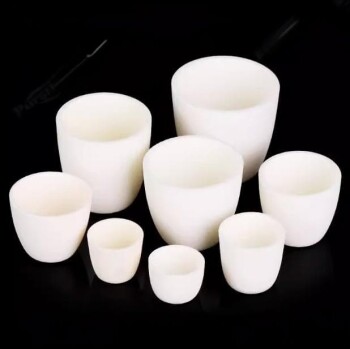
Achieving accurate results in field-assisted experiments requires high-purity materials and stable thermal environments. KINTEK specializes in providing the essential tools for advanced material science, from high-purity alumina ceramics, crucibles, and zirconia buffers to state-of-the-art high-temperature furnaces (muffle, tube, and vacuum).
Whether you are studying ionic migration or microstructural evolution, our comprehensive portfolio—including hydraulic presses for pellet preparation and cooling solutions—is designed to meet the rigorous demands of modern laboratories.
Ready to optimize your experimental setup? Contact our technical specialists today to discover how KINTEK’s laboratory equipment and consumables can enhance your research accuracy and efficiency.
References
- Jan‐Helmut Preusker, Wolfgang Rheinheimer. Impact of AC and DC Electric Fields on the Microstructure Evolution in Strontium Titanate. DOI: 10.1002/adem.202201848
This article is also based on technical information from Kintek Solution Knowledge Base .
Related Products
- High Temperature Wear-Resistant Alumina Al2O3 Plate for Engineering Advanced Fine Ceramics
- High Purity Alumina Granulated Powder for Engineering Advanced Fine Ceramics
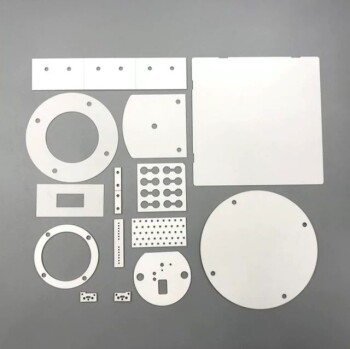
- Custom-Made Alumina Zirconia Special-Shaped Ceramic Plates for Engineering Advanced Fine Ceramics Processing
- Arc-Shaped Alumina Ceramic Crucible High Temperature Resistant for Engineering Advanced Fine Ceramics
- High Temperature Alumina (Al2O3) Furnace Tube for Engineering Advanced Fine Ceramics
People Also Ask
- What are the process advantages of selecting an alumina plate for CuO nanofilm synthesis? Achieve Superior Purity
- What function do alumina ceramic plates serve as supports in the preparation of molecular sieve membranes?
- How is alumina ceramic made? A Guide to Manufacturing Methods and Material Properties
- Why use high-purity alumina plates for sintering porous stainless steel? Ensure Purity & Precision
- What is the function of alumina setter plates for LATP? Protect Material Purity & Prevent Adhesion