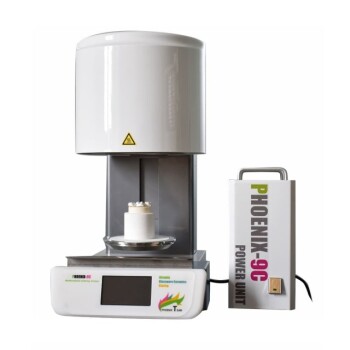
The primary function of high-temperature furnaces in High Purity Quartz (HPQ) processing is to subject the material to a uniform thermal environment of approximately 900°C, acting as the critical precursor to physical fracturing. This heating stage is not simply about changing the temperature; it is a mechanical strategy designed to weaken the crystal structure through thermal expansion prior to rapid cooling.
Core Takeaway The furnace acts as a catalyst for physical change, utilizing high heat to prepare quartz for "thermal shock." This process induces stress that fractures the particle structure, exposing deep-seated impurities that would otherwise remain inaccessible to chemical purification agents.
The Mechanics of Calcination-Quenching
To understand the furnace's role, one must look beyond the heat itself and focus on the structural changes it forces upon the quartz particle.
Uniform Thermal Energy Application
Furnaces, such as electric or tube variants, are employed to generate a stable, high-heat environment.
The critical requirement here is uniformity. Every particle must reach the target temperature of roughly 900°C to ensure the material expands consistently.
Inducing Thermal Expansion
At these elevated temperatures, the quartz particles undergo significant thermal expansion.
The furnace maintains this expanded state until the precise moment of processing. This potential energy is released during the subsequent step: rapid quenching in cold water.
The Thermal Shock Mechanism
The furnace is the "setup" mechanism for thermal shock.
By transitioning the quartz from the 900°C environment of the furnace immediately into cold water, the material experiences violent contraction. This rapid shift from expansion to contraction generates intense internal thermal stress.
Impact on Purification Efficiency
The ultimate goal of the furnace is not just to heat the rock, but to facilitate the removal of contaminants during later processing stages.
Creating Micro-Cracks
The thermal stress generated by the calcination-quenching cycle fractures the quartz physically.
This results in the formation of a dense network of micro-cracks throughout the quartz particles. These fissures are essential for breaking down the rigid crystal integrity.
Exposing Internal Impurities
High-grade quartz often contains impurities trapped deep within the particle core.
The micro-cracks effectively "open up" the particle, creating channels that lead directly to these internal inclusions. Without the furnace heating step, these impurities would remain sealed inside the quartz.
Maximizing Acid Leaching Efficiency
The efficiency of the subsequent acid leaching process is directly tied to the furnace's performance.
Because the micro-cracks increase the surface area and expose internal contaminants, leaching acids can penetrate deeply into the particle. This ensures a far more thorough removal of impurities than would be possible with solid, uncracked particles.
Critical Process Variables and Risks
While the concept is straightforward, the execution relies on precise control of the thermal environment.
The Necessity of Uniformity
If the furnace fails to provide uniform thermal energy, the quartz will not expand evenly.
Inconsistent heating leads to "dead zones" where particles do not crack sufficiently during quenching. These uncracked particles will retain their impurities, compromising the purity of the final batch.
Temperature Precision
The specific target of approximately 900°C is not arbitrary.
Significant deviations from this temperature can alter the effectiveness of the thermal shock. Too low, and the stress fracture is insufficient; too high, and you risk altering the crystal phase in undesirable ways or wasting energy.
Optimizing the Process for Purity
To extract the maximum value from your high-temperature furnace operations, consider these strategic focal points.
- If your primary focus is Maximizing Purity: Ensure the furnace maintains strict temperature uniformity to guarantee that micro-cracks propagate through 100% of the material volume.
- If your primary focus is Process Efficiency: Verify that the transfer time between the furnace and the quenching medium is minimized to prevent premature cooling.
The furnace is the key that unlocks the internal structure of quartz, transforming a hard mineral into a permeable material ready for deep purification.
Summary Table:
| Process Stage | Furnace Temperature | Key Mechanism | Resulting Benefit |
|---|---|---|---|
| Calcination | Approx. 900°C | Uniform Thermal Expansion | Weakens crystal structure for fracturing |
| Quenching | Ambient/Cold | Rapid Thermal Contraction | Generates dense network of micro-cracks |
| Leaching Prep | N/A | Channel Creation | Exposes deep-seated internal impurities |
| Purification | N/A | Increased Surface Area | Maximizes acid penetration & contaminant removal |
Elevate Your HPQ Purity with KINTEK Solutions
Precision heating is the foundation of high-purity quartz production. At KINTEK, we specialize in high-performance laboratory equipment designed for the most demanding thermal processes. Our advanced tube furnaces, muffle furnaces, and rotary furnaces provide the industry-leading temperature uniformity required to ensure consistent thermal shock and maximum impurity exposure.
From crushing and milling systems to high-temperature high-pressure reactors and PTFE consumables, KINTEK offers a complete ecosystem of tools to support your material science research and industrial production.
Ready to optimize your calcination-quenching workflow? Contact our technical experts today to find the perfect furnace or laboratory solution tailored to your purity goals.
References
- Hailin Long, Zhengqi Guo. Advanced Processing Techniques and Impurity Management for High-Purity Quartz in Diverse Industrial Applications. DOI: 10.3390/min14060571
This article is also based on technical information from Kintek Solution Knowledge Base .
Related Products
- 1200℃ Split Tube Furnace with Quartz Tube Laboratory Tubular Furnace
- Laboratory Rapid Thermal Processing (RTP) Quartz Tube Furnace
- High Temperature Muffle Oven Furnace for Laboratory Debinding and Pre Sintering
- Vertical High Temperature Graphite Vacuum Graphitization Furnace
- Electric Rotary Kiln Pyrolysis Furnace Plant Machine Calciner Small Rotary Kiln Rotating Furnace
People Also Ask
- What functions does a laboratory high-temperature tube furnace perform? Master Catalyst Synthesis & Carbonization
- What roles does a high-temperature tube furnace play in the synthesis of N/O co-doped carbon? Master Precise Doping
- How does a high-temperature tube furnace influence 253MA steel? Master Microstructure & High-Temp Creep Resistance
- What are the primary applications of muffle and tube furnaces in photocatalysts? Optimize Metal Loading & Support Synthesis
- Why is a high-temperature tube furnace required for the production of biochar from tobacco straw? Expert Pyrolysis Guide