Speed control serves as the critical regulator of the leaching environment, ensuring a continuous power cycle that maintains thorough contact between the solid electronic waste and the chemical solution. By precisely managing agitation, operators eliminate mass transfer resistance, which is essential for sustaining the kinetic rate of the gold recovery process.
The core objective of speed control is to achieve a uniform reaction environment that maximizes gold recovery while minimizing energy expenditure. Effective agitation prevents solid settling and ensures constant interaction between reactants without unnecessary power consumption.
The Mechanics of Efficient Leaching
Ensuring Thorough Contact
The primary function of the shaker or stirrer is to keep solid electronic waste particles in suspension.
This facilitates constant interaction between the thiourea leaching solution, oxidants (such as iron ions), and the gold-bearing solids. Without this continuous contact, the chemical reaction stalls.
Eliminating Mass Transfer Resistance
In a static or poorly agitated vessel, a stagnant layer of fluid can surround solid particles.
Speed control drives the agitation necessary to break this layer and eliminate mass transfer resistance. This ensures that fresh leaching agents constantly reach the surface of the gold, maintaining the kinetic rate of the reaction.
Creating a Uniform Environment
Variations in concentration or temperature within the vessel can lead to inconsistent results.
Controlled stirring generates a homogeneous mixture. This ensures that the chemical conditions are uniform throughout the tank, preventing "dead zones" where leaching efficiency drops.
Understanding the Trade-offs: Energy vs. Agitation
The Myth of "Faster is Better"
It is a common misconception that maximizing agitation speed always leads to faster leaching.
Beyond a certain point, increasing speed yields diminishing returns on recovery rates. Excessive agitation wastes energy and can cause unnecessary wear on equipment without improving the chemical process.
The Efficiency Sweet Spot
Efficiency lies in finding the minimum speed required to suspend solids.
Primary data suggests that maintaining a low-speed agitation, typically around 150 rpm, is often sufficient. This specific range meets high-efficiency leaching requirements while significantly reducing energy consumption compared to high-speed operations.
Optimizing Your Process Parameters
To achieve the best results, you must calibrate your equipment based on your specific operational priorities.
- If your primary focus is reaction kinetics: Ensure the speed is sufficient to completely eliminate mass transfer resistance, guaranteeing that the solution and oxidants have unrestricted access to the waste particles.
- If your primary focus is operational cost: Target a lower agitation speed (approx. 150 rpm) that sustains particle suspension, as this maintains high efficiency while minimizing energy draw.
Precise speed control transforms agitation from a simple mechanical step into a strategic lever for cost-effective gold recovery.
Summary Table:
| Feature | Function in Gold Leaching | Impact on Efficiency |
|---|---|---|
| Particle Suspension | Keeps solid e-waste in constant motion | Ensures continuous contact with thiourea solution |
| Mass Transfer | Breaks stagnant fluid layers around particles | Maintains the kinetic rate of the chemical reaction |
| Homogenization | Eliminates temperature/concentration gradients | Prevents "dead zones" for uniform gold recovery |
| Speed Optimization | Maintains sweet spot (e.g., ~150 rpm) | Minimizes energy consumption and equipment wear |
Maximize Your Gold Recovery Efficiency with KINTEK
Ready to optimize your e-waste recycling process? KINTEK specializes in high-performance laboratory equipment designed for precision and durability. From advanced shakers and homogenizers for perfect agitation to crushing and milling systems for material preparation, we provide the tools necessary to eliminate mass transfer resistance and reduce operational costs.
Whether you are refining precious metals or conducting battery research, our comprehensive portfolio—including high-temperature furnaces, hydraulic presses, and specialized reactors—is engineered to meet the rigorous demands of your lab.
Don't let energy waste stall your productivity. Contact KINTEK today to find the perfect equipment solution tailored to your specific leaching and processing needs!
References
- Daniel A. Ray, Sébastien Farnaud. Thiourea Leaching: An Update on a Sustainable Approach for Gold Recovery from E-waste. DOI: 10.1007/s40831-022-00499-8
This article is also based on technical information from Kintek Solution Knowledge Base .
Related Products
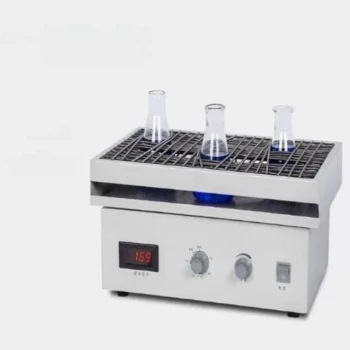
- Laboratory Multifunctional Small Speed-Adjustable Horizontal Mechanical Shaker for Lab
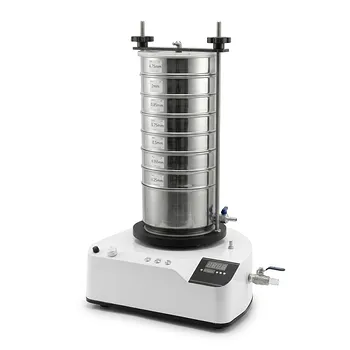
- Laboratory Vibratory Sieve Shaker Machine for Dry and Wet Three-Dimensional Sieving
- Laboratory Oscillating Orbital Shaker
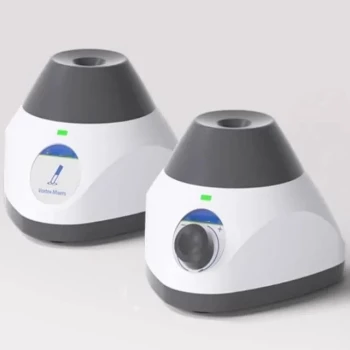
- Laboratory Vortex Mixer Orbital Shaker Multifunctional Rotation Oscillation Mixer
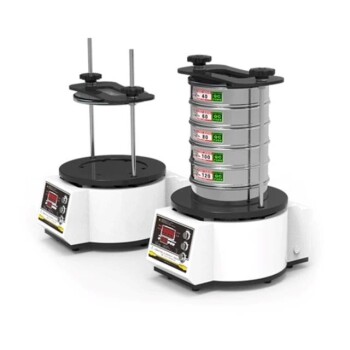
- Laboratory Wet Three-Dimensional Vibratory Sieve Shaker Machine
People Also Ask
- How do static culture and shaking culture affect the morphology of BC? Optimize Lab Shaker Results
- What is the role of a laboratory shaker in silane sol preparation? Master Uniform Aramid Fabric Coating
- Why is a laboratory shaker required for continuous 24-hour catalyst treatment? Achieve Deep Uniform Impregnation
- What is the function of a laboratory shaker in evaluating Fe-C@C nanoparticles? Optimize Methylene Blue Adsorption
- How do laboratory shakers or stirrers influence the efficiency of hydrogen production during dark fermentation?