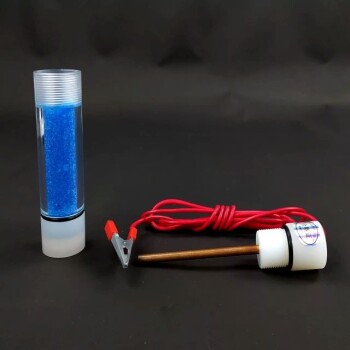
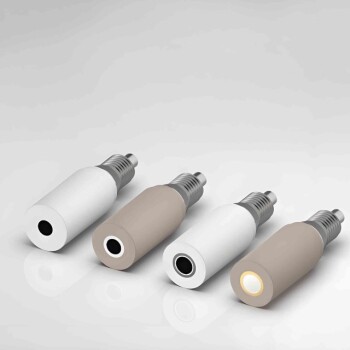
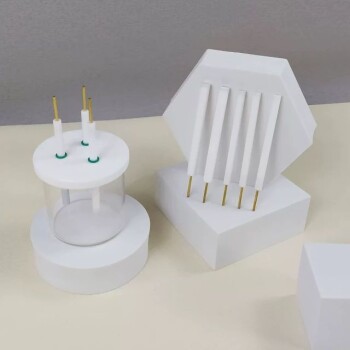
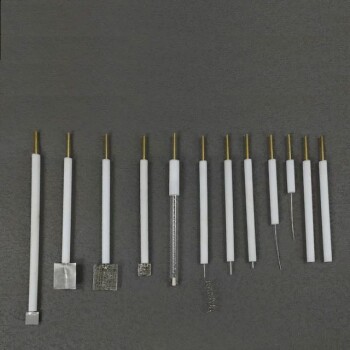
The PTFE cone functions as the critical structural and isolation interface within the electrode assembly. It serves strictly as a carrier for the Ag/AgCl wire while simultaneously creating a mechanical high-pressure seal that isolates the internal reference solution from the harsh external environment.
The integrity of an External Pressure Balanced Reference Electrode (EPBRE) relies entirely on this component's ability to maintain a seal during phase changes. By preventing the leakage or contamination of the KCl solution, the PTFE cone ensures the electrochemical potential remains stable even during subcritical and supercritical transitions.
The Mechanics of the Sealing Interface
Creating a High-Pressure Barrier
The primary role of the PTFE cone is to establish a robust high-pressure sealing interface.
The cone is mechanically pressed into a matching conical hole within the electrode holder. This interference fit is essential for maintaining integrity when the system is subjected to the high pressures associated with EPBRE applications.
Preventing Contamination and Leakage
The seal created by the cone acts as a two-way barrier.
First, it prevents the internal KCl reference solution from leaking out of the assembly. Second, and equally important, it stops external fluids from infiltrating the electrode, which would contaminate the solution and destroy the reference baseline.
Electrical and Structural Roles
Carrier for the Sensing Element
Beyond sealing, the cone acts as the physical carrier for the Ag/AgCl wire.
It anchors the sensing wire within the assembly, ensuring it remains in the correct position relative to the reference solution and the electrode body throughout the operation.
Electrical Insulation
The material choice of PTFE is deliberate for its dielectric properties.
The cone provides electrical insulation between the conductive sensing wire and the metallic electrode holder. This ensures that the potential measured is strictly from the electrochemical reaction and not influenced by shorts or leakage currents through the housing.
Understanding the Trade-offs
Reliance on Mechanical Fit
The effectiveness of the EPBRE is heavily dependent on the precision of the mechanical pressing of the cone.
If the cone is not pressed with sufficient force or precision into the holder, the seal will fail. This failure point is critical because even a microscopic breach can lead to potential drift during pressure transitions.
Sensitivity to Transitions
The reference highlights the cone's role during subcritical and supercritical transitions.
These transitions often involve rapid changes in density and pressure. The trade-off in this design is that the PTFE cone must be rigid enough to hold the wire but compliant enough to maintain the seal under these fluctuating conditions without deforming permanently.
Ensuring Measurement Accuracy
To ensure your EPBRE functions correctly, evaluate the cone's performance based on your specific operational needs:
- If your primary focus is Potential Stability: Ensure the cone is seated correctly to prevent contamination of the KCl solution, which is the primary cause of drift during phase transitions.
- If your primary focus is Mechanical Longevity: Verify that the "mechanical pressing" mechanism has not compromised the structural integrity of the PTFE carrier over repeated cycles.
The PTFE cone is the lynchpin of the EPBRE, converting a simple wire assembly into a pressure-resilient reference tool.
Summary Table:
| Feature | Primary Function of PTFE Cone |
|---|---|
| Mechanical Seal | Creates a high-pressure barrier to prevent KCl leakage and external contamination. |
| Structural Support | Acts as a robust carrier and anchor for the Ag/AgCl sensing wire. |
| Electrical Isolation | Provides dielectric insulation between the wire and the metallic electrode holder. |
| Phase Stability | Maintains seal integrity during subcritical and supercritical transitions. |
Elevate Your Electrochemical Research with KINTEK
Precise measurements in harsh environments demand superior structural integrity. KINTEK specializes in advanced laboratory equipment, offering high-performance electrolytic cells, electrodes, and high-pressure reactors designed to withstand subcritical and supercritical conditions.
From durable PTFE products and ceramics to sophisticated battery research tools and high-temperature furnaces, our comprehensive portfolio is engineered for precision and longevity. Don't let seal failures or potential drift compromise your data.
Discover the KINTEK difference today—Contact our specialists now to find the perfect solution for your lab.
References
- Sen Lin, Can Cui. A novel experimental device for electrochemical measurements in supercritical fluids up to 700 °C/1000 bar and its application in the corrosion study of superalloy Inconel 740H. DOI: 10.1039/c7ra04054g
This article is also based on technical information from Kintek Solution Knowledge Base .
Related Products
- Reference Electrode Calomel Silver Chloride Mercury Sulfate for Laboratory Use
- Copper Sulfate Reference Electrode for Laboratory Use
- RRDE rotating disk (ring disk) electrode / compatible with PINE, Japanese ALS, Swiss Metrohm glassy carbon platinum
- Rotating Platinum Disk Electrode for Electrochemical Applications
- Laboratory CVD Boron Doped Diamond Materials
People Also Ask
- What is the function of a reference electrode? Master Precision in Three-Electrode Reactor Reconstruction
- What is the recommended maintenance for the filling solution of a reference electrode? A Guide to Stable & Accurate Readings
- Which electrode is used as a ground reference? Master the Key to Accurate Electrochemical Measurements
- What is the reference electrode in potentiometry? The Key to Stable & Accurate Measurements
- Which electrode is used as a reference? A Guide to Accurate Electrochemical Measurements