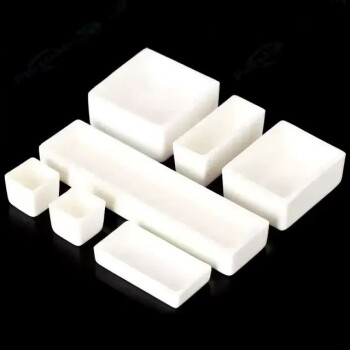
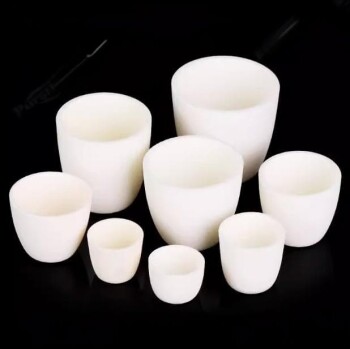
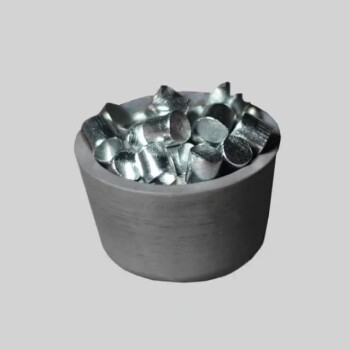
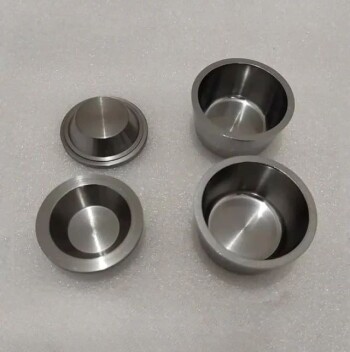
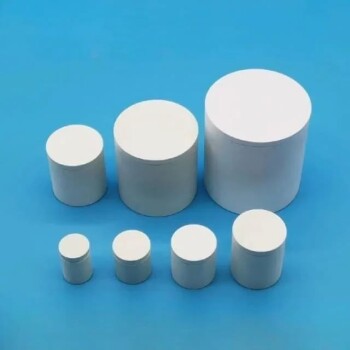
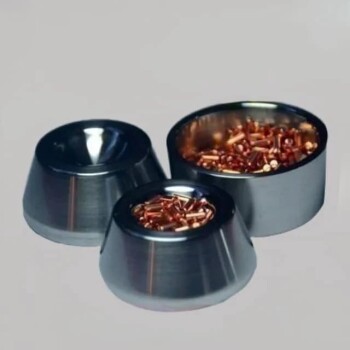
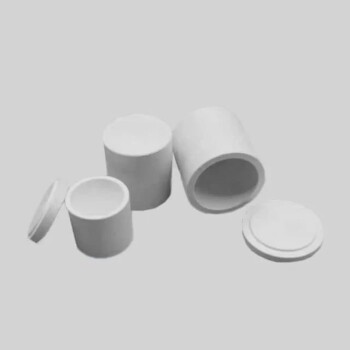
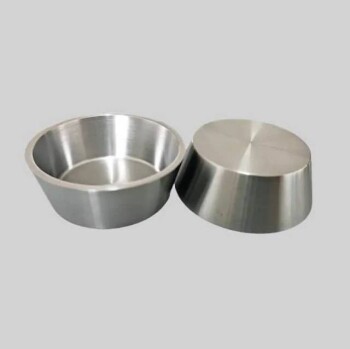
The silicon melt crucible functions as the primary reservoir and reaction initiator for the coating process. Located at the base of the reaction environment, it facilitates the creation of airtight Silicon Carbide (SiC) coatings by simultaneously supplying molten silicon for direct contact reactions and generating silicon vapor for gas-phase infiltration.
Core Takeaway The crucible is not merely a container; it is the active source of the "dual silicon supply" mechanism. By enabling both liquid-solid and gas-solid reactions simultaneously, it ensures the formation of a dense, continuous, and low-permeability protective layer that is essential for airtightness.
The Dual-Mechanism of Silicon Supply
The effectiveness of the crucible lies in its ability to support two distinct physical states of silicon during the coating process. This dual supply is the technical driver behind high-quality SiC formation.
Direct Liquid-Solid Reaction
The crucible holds the silicon source until it reaches its melting point. Once molten, this silicon is available for direct reaction with the carbon on the substrate surface.
This liquid-phase contact promotes rapid wetting of the substrate. It creates a foundational bond between the carbon base and the developing silicon carbide layer.
Vapor Phase Generation
Beyond the liquid phase, the crucible facilitates the generation of silicon vapor within the hot zone.
This vapor is critical for reaching complex geometries and internal pores that molten silicon might not penetrate. The gas-solid reaction ensures that the coating is uniform, even on irregular surfaces.
Achieving Airtightness and Density
The ultimate goal of using a silicon melt crucible in this configuration is to produce a coating that is impermeable to air and fluids.
Creating Low-Permeability Layers
Airtightness requires a coating with near-zero porosity. The crucible's ability to maintain a steady supply of silicon ensures that the reaction does not starve.
This continuous supply allows the SiC layer to grow densely, filling voids that would otherwise result in leakage paths.
Ensuring Coating Continuity
For a coating to be airtight, it must be unbroken. The silicon melt crucible ensures the continuity of the coating formation process.
By stabilizing the source material, the crucible prevents interruptions in the silicon supply, which prevents the formation of cracks or gaps in the final protective shell.
Essential Material Characteristics and Trade-offs
While the function of the crucible is to hold silicon, the material of the crucible itself plays a critical role in the success or failure of the process.
Thermal Stability
The crucible must endure extreme thermal stress without deformation. Processing temperatures often exceed 1100°C to 1150°C.
If the crucible softens or fractures under this heat, it risks spilling the molten silicon or altering the geometry of the hot zone, leading to process failure.
Chemical Inertness and Purity
The crucible must resist corrosion, particularly in processes involving molten salts or high-temperature reactive agents.
Materials like alumina are often selected for their resistance to these aggressive environments. If the crucible material reacts with the melt, it can introduce contaminants, compromising the purity and mechanical properties of the SiC coating.
Making the Right Choice for Your Goal
To maximize the effectiveness of your silicon melt crucible, select your approach based on the specific constraints of your project.
- If your primary focus is coating density (Airtightness): Ensure the crucible design maximizes surface area for silicon vaporization to promote deep pore infiltration.
- If your primary focus is purity: Select crucible materials like high-grade alumina that are strictly chemically inert to your specific molten salt or silicon mixture.
- If your primary focus is process longevity: Prioritize crucible materials with exceptional thermal shock resistance to withstand repeated heating and cooling cycles without fracturing.
The crucible is the governor of your reaction kinetics; treat it as a precision component, not just a vessel.
Summary Table:
| Feature | Function in SiC Coating | Benefit to Final Product |
|---|---|---|
| Liquid-Solid Reaction | Provides molten silicon for direct substrate wetting | Ensures a strong foundational bond |
| Vapor Generation | Supplies silicon gas for deep pore infiltration | Achieves uniform coating on complex geometries |
| Reaction Kinetics | Acts as a steady reservoir to prevent supply starvation | Eliminates porosity for high airtightness |
| Material Purity | Resists chemical corrosion (e.g., Alumina) | Prevents contamination of the SiC layer |
Elevate Your SiC Coating Precision with KINTEK
Achieve unmatched density and airtightness in your coating processes with KINTEK’s premium laboratory solutions. As experts in high-temperature environments, we provide the specialized equipment necessary for advanced material research—from high-temperature furnaces (muffle, vacuum, and CVD) to high-purity ceramic crucibles and high-pressure reactors.
Whether you are refining semiconductor components or developing advanced aerospace materials, KINTEK offers the thermal stability and chemical purity your projects demand. Contact us today to optimize your lab's performance!
References
- S. L. Shikunov, В. Н. Курлов. Novel Method for Deposition of Gas-Tight SiC Coatings. DOI: 10.3390/coatings13020354
This article is also based on technical information from Kintek Solution Knowledge Base .
Related Products
- Engineering Advanced Fine Ceramics Alumina Al2O3 Crucible With Lid Cylindrical Laboratory Crucible
- High Purity Pure Graphite Crucible for Evaporation
- Engineering Advanced Fine Alumina Al2O3 Ceramic Crucible for Laboratory Muffle Furnace
- Arc-Shaped Alumina Ceramic Crucible High Temperature Resistant for Engineering Advanced Fine Ceramics
- Alumina Al2O3 Ceramic Crucible Semicircle Boat with Lid for Engineering Advanced Fine Ceramics
People Also Ask
- Why are high-purity alumina crucibles used for liquid lead corrosion experiments? Ensure Data Accuracy at 550°C
- Why are alumina crucibles and mother powder essential for LATP sintering? Optimize Your Solid Electrolyte Performance
- What is the primary purpose of using alumina crucibles for LLTO ceramics? Optimize Your High-Temperature Sintering
- Why Use Alumina Crucibles & Powder Burial for NaSICON? Ensure Phase Purity and Prevent Elemental Volatilization
- Why are alumina crucibles used as containers during the tungsten diffusion coating process on diamond surfaces?