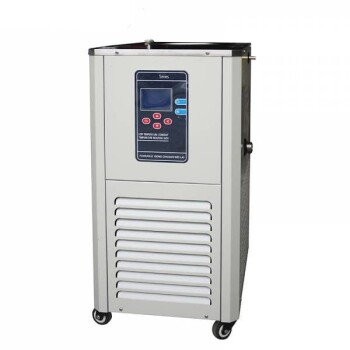
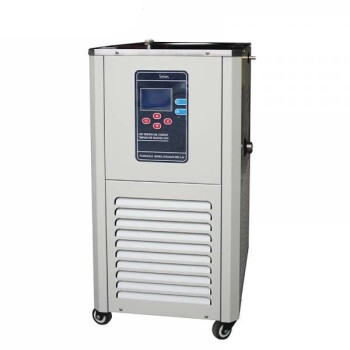
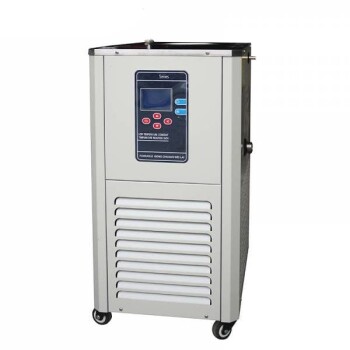
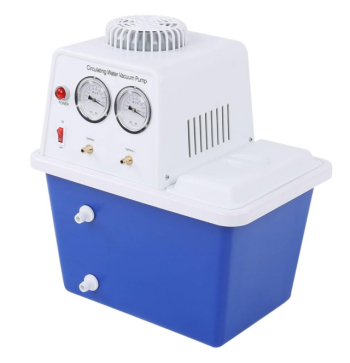
A circulating water cooling system serves as the critical safeguard for high-temperature heat treatment equipment. It is essential for managing the thermal load during the preparation of zirconium alloy strengthened layers, preventing hardware degradation during extended operational cycles.
In high-stakes environments like chemical heat treatment, this system is the difference between a successful experiment and equipment failure. It ensures reproducibility by stabilizing temperature control and preserving vacuum integrity over long durations.
Protecting Critical Infrastructure
Preserving Vacuum Seals
High-temperature environments place immense stress on equipment seals. A functioning cooling system rapidly removes heat from vacuum furnace seals.
Without this active cooling, seals degrade quickly. This leads to vacuum leaks, which compromise the entire treatment atmosphere and the integrity of the zirconium alloy layer.
Shielding Sensors and Walls
The system extends its protection to the furnace walls and critical sensor hardware.
These components are sensitive to thermal saturation. By maintaining them at safe operating temperatures, the system prevents physical warping and electronic drift.
Ensuring Experimental Consistency
The Challenge of Extended Durations
The preparation of zirconium alloy strengthened layers often requires extended chemical heat treatment processes, sometimes lasting up to 20 hours.
Passive cooling is insufficient for such durations. A circulating system ensures that the equipment can operate stably without overheating, even during these marathon sessions.
Guaranteeing Reproducibility
Scientific validity relies on the ability to repeat results. Overheating causes fluctuations in temperature control accuracy.
By preventing these fluctuations, the cooling system ensures that the experimental conditions remain constant. This guarantees the reproducibility of the strengthened layers from one batch to the next.
Common Risks and Trade-offs
The Cost of Cooling Failure
While adding a cooling system adds complexity, the trade-off of operating without one is unacceptable in high-temperature regimes.
If the cooling system underperforms, you risk vacuum seal failure. This is not merely a maintenance issue; it introduces contaminants that can ruin the chemical composition of the zirconium alloy surface.
Thermal Saturation
In the absence of active circulation, heat eventually saturates the equipment casing. This leads to a loss of containment and potentially permanent damage to the furnace structure.
Maximizing Success in Zirconium Alloy Preparation
To ensure high-quality strengthened layers, you must treat the cooling system as a primary process variable, not just an accessory.
- If your primary focus is Equipment Longevity: Ensure the cooling flow is directed specifically toward vacuum seals to prevent brittleness and leaks.
- If your primary focus is Experimental Precision: Monitor the cooling system's stability to maintain exact temperature control over the full 20-hour cycle.
Reliable cooling is the silent engine that transforms a volatile high-temperature process into a repeatable science.
Summary Table:
| Feature | Role in Zirconium Alloy Treatment | Benefit to Equipment |
|---|---|---|
| Vacuum Seal Protection | Prevents degradation during chemical heat treatment | Avoids atmospheric contamination and leaks |
| Thermal Management | Rapidly removes heat from furnace walls and sensors | Prevents physical warping and electronic sensor drift |
| Extended Cycle Stability | Sustains performance during 20+ hour processes | Enables marathon sessions without hardware failure |
| Temperature Precision | Eliminates fluctuations caused by thermal saturation | Guarantees reproducibility and layer consistency |
Elevate Your Lab's Performance with KINTEK Precision Solutions
Don't let thermal fatigue compromise your research integrity. KINTEK specializes in advanced laboratory equipment, including high-temperature furnaces (muffle, vacuum, and CVD) and high-performance cooling solutions like ULT freezers and chillers specifically designed to protect your critical infrastructure.
Whether you are preparing zirconium alloy strengthened layers or conducting complex chemical heat treatments, our comprehensive range of crushing systems, hydraulic presses, and high-temperature reactors ensures your laboratory operates with unmatched precision and longevity.
Ready to safeguard your experiments? Contact KINTEK experts today to find the perfect thermal management and equipment solutions for your facility!
References
- V. S. Trush. Effect of oxidation and nitriding on the properties of zirconium alloys. DOI: 10.15587/1729-4061.2017.97446
This article is also based on technical information from Kintek Solution Knowledge Base .
Related Products
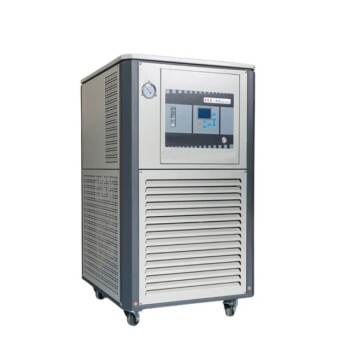
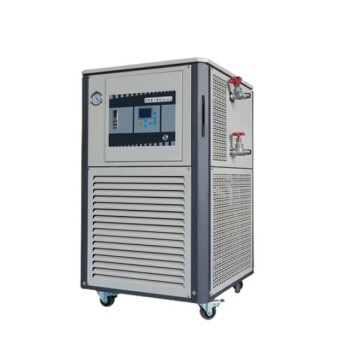
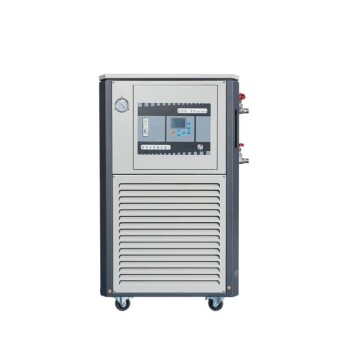
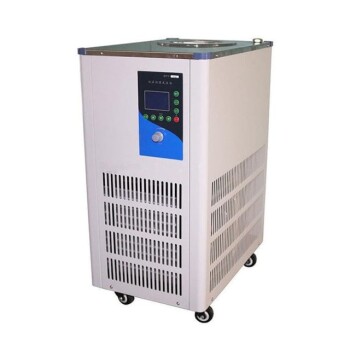
- 5L Heating Chilling Circulator Cooling Water Bath Circulator for High and Low Temperature Constant Temperature Reaction
- 20L Heating Chilling Circulator Cooling Water Bath Circulator for High and Low Temperature Constant Temperature Reaction
- 100L Heating Chilling Circulator Cooling Water Bath Circulator for High and Low Temperature Constant Temperature Reaction
- 10L Heating Chilling Circulator Cooling Water Bath Circulator for High and Low Temperature Constant Temperature Reaction
- High Temperature Constant Temperature Heating Circulator Water Bath Chiller Circulator for Reaction Bath
People Also Ask
- What is the necessity of a circulating water bath in chlorate production? Optimize Yield & Purity with Precision
- How does a constant temperature circulator support the leaching reaction of gold scrap? Optimize Gold Recovery Results
- How do constant temperature circulators impact weight-loss immersion tests? Ensure Precision in Corrosion Analysis
- Why is a circulating water chiller required for Prussian Blue nanoparticles? Ensure Stability & Batch Reproducibility
- What function does a circulating cooling chiller perform during the gas adsorption isotherm testing of nanoporous carbon?