The critical function of mechanical mixing is to achieve a uniform macroscopic dispersion of diamond particles within a metal matrix, specifically copper-silicon alloy powder. By physically integrating these materials before the composite is formed, you prevent the diamond particles from clustering together during the subsequent molding phase. This step is essential for creating a final product that exhibits consistent physical properties throughout its entire volume.
Mechanical mixing is the foundational process that transforms raw ingredients into a homogeneous composite, serving as the primary defense against particle agglomeration. Without this step, the material cannot achieve the isotropic thermal conductivity and dimensional stability required for high-performance applications.
The Mechanics of Dispersion
Achieving Macroscopic Uniformity
The primary objective of using grinding or mixing tools is to distribute the reinforcement phase—the diamond particles—evenly throughout the copper-silicon alloy powder.
This process ensures that the diamond is not concentrated in specific pockets but is spread consistently across the entire matrix.
Preventing Agglomeration
Diamond particles naturally tend to clump together during the molding phase if they are not properly separated beforehand.
Mechanical grinding disrupts these clusters early in the process. This physical separation is critical to maintaining the integrity of the composite structure.
Impact on Material Performance
Isotropic Thermal Conductivity
When diamond particles are uniformly dispersed, the final composite conducts heat equally well in all directions.
This property, known as isotropy, is vital for efficient thermal management. It prevents the formation of "hot spots" that occur when conductive particles are unevenly distributed.
Stability of Thermal Expansion
A well-mixed composite maintains a stable thermal expansion coefficient throughout the material.
This stability ensures that the composite expands and contracts predictably under temperature changes. It reduces the risk of internal stresses that could lead to structural failure.
Consistent Performance Stability
The overall reliability of the final product is directly tied to the homogeneity of the initial powder mix.
Mechanical mixing eliminates variability in the material's structure. This results in performance stability that can be trusted across the lifespan of the component.
Common Pitfalls to Avoid
The Consequence of Inadequate Mixing
Skipping or under-utilizing mechanical grinding leads to localized agglomeration of diamond particles.
When particles cluster, the material loses its isotropic nature. This results in unpredictable thermal behavior and compromised structural integrity.
Ignoring the Matrix Context
It is not enough to simply add diamond to the alloy; the mixing must address the specific interaction with the copper-silicon powder.
Failing to achieve dispersion within this specific alloy matrix undermines the stability of the reinforcement phase, rendering the composite less effective.
Making the Right Choice for Your Goal
To maximize the potential of your diamond-metal composite, align your processing steps with your specific performance requirements.
- If your primary focus is thermal efficiency: Prioritize rigorous mechanical mixing to ensure isotropic thermal conductivity, preventing heat localization.
- If your primary focus is dimensional precision: Ensure thorough grinding to achieve a stable thermal expansion coefficient, which is critical for maintaining shape under thermal stress.
The rigor of your pre-formation mixing process dictates the macroscopic stability and ultimate success of the composite material.
Summary Table:
| Feature | Impact of Proper Mechanical Mixing | Consequence of Inadequate Mixing |
|---|---|---|
| Particle Dispersion | Uniform macroscopic distribution; no clustering | Localized agglomeration and diamond pockets |
| Thermal Conductivity | Isotropic (consistent in all directions) | Unpredictable behavior and "hot spot" formation |
| Thermal Expansion | Stable and predictable coefficient | Internal stresses and structural failure risk |
| Material Integrity | Consistent performance and high reliability | Variable performance and compromised stability |
Elevate Your Material Science with KINTEK Precision
Achieving the perfect diamond-metal composite requires more than just raw materials; it demands the right equipment for precision processing. At KINTEK, we specialize in high-performance crushing and milling systems, shakers, and high-pressure reactors designed to ensure the homogeneous dispersion of reinforcements in your metal matrix.
Whether you are developing heat sinks for thermal management or structural components requiring dimensional stability, our comprehensive range of laboratory equipment and consumables—including planetary ball mills, ceramics, and hydraulic presses—is engineered to prevent particle agglomeration and maximize material performance.
Ready to optimize your composite production? Contact our technical experts today to discover how KINTEK's specialized tools can bring consistency and excellence to your laboratory workflows.
Related Products
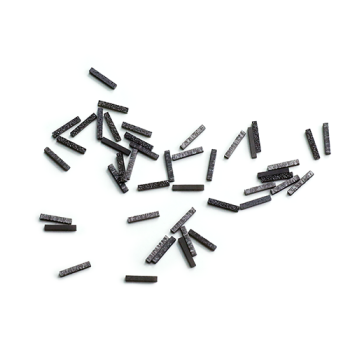
- CVD Diamond Dressing Tools for Precision Applications
- Laboratory Ball Mill Jar Mill with Metal Alloy Grinding Jar and Balls
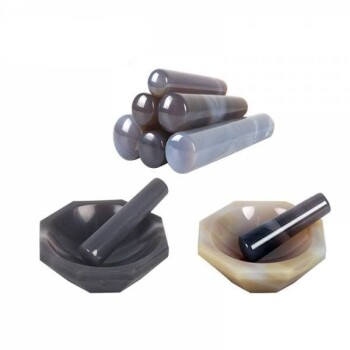
- Nature Agate Mortar and Pestle for Grinding and Mixing
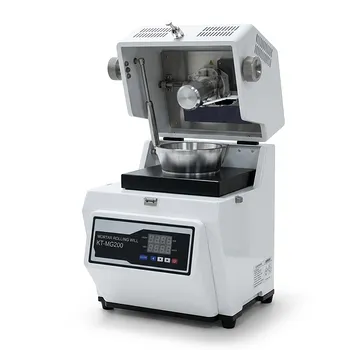
- Laboratory Grinding Mill Mortar Grinder for Sample Preparation
- Mini Planetary Ball Mill Machine for Laboratory Milling
People Also Ask
- How do you identify a CVD diamond? The Definitive Guide to Lab-Grown Diamond Verification
- What is chemical vapor deposition of diamond? Grow High-Purity Diamonds Atom-by-Atom
- How do CVD diamonds grow? A Step-by-Step Guide to Lab-Grown Diamond Creation
- What are the raw materials for CVD diamonds? A seed, a gas, and the science of crystal growth.
- What is CVD diamond? The Ultimate Guide to Lab-Grown Diamonds and Their Uses