Knowledge What is the necessity of high-shear emulsifiers in silver nanoparticle coatings? Achieve Perfect Dispersion Today
Author avatar

Tech Team · Kintek Solution

Updated 2 days ago

What is the necessity of high-shear emulsifiers in silver nanoparticle coatings? Achieve Perfect Dispersion Today


The necessity of high-shear emulsifiers or precision stirrers lies in their ability to generate sufficient mechanical energy to overcome the strong attractive forces between nanoparticles. Without this intense energy input, silver nanoparticles will naturally clump together rather than dispersing evenly, compromising the coating's effectiveness.

Core Takeaway Simple mixing is insufficient for nanotechnology applications because it cannot break the Van der Waals forces that cause nanoparticles to agglomerate. High-shear processing is the only reliable method to achieve the molecular-level distribution required for a coating to provide comprehensive, consistent pathogen protection.

The Physics of Dispersion

Overcoming Van der Waals Forces

Silver nanoparticles possess a strong natural tendency to attract one another due to Van der Waals forces.

These inter-particle forces pull individual nanoparticles into larger clusters or "agglomerates."

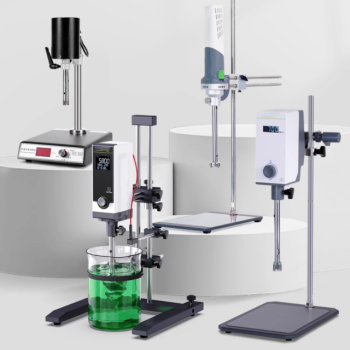
High-shear emulsifiers use high-speed rotation to introduce mechanical energy that exceeds these attractive forces, physically pulling the particles apart.

Achieving Molecular-Level Homogeneity

The goal of the blending process is to move beyond simple mixing to true dispersion.

Precision stirrers ensure that the silver is distributed at a molecular or micron-level throughout the polymer matrix.

This transforms a heterogeneous mixture of polymer and metal clumps into a uniform composite material.

Impact on Coating Performance

Comprehensive Pathogen Defense

For a silver nanoparticle coating to be effective, the active antimicrobial agents must be present everywhere.

If particles agglomerate, large microscopic areas of the coating remain unprotected, leaving gaps where pathogens can survive.

Uniform dispersion ensures the final coating delivers comprehensive pathogen-killing capabilities at the microscopic scale.

Consistent Physicochemical Properties

Beyond antimicrobial activity, the physical integrity of the coating relies on how well the filler connects with the matrix.

As noted in comparative studies with similar nanomaterials, high-shear homogenization creates turbulence that ordinary stirring cannot replicate.

This results in consistent physicochemical properties and anti-fouling effects across the entire surface area of the coating, preventing weak spots or structural inconsistencies.

Common Pitfalls to Avoid

The Illusion of Mixing with Standard Stirrers

A common mistake is assuming that if a solution looks mixed to the naked eye, it is dispersed at the nanoscale.

Ordinary stirring often lacks the shear force required to break down microscopic agglomerates.

This leads to a coating that appears uniform visually but fails functionally due to poor particle distribution.

Inconsistent Surface Protection

When low-energy mixing methods are used, the concentration of silver nanoparticles will vary across the coated surface.

This results in "hot spots" with too much silver and "dead zones" with none.

To guarantee that the coating performs reliably in real-world applications, high-shear processing is not optional—it is a critical quality control requirement.

Making the Right Choice for Your Goal

To ensure your silver nanoparticle polymer composite performs as intended, align your mixing strategy with your performance metrics:

  • If your primary focus is Antimicrobial Efficacy: You must use high-shear processing to ensure silver covers every microscopic point of the surface, eliminating safe havens for pathogens.
  • If your primary focus is Coating Durability: You need the turbulence of precision stirring to ensure the polymer and nanoparticles form a structurally consistent matrix without weak points.

Ultimately, the mechanical energy applied during mixing is just as critical to the final product's success as the chemical composition of the nanoparticles themselves.

Summary Table:

Mixing Factor Standard Stirring High-Shear Emulsification
Energy Level Low mechanical input High mechanical energy
Particle State Leads to agglomeration Achieves molecular dispersion
Distribution Inconsistent (dead zones) Uniform (full surface coverage)
Functionality Weak antimicrobial efficacy Maximum pathogen protection
Coating Integrity Structural weak spots Consistent physicochemical properties

Elevate Your Material Science with KINTEK Precision Solutions

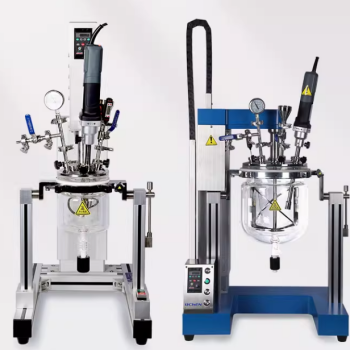
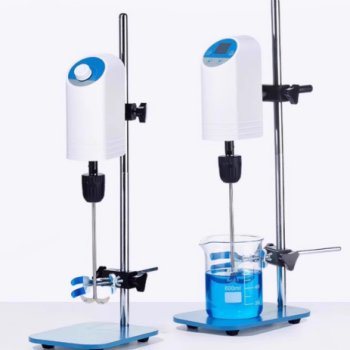
Don't let nanoparticle agglomeration compromise your coating's performance. KINTEK specializes in advanced laboratory equipment designed to help you achieve molecular-level homogeneity. Our high-performance high-shear emulsifiers, precision stirrers, homogenizers, and shakers provide the critical mechanical energy required to break Van der Waals forces and ensure consistent antimicrobial efficacy.

Whether you are developing silver nanoparticle composites or complex polymer matrices, KINTEK offers a comprehensive range of tools—from ultrasonic cleaners and cooling solutions to high-temperature furnaces and hydraulic presses—to support your research and production.

Ready to optimize your dispersion process and ensure comprehensive surface protection?
Contact KINTEK experts today to find the perfect equipment for your lab.

References

  1. Edith Dube, Grace Emily Okuthe. Silver Nanoparticle-Based Antimicrobial Coatings: Sustainable Strategies for Microbial Contamination Control. DOI: 10.3390/microbiolres16060110

This article is also based on technical information from Kintek Solution Knowledge Base .

Related Products

People Also Ask

Related Products

Lab Internal Rubber Mixer Rubber Kneader Machine for Mixing and Kneading

Lab Internal Rubber Mixer Rubber Kneader Machine for Mixing and Kneading

Lab internal rubber mixer is suitable for mixing, kneading and dispersing various chemical raw materials such as plastics, rubber, synthetic rubber, hot melt adhesive and various low-viscosity materials.

Laboratory Test Sieves and Sieving Machines

Laboratory Test Sieves and Sieving Machines

Precision lab test sieves & sieving machines for accurate particle analysis. Stainless steel, ISO-compliant, 20μm-125mm range. Request specs now!

Small Lab Rubber Calendering Machine

Small Lab Rubber Calendering Machine

Small lab rubber calendering machine is used for producing thin, continuous sheets of plastic or rubber materials. It is commonly employed in laboratories, small-scale production facilities, and prototyping environments to create films, coatings, and laminates with precise thickness and surface finish.

Laboratory Test Sieves and Vibratory Sieve Shaker Machine

Laboratory Test Sieves and Vibratory Sieve Shaker Machine

Efficiently process powders, granules, and small blocks with a high-frequency vibration sieve. Control vibration frequency, screen continuously or intermittently, and achieve accurate particle size determination, separation, and classification.

Rubber Vulcanizer Vulcanizing Machine Plate Vulcanizing Press for Lab

Rubber Vulcanizer Vulcanizing Machine Plate Vulcanizing Press for Lab

The Plate vulcanizing press is a kind of equipment used in the production of rubber products, mainly used for the vulcanization of rubber products. Vulcanization is a key step in rubber processing.

Laboratory Vibratory Sieve Shaker Machine for Dry and Wet Three-Dimensional Sieving

Laboratory Vibratory Sieve Shaker Machine for Dry and Wet Three-Dimensional Sieving

KT-VD200 can be used for sieving tasks of dry and wet samples in the laboratory. The screening quality is 20g-3kg. The product is designed with a unique mechanical structure and an electromagnetic vibrating body with a vibration frequency of 3000 times per minute.

Laboratory Vibratory Sieve Shaker Machine Slap Vibrating Sieve

Laboratory Vibratory Sieve Shaker Machine Slap Vibrating Sieve

KT-T200TAP is a slapping and oscillating sieving instrument for laboratory desktop use, with 300 rpm horizontal circular motion and 300 vertical slapping motions to simulate manual sieving to help sample particles pass through better.

Laboratory Sterilizer Lab Autoclave Herbal Powder Sterilization Machine for Plant

Laboratory Sterilizer Lab Autoclave Herbal Powder Sterilization Machine for Plant

The herbal powder sterilization autoclave machine for Chinese medicine uses saturated steam for effective sterilization. It utilizes the heat and penetrative properties of steam, achieves sterilization after heat preservation, and maintains a good drying effect with a dedicated drying system.

Automatic Laboratory Hydraulic Pellet Press Machine for Lab Use

Automatic Laboratory Hydraulic Pellet Press Machine for Lab Use

Experience efficient sample preparation with our Automatic Lab Press Machine. Ideal for material research, pharmacy, ceramics, and more. Features a compact size and hydraulic press functionality with heating plates. Available in various sizes.

Lab Blown Film Extrusion Three Layer Co-Extrusion Film Blowing Machine

Lab Blown Film Extrusion Three Layer Co-Extrusion Film Blowing Machine

Lab blown film extrusion is mainly used to detect the feasibility of film blowing of polymer materials and the colloid condition in the materials, as well as the dispersion of colored dispersions, controlled mixtures, and extrudates;

Precision Wire Saw Laboratory Cutting Machine with 800mm x 800mm Workbench for Diamond Single Wire Circular Small Cutting

Precision Wire Saw Laboratory Cutting Machine with 800mm x 800mm Workbench for Diamond Single Wire Circular Small Cutting

Diamond wire cutting machines are mainly used for precision cutting of ceramics, crystals, glass, metals, rocks, thermoelectric materials, infrared optical materials, composite materials, biomedical materials and other material analysis samples. Especially suitable for precision cutting of ultra-thin plates with thickness up to 0.2mm.

Single Punch Electric Tablet Press Machine Laboratory Powder Tablet Punching TDP Tablet Press

Single Punch Electric Tablet Press Machine Laboratory Powder Tablet Punching TDP Tablet Press

The single-punch electric tablet press is a laboratory-scale tablet press suitable for corporate laboratories in pharmaceutical, chemical, food, metallurgical and other industries.

Small Injection Molding Machine for Lab Use

Small Injection Molding Machine for Lab Use

The small injection molding machinehas fast and stable movements; good controllability and repeatability, super energy saving; the product can be automatically dropped and formed; the machine body is low, convenient for feeding, easy to maintain, and no height restrictions on the installation site.

Vibratory Sieve Shaker Machine Dry Three-Dimensional Vibrating Sieve

Vibratory Sieve Shaker Machine Dry Three-Dimensional Vibrating Sieve

The KT-V200 product focuses on solving common sieving tasks in the laboratory. It is suitable for sieving 20g-3kg dry samples.

Manual High Temperature Heated Hydraulic Press Machine with Heated Plates for Lab

Manual High Temperature Heated Hydraulic Press Machine with Heated Plates for Lab

The High Temperature Hot Press is a machine specifically designed for pressing, sintering and processing materials in a high temperature environment. It is capable of operating in the range of hundreds of degrees Celsius to thousands of degrees Celsius for a variety of high temperature process requirements.

Automatic High Temperature Heated Hydraulic Press Machine with Heated Plates for Lab

Automatic High Temperature Heated Hydraulic Press Machine with Heated Plates for Lab

The High Temperature Hot Press is a machine specifically designed for pressing, sintering and processing materials in a high temperature environment. It is capable of operating in the range of hundreds of degrees Celsius to thousands of degrees Celsius for a variety of high temperature process requirements.

Single Punch Electric Tablet Press Machine TDP Tablet Punching Machine

Single Punch Electric Tablet Press Machine TDP Tablet Punching Machine

The electric tablet punching machine is a laboratory equipment designed for pressing various granular and powdery raw materials into discs and other geometric shapes. It is commonly used in pharmaceutical, healthcare products, food, and other industries for small batch production and processing. The machine is compact, lightweight, and easy to operate, making it suitable for use in clinics, schools, laboratories, and research units.

Lab Plastic PVC Calender Stretch Film Casting Machine for Film Testing

Lab Plastic PVC Calender Stretch Film Casting Machine for Film Testing

The cast film machine is designed for the molding of polymer cast film products and has multiple processing functions such as casting, extrusion, stretching, and compounding.

Heated Hydraulic Press Machine with Integrated Manual Heated Plates for Lab Use

Heated Hydraulic Press Machine with Integrated Manual Heated Plates for Lab Use

Efficiently process heat-pressing samples with our Integrated Manual Heated Lab Press. With a heating range up to 500°C, it's perfect for various industries.

Electric Split Lab Cold Isostatic Press CIP Machine for Cold Isostatic Pressing

Electric Split Lab Cold Isostatic Press CIP Machine for Cold Isostatic Pressing

Split cold isostatic presses are capable of providing higher pressures, making them suitable for testing applications that require high pressure levels.


Leave Your Message