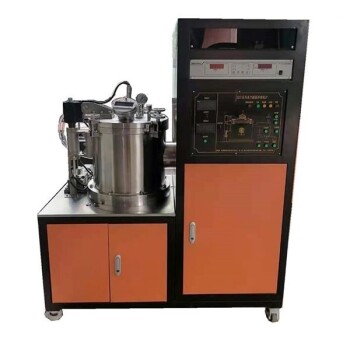
To melt Spheroidal Graphite (SG) Iron effectively, you generally require a power consumption range of 550 to 600 kWh per ton. This specific energy profile makes SG Iron moderately more efficient to process compared to many steel variants, serving as a critical baseline for calculating foundry operational costs.
While the standard requirement for melting SG Iron sits between 550 and 600 kWh per ton, this represents a notable efficiency advantage over steel alloys, which demand higher energy inputs to achieve the same molten state.
Benchmarking Energy Efficiency
To truly understand the operational efficiency of your foundry, you must compare the requirements of SG Iron against other common industrial metals.
The SG Iron Baseline
For SG Iron, the industry standard for power consumption is 550 to 600 kWh per ton.
This range accounts for typical variations in furnace efficiency and operating conditions. Keeping your consumption near the lower end of this bracket (550 kWh) indicates a highly optimized melting process.
Comparison with Mild and Stainless Steel
When shifting production to Mild Steel (MS) or Stainless Steel (SS), energy demands increase.
Melting these alloys typically requires 600 to 650 kWh per ton. This represents a potential energy increase of up to 18% compared to the most efficient SG Iron melting cycles.
Comparison with General Steel
General steel melting sits firmly at a higher consumption point.
The specific benchmark for melting steel is approximately 625 kWh per ton. This differential is significant when calculating the long-term electrical utility costs of a mixed-metal facility.
Understanding the Operational Trade-offs
While the raw numbers provide a target, achieving them requires understanding where energy is lost or gained.
The Cost of Material Flexibility
Foundries that switch frequently between SG Iron and Steel must account for the energy delta.
Running a campaign of Steel immediately following SG Iron will spike your energy consumption per ton by roughly 25 to 75 kWh. This necessitates distinct cost modeling for different product lines rather than using a flat facility-wide energy metric.
The Efficiency "Gap"
The range of 550 to 600 kWh for SG Iron implies a variable gap of 50 kWh per ton.
This variance is often dictated by the condition of your equipment and the continuity of your melt. Operating at the higher end (600 kWh) for SG Iron suggests your process is approaching the energy intensity of steel, signaling a need for process optimization.
Making the Right Choice for Your Goal
When planning your production schedule or evaluating furnace efficiency, use these figures to set realistic Key Performance Indicators (KPIs).
- If your primary focus is cost minimization: Target the 550 kWh per ton mark for SG Iron by optimizing furnace utilization and minimizing hold times.
- If your primary focus is multi-metal production: Budget for an average consumption closer to 625 kWh per ton to accommodate the higher energy demands of steel, MS, and SS cycles.
By adhering to the 550-600 kWh benchmark, you ensure your SG Iron production remains economically competitive against higher-energy alternatives.
Summary Table:
| Metal Type | Energy Consumption (kWh/Ton) | Efficiency Ranking |
|---|---|---|
| SG Iron | 550 - 600 | High (Most Efficient) |
| Mild Steel (MS) | 600 - 650 | Moderate |
| Stainless Steel (SS) | 600 - 650 | Moderate |
| General Steel | ~625 | Low |
Maximize Your Foundry Productivity with KINTEK Solutions
Is your energy consumption exceeding industry benchmarks? KINTEK specializes in advanced induction melting systems and laboratory-grade equipment designed to minimize energy loss and maximize output. Whether you are melting SG Iron or high-alloy steels, our precision induction melting furnaces and crushing systems provide the thermal control you need to stay under the 550 kWh/ton mark.
From high-performance crucibles and ceramics to specialized hydraulic presses and high-temperature furnaces, KINTEK delivers the tools to optimize your material science and production cycles.
Ready to lower your operational costs? Contact our engineering experts today to find the perfect equipment solution for your laboratory or foundry needs!
Related Products
- Non Consumable Vacuum Arc Induction Melting Furnace
- Vacuum Arc Induction Melting Furnace
- Vacuum Heat Treat Furnace and Levitation Induction Melting Furnace
- Lab-Scale Vacuum Induction Melting Furnace
- 2200 ℃ Tungsten Vacuum Heat Treat and Sintering Furnace
People Also Ask
- What are the advantages of induction melting furnace? Achieve Purity, Efficiency, and Safety
- What is the temperature range of the induction melting furnace? Find the Right Heat for Your Metals
- What is the use of induction melting furnace? Achieve Fast, Clean, and Precise Metal Melting
- How do specialized industrial-grade small melting furnaces address challenges in precision jewelry casting? Expert Guide
- How do vacuum induction or arc melting furnaces facilitate the synthesis of U-Al-C MAX phases? Precision Heat & Purity