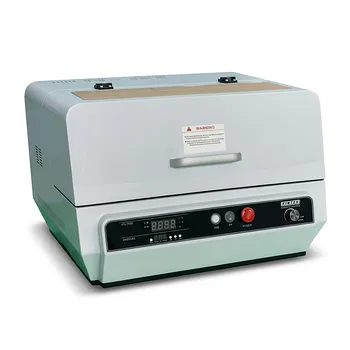
The primary function of a high-energy ball mill in lignocellulose pretreatment is the mechanical disruption of the biomass's resistant physical structure. By utilizing grinding media, such as hard alumina balls, the mill generates intense mechanical impact forces. These forces simultaneously pulverize the material to reduce particle size and dismantle the dense crystalline lattice of the cellulose.
Core Takeaway The ball mill acts as a physical activator that transforms recalcitrant biomass into a highly reactive substrate. By shattering the crystalline structure and maximizing surface area, it removes the physical barriers that otherwise prevent catalysts from effectively converting cellulose into value-added products.
The Mechanics of Disruption
Generating Impact Forces
The fundamental operation involves a rotating cylinder filled with grinding media, typically hard alumina balls. As the mill rotates, these balls collide with the lignocellulose, delivering high-energy mechanical impact.
Breaking the Crystalline Lattice
Lignocellulose possesses a dense, crystalline structure that naturally resists degradation. The ball mill's mechanical forces physically disrupt this lattice, effectively "decrystallizing" the cellulose. This reduction in crystallinity is critical because it weakens the material's structural integrity, making it susceptible to chemical breakdown.
Particle Size Reduction
Simultaneous to decrystallization, the milling process drastically reduces the biomass particle size. This transforms coarse fibers into fine powders, exposing the inner material that was previously locked away behind the cell wall structure.
Enhancing Reactivity and Conversion
Maximizing Specific Surface Area
The reduction in particle size leads to a significant increase in the specific surface area of the cellulose. This creates a vastly larger landscape for chemical interactions to occur.
Facilitating Catalyst Contact
In processes utilizing solid acid catalysts, this increased surface area is vital. The milling process ensures a high frequency of physical contact between the solid acid catalysts and the cellulose substrates. Without this physical proximity, the chemical reaction would be inefficient or impossible.
Driving High Conversion Rates
The combination of reduced crystallinity and increased surface contact allows for exceptional efficiency in downstream processing. When effectively pretreated via ball milling, cellulose conversion rates can reach approximately 93 percent.
Understanding the Process Requirements
Physical vs. Chemical Action
It is important to recognize that the ball mill provides a strictly physical pretreatment. It does not chemically alter the molecular composition of the cellulose but rather changes its physical state (amorphization) to prepare it for subsequent chemical or enzymatic reactions.
The Necessity of Intensity
Standard grinding is often insufficient for lignocellulose. The process specifically requires high-energy impacts to overcome the robust nature of the cell wall. Low-energy approaches may reduce particle size without sufficiently disrupting the crystalline structure required for high conversion yields.
Making the Right Choice for Your Goal
To maximize the efficiency of your lignocellulose conversion process, consider how the ball mill aligns with your specific downstream targets:
- If your primary focus is Chemical Conversion (Solid Acid Catalysts): Ensure your milling parameters are set to maximize specific surface area, as this directly correlates to the contact frequency between the solid catalyst and the substrate.
- If your primary focus is Biological Conversion (Enzymatic Hydrolysis): Prioritize the reduction of crystallinity, as this mechanical disruption is the key factor in allowing enzymes to penetrate the cell wall and access the cellulose.
The high-energy ball mill is not just a grinder; it is a prerequisite tool that unlocks the chemical potential of biomass by physically dismantling its natural defenses.
Summary Table:
| Pretreatment Factor | Mechanism of Action | Impact on Efficiency |
|---|---|---|
| Physical Structure | Mechanical disruption of crystalline lattice | Decrystallizes cellulose for easier chemical access |
| Particle Size | Reduction from coarse fibers to fine powders | Drastically increases specific surface area |
| Reactivity | Increased catalyst-substrate contact frequency | Drives conversion rates up to approximately 93% |
| Energy Level | High-energy mechanical impact forces | Overcomes the robust cell wall resistance of biomass |
Elevate Your Biomass Research with KINTEK Precision
Maximize your conversion yields and achieve superior pretreatment results with KINTEK’s high-performance crushing and milling systems. As a leading specialist in laboratory equipment, we provide the robust, high-energy ball mills and durable alumina grinding media essential for decrystallizing recalcitrant biomass and enhancing reactive surface area.
Whether you are focusing on chemical conversion with solid acid catalysts or biological enzymatic hydrolysis, our comprehensive portfolio—including milling systems, hydraulic presses, and high-temperature reactors—is designed to meet the rigorous demands of material science and renewable energy research.
Ready to unlock the chemical potential of your substrates? Contact KINTEK today to find the perfect equipment solution for your laboratory!
References
- Addisu Tamir Wasie, Ibrahim Nasser Ahmed. Heterogeneous catalytic conversion of lignocellulose: towards green and renewable chemicals. DOI: 10.1007/s42452-024-05680-0
This article is also based on technical information from Kintek Solution Knowledge Base .
Related Products
- High Energy Planetary Ball Mill Milling Machine for Laboratory
- High Energy Planetary Ball Mill for Laboratory Horizontal Tank Type Milling Machine
- High-Energy Omnidirectional Planetary Ball Mill Milling Machine for Laboratory
- High Energy Planetary Ball Mill Milling Machine for Laboratory
- High Energy Planetary Ball Mill Machine for Laboratory Horizontal Tank Type
People Also Ask
- How does a planetary ball mill provide mechanical activation for scandium recovery? Maximize Your Leaching Efficiency
- What role do planetary ball mills and zirconia media play in LLZT preparation? Optimize Your Solid Electrolyte Research
- What is the function of a planetary ball mill in the preparation of high-entropy rare earth silicate multi-phase ceramics?
- What is the purpose of using a planetary ball mill for cathode material regeneration? Achieve Atomic-Level Mixing
- What is the primary function of a planetary ball mill? Mastering SiC/Al Composite Mixing for Homogeneity