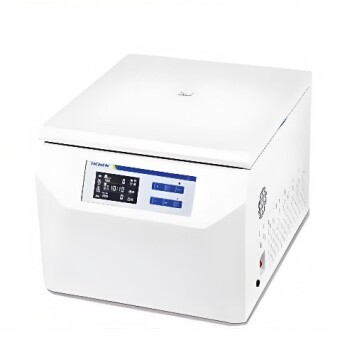
The primary function of a high-pressure reactor is to facilitate the hydrothermal pretreatment of bamboo shoots by creating a sealed, temperature-controlled environment. Specifically, it maintains temperatures between 150°C and 190°C to degrade hemicellulose within the bamboo tissue and convert it into xylooligosaccharides (XOS).
By strictly controlling temperature and pressure, this reactor ensures the efficient breakdown of bamboo tissue, maximizing the yield of valuable xylooligosaccharides while enabling effective solid-liquid separation.
The Mechanics of Hydrothermal Pretreatment
Creating the Reaction Environment
The reactor isolates the bamboo biomass in a sealed vessel, allowing it to reach temperatures that would be impossible under atmospheric conditions.
This sealed environment is essential for reaching the 150°C to 190°C range, which is the specific thermal window required to treat bamboo shoots effectively.
Degradation and Conversion
The core purpose of this thermal treatment is the chemical alteration of the biomass.
Under these high-pressure conditions, the reactor facilitates the degradation of hemicellulose, a structural component of the bamboo.
This process directly converts the degraded material into xylooligosaccharides (XOS), a valuable prebiotic component.
Critical Operational Capabilities
Withstanding Internal Pressure
The equipment is explicitly engineered to handle the significant internal pressures generated during the reaction.
This structural integrity ensures safety and stability while the internal liquid turns to high-pressure steam and interacts with the bamboo solids.
Ensuring Uniform Heat Transfer
Beyond simply heating the material, the reactor is designed to distribute heat evenly throughout the bamboo shoots.
Uniform heat transfer is critical for consistent degradation, ensuring that the final crude xylooligosaccharide solution is of high quality.
This consistency also plays a vital role in the downstream solid-liquid separation process, preventing localized under-processing.
Understanding the Operational Trade-offs
The Necessity of Precision
While the reactor enables extraction, it requires extremely precise operational control.
Operating outside the 150°C and 190°C window can lead to inefficient degradation (if too low) or potentially excessive breakdown of the target compounds (if too high).
Equipment Demands
The requirement to withstand high internal pressures necessitates robust, heavy-duty engineering.
This adds complexity to the equipment design compared to standard atmospheric extraction vessels, requiring stricter maintenance and safety protocols.
Optimizing the Extraction Process
To ensure the high-pressure reactor delivers the intended results, align your operational parameters with your specific goals:
- If your primary focus is maximizing product yield: strictly maintain temperature control within the 150°C–190°C range to ensure optimal conversion of hemicellulose to XOS without degradation.
- If your primary focus is process consistency: prioritize equipment designs that guarantee uniform heat transfer to facilitate effective solid-liquid separation later in the workflow.
The high-pressure reactor acts as the critical vessel that transforms raw bamboo structure into a recoverable, valuable chemical solution.
Summary Table:
| Feature | Specification/Function | Benefit |
|---|---|---|
| Temperature Range | 150°C to 190°C | Optimal degradation of hemicellulose |
| Pressure Stability | High-pressure containment | Allows heating above atmospheric boiling points |
| Core Process | Hydrothermal Pretreatment | Converts bamboo tissue into prebiotic XOS |
| Heat Transfer | Uniform distribution | Ensures consistent quality and solid-liquid separation |
Maximize Your Extraction Efficiency with KINTEK
Elevate your biomass research with KINTEK’s precision-engineered high-temperature high-pressure reactors and autoclaves. Specifically designed to handle rigorous hydrothermal pretreatment, our systems ensure the uniform heat transfer and pressure stability required for high-yield hemicellulose conversion.
Whether you are producing xylooligosaccharides or exploring advanced chemical synthesis, KINTEK provides the robust laboratory equipment—from crushing systems to solid-liquid separation tools—needed to streamline your workflow.
Ready to upgrade your lab? Contact our experts today to find the perfect reactor for your application!
References
- Junping Deng, Caoxing Huang. Evaluating the In Vitro and In Vivo Prebiotic Effects of Different Xylo-Oligosaccharides Obtained from Bamboo Shoots by Hydrothermal Pretreatment Combined with Endo-Xylanase Hydrolysis. DOI: 10.3390/ijms241713422
This article is also based on technical information from Kintek Solution Knowledge Base .
Related Products
- Customizable Laboratory High Temperature High Pressure Reactors for Diverse Scientific Applications
- Customizable High Pressure Reactors for Advanced Scientific and Industrial Applications
- Stainless High Pressure Autoclave Reactor Laboratory Pressure Reactor
- Mini SS High Pressure Autoclave Reactor for Laboratory Use
- High Pressure Laboratory Autoclave Reactor for Hydrothermal Synthesis
People Also Ask
- How do high-pressure and high-temperature reactors ensure the effective treatment of lignocellulosic wastewater in WAO?
- What equipment is required for high-pressure high-temperature reactions? Master Extreme Chemistry Safely
- How do you control high pressure in a reactor? A Guide to Safe & Stable Operation
- Why is argon better than nitrogen for inert atmosphere? Ensure Absolute Reactivity & Stability
- How does initial oxygen pressure affect the wet oxidation of pharmaceutical sludge? Master Your Oxidation Depth