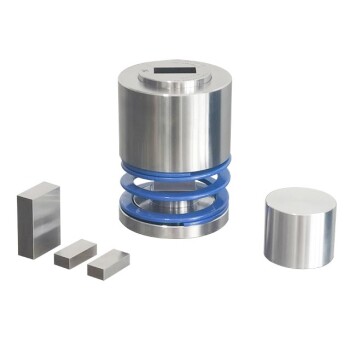
The primary function of a laboratory high-pressure reactor in this context is to rigorously simulate the extreme physical environment of a light water reactor. It acts as a specialized containment vessel designed to maintain stable high-temperature conditions of approximately 288°C and high-pressure conditions of 10.3 MPa, enabling the accurate testing of ferritic steels against stress corrosion cracking.
To evaluate material failure accurately, you cannot rely on standard ambient tests; the reactor is essential for establishing the precise, high-energy environment required to determine long-term susceptibility to environmental assisted cracking.
Simulating Light Water Reactor Environments
Replicating Extreme Physical Parameters
The validity of stress corrosion cracking research hinges on the environment. The reactor's main job is to achieve specific industrial parameters: 288°C and 10.3 MPa.
These figures are not arbitrary; they mirror the operating conditions of light water reactors.
Ensuring Environmental Stability
Reaching these conditions is only the first step; maintaining them is the second.
The reactor provides a stable environment, ensuring that the test medium does not fluctuate.
This stability is critical for isolating the variables that cause stress corrosion cracking in ferritic steels.
Evaluating Material Susceptibility
The Role of Containment
The reactor serves as the core containment vessel for the experiment.
It physically isolates the test medium and the material sample from external variables.
This allows researchers to safely manage the high pressures involved in the testing process.
Assessing Long-Term Performance
Stress corrosion cracking is often a slow process.
The reactor is designed to evaluate long-term environmental assisted cracking susceptibility.
By sustaining the simulated environment over time, it reveals how materials will degrade during actual service lives, rather than just instantaneous failure.
Critical Operational Requirements
The Necessity of Precision
The effectiveness of this research is entirely dependent on the reactor's ability to hold conditions constant.
If the temperature deviates from 288°C or pressure drops below 10.3 MPa, the simulation is compromised.
Therefore, the equipment must offer rigorous control to ensure the data reflects true industrial risks.
Making the Right Choice for Your Research
To ensure your stress corrosion cracking data is valid for industrial application, consider the following regarding your equipment:
- If your primary focus is mimicking light water reactors: Ensure your reactor is rated to sustain a stable 288°C and 10.3 MPa without fluctuation.
- If your primary focus is long-term durability: Prioritize a containment vessel known for maintaining environmental stability over extended testing periods to accurately measure cracking susceptibility.
Ultimately, the laboratory high-pressure reactor is the bridge between theoretical material science and the harsh reality of industrial application.
Summary Table:
| Feature | Specification/Requirement | Role in Research |
|---|---|---|
| Temperature | 288°C (Constant) | Replicates light water reactor operating heat |
| Pressure | 10.3 MPa | Simulates high-energy industrial environments |
| Containment | High-Pressure Vessel | Safely isolates material samples from external variables |
| Core Goal | Environmental Stability | Evaluates long-term susceptibility to assisted cracking |
Upgrade Your Material Science Research with KINTEK Precision
Ensure your stress corrosion cracking data is accurate and reproducible with KINTEK’s industry-leading laboratory equipment. We specialize in providing high-performance high-temperature high-pressure reactors and autoclaves specifically designed to maintain the rigorous stability required for simulating light water reactor environments.
Whether you are studying ferritic steels or developing next-generation alloys, KINTEK offers a comprehensive range of solutions—from advanced crushing and milling systems to precision hydraulic presses and high-temperature furnaces.
Don't compromise on your data integrity. Partner with KINTEK to access the reliable tools your lab needs for long-term durability testing. Contact us today to find the perfect reactor for your application!
References
- Raúl B. Rebak. Resistance of Ferritic Steels to Stress Corrosion Cracking in High Temperature Water. DOI: 10.1115/pvp2013-97352
This article is also based on technical information from Kintek Solution Knowledge Base .
Related Products
- Customizable Laboratory High Temperature High Pressure Reactors for Diverse Scientific Applications
- Customizable High Pressure Reactors for Advanced Scientific and Industrial Applications
- Stainless High Pressure Autoclave Reactor Laboratory Pressure Reactor
- Visual High-Pressure Reactor for In-Situ Observation
- Mini SS High Pressure Autoclave Reactor for Laboratory Use
People Also Ask
- How do high-pressure and high-temperature reactors ensure the effective treatment of lignocellulosic wastewater in WAO?
- What equipment is required for high-pressure high-temperature reactions? Master Extreme Chemistry Safely
- How do you control high pressure in a reactor? A Guide to Safe & Stable Operation
- Why is argon better than nitrogen for inert atmosphere? Ensure Absolute Reactivity & Stability
- How does initial oxygen pressure affect the wet oxidation of pharmaceutical sludge? Master Your Oxidation Depth