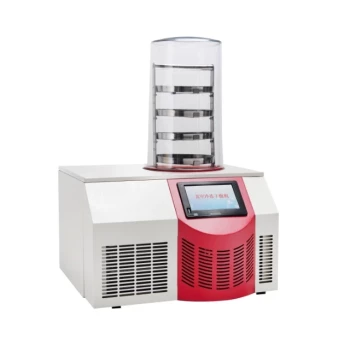
The primary function of a vacuum drying oven in the synthesis of pyrochlore-type iron hydroxyfluoride (Pyr-IHF) is to efficiently remove residual solvents, specifically ethanol and water, from the precipitated precursor. By operating at a controlled temperature of 80°C under reduced pressure, this step prepares a dry, pure precursor powder essential for subsequent thermal treatment.
While its obvious role is removing moisture, the vacuum oven’s critical value lies in its ability to dry materials at lower temperatures, preventing the oxidation of iron and minimizing particle agglomeration that would occur in standard air drying.
Mechanisms of Efficient Dehydration
Lowering Solvent Boiling Points
The synthesis of Pyr-IHF involves liquid solvents, typically a mixture including ethanol and water.
Standard drying would require high temperatures to boil these off, potentially damaging the material. A vacuum oven creates a negative pressure environment, significantly lowering the boiling point of these solvents.
Gentle Thermal Treatment
This pressure reduction allows the oven to operate effectively at just 80°C.
At this temperature, the solvents evaporate rapidly without subjecting the delicate precursor structure to excessive thermal stress.
Preserving Chemical and Physical Structure
Preventing Iron Oxidation
Iron-based materials are highly susceptible to oxidation when exposed to air, especially at elevated temperatures.
The vacuum environment removes oxygen from the chamber. This ensures that the iron remains in its intended chemical state, preventing the formation of unwanted iron oxide impurities.
Minimizing Agglomeration
Drying precipitates in a standard oven often leads to "caking" or harsh agglomeration of particles as the liquid evaporates slowly.
Vacuum drying promotes a cleaner separation of the solid from the solvent. This helps maintain a fine powder morphology, which is critical for the electrochemical performance of the final cathode material.
Operational Considerations and Trade-offs
The Necessity of Vacuum
Using a standard air oven is a common pitfall in cathode synthesis.
While cheaper and more accessible, an air oven cannot protect the iron component from oxidation, leading to a degraded electrochemical profile in the final battery cell.
Process Speed vs. Quality
Vacuum drying is generally a batch process that may take longer to set up than continuous air drying.
However, in the context of Pyr-IHF, this trade-off is non-negotiable. The gain in purity and structural integrity outweighs the operational complexity of maintaining a vacuum.
Optimizing the Synthesis Process
To ensure high-performance cathode materials, apply these principles to your drying stage:
- If your primary focus is chemical purity: Maintain a strict vacuum seal throughout the 80°C cycle to completely eliminate oxygen exposure and prevent iron oxidation.
- If your primary focus is particle morphology: Rely on the vacuum conditions to prevent hard agglomeration, ensuring the precursor powder remains loose and reactive for the next thermal step.
Strict adherence to vacuum drying parameters is the baseline requirement for producing viable pyrochlore-type iron hydroxyfluoride cathodes.
Summary Table:
| Feature | Vacuum Drying (at 80°C) | Standard Air Drying |
|---|---|---|
| Oxidation Risk | Near Zero (Oxygen-free environment) | High (Risk of iron oxide impurities) |
| Particle Morphology | Fine powder, low agglomeration | Dense "caking" and agglomeration |
| Boiling Point | Lowered due to negative pressure | Standard boiling points |
| Solvent Removal | Efficient (Ethanol & Water) | Slower, requires more heat |
| Material Integrity | Preserved chemical/physical structure | Potential thermal degradation |
Elevate Your Battery Research with KINTEK Precision
Producing high-performance Pyr-IHF cathode materials requires absolute control over your thermal environment. At KINTEK, we specialize in providing researchers with the high-precision vacuum drying ovens, high-temperature furnaces (CVD, atmosphere, vacuum), and battery research tools necessary to prevent oxidation and ensure optimal particle morphology.
Whether you are refining precursors or scaling up production, our comprehensive range of laboratory equipment—from crushing and milling systems to ultralow freezers and PTFE consumables—is designed to meet the rigorous demands of advanced material science.
Ready to optimize your synthesis process? Contact our laboratory experts today to find the perfect equipment solution for your specific research needs.
Related Products
- 56L Vertical Laboratory Vacuum Drying Oven
- 23L Laboratory Vacuum Drying Oven
- Laboratory Scientific Electric Heating Blast Drying Oven
- Benchtop Laboratory Vacuum Freeze Dryer
- Dental Porcelain Zirconia Sintering Ceramic Vacuum Press Furnace
People Also Ask
- Why is a laboratory vacuum drying oven recommended for rice straw residues? Protect Your Biomass Integrity
- What role does a laboratory vacuum drying oven play in the preparation of modified multi-walled carbon nanotubes?
- What is the importance of using a laboratory vacuum drying oven? Preserving Slow-Release Microcapsule Integrity
- Why is a Laboratory Vacuum Drying Oven recommended for PBAT microspheres? Protect Sensitive Polymer Integrity
- What role does a laboratory vacuum drying oven play in processing nanoparticle powder samples? Protect Sample Integrity