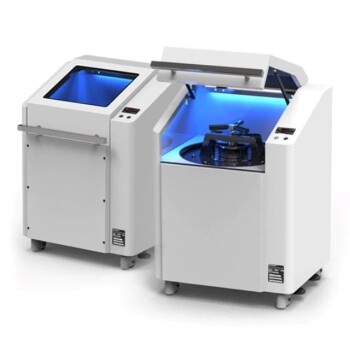
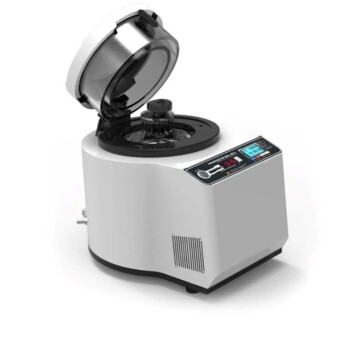
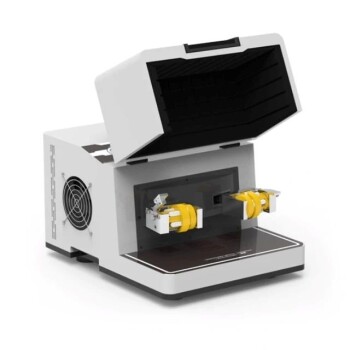
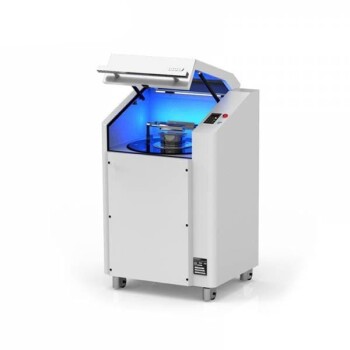
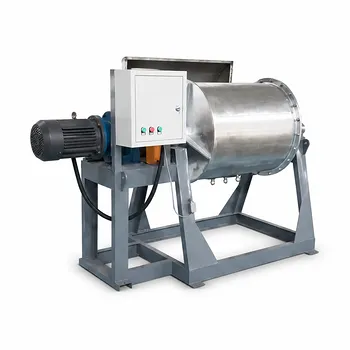
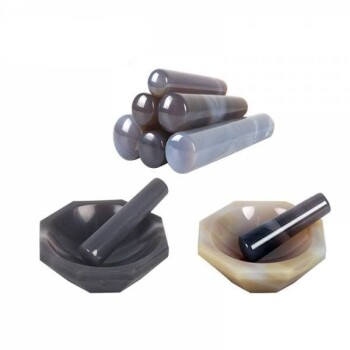
The primary function of mechanical grinding is to physically disrupt the recalcitrant structure of lignocellulosic biomass. By utilizing intense shear and impact forces, this equipment significantly reduces the particle size of raw materials and lowers the crystallinity of the cellulose, creating a substrate that is receptive to downstream processing.
Core Takeaway Mechanical grinding is not merely about size reduction; it is a structural activation process. By increasing the specific surface area and breaking the lignin-hemicellulose seal, grinding transforms biomass from a resistant raw material into a reactive feedstock ready for enzymatic or chemical penetration.
The Mechanics of Physical Disruption
Applying Shear and Impact Forces
Mechanical grinding equipment utilizes kinetic energy to apply shear and impact forces directly to the biomass. This physical stress fractures the material, breaking down agricultural waste or wood fibers into manageable fragments.
Reducing Particle Size
The most immediate visible effect of this process is a significant reduction in particle size. Equipment is often calibrated to produce specific mesh sizes (e.g., 40 mesh) or particle ranges (typically 0.2 to 2 mm), which simplifies material handling in subsequent stages.
Increasing Specific Surface Area
As the particle size decreases, the specific surface area of the material increases exponentially. This maximizes the physical area available for contact, which is a critical prerequisite for effective chemical reactions or biological fermentation.
Altering the Micro-Structure
Lowering Cellulose Crystallinity
Beyond simple crushing, high-energy mechanical forces alter the molecular structure of the biomass. Grinding disrupts the organized, crystalline lattice of cellulose, rendering it more amorphous and less resistant to degradation.
Disrupting the Lignin Seal
Lignocellulosic biomass possesses a "tight coating structure" where lignin and hemicellulose protect the cellulose. Mechanical grinding physically disrupts this protective coating, exposing the cellulose fibers that were previously encapsulated by the lignin matrix.
Enabling Downstream Efficiency
Improving Enzymatic Accessibility
The combination of increased surface area and exposed cellulose fibers allows enzymes to physically reach their substrate. Without this mechanical disruption, enzymes would struggle to penetrate the intact cell wall structure, leading to poor conversion rates.
Enhancing Chemical Reactivity
For processes utilizing chemical reagents, such as dilute acid hydrolysis, grinding facilitates deeper and faster penetration. This improved wettability ensures that hydrolysis reagents can interact efficiently with the hemicellulose and cellulose components.
Understanding the Trade-offs
Energy Intensity
While effective, mechanical grinding—particularly high-energy milling like ball milling—requires significant energy input to generate the necessary impact forces. Operators must balance the degree of structural disruption against the energy costs required to achieve it.
Optimization vs. Over-processing
Reducing particle size is beneficial, but there is a point of diminishing returns. The goal is to achieve a size range (e.g., 0.2–2 mm) that maximizes reactivity without expending unnecessary energy on pulverization that does not yield proportionally better hydrolysis results.
Making the Right Choice for Your Goal
To maximize the efficiency of your pretreatment process, align your grinding strategy with your specific downstream requirements:
- If your primary focus is Enzymatic Hydrolysis: Prioritize grinding methods that maximize the reduction of cellulose crystallinity to prevent enzymes from being blocked by rigid structural barriers.
- If your primary focus is Chemical Penetration: Focus on achieving a specific mesh size (such as 40 mesh) to increase surface area and wettability for reagents like dilute acid.
- If your primary focus is Bio-hydrogen Fermentation: Ensure the particle size is reduced sufficiently to shorten the time required for microbial conversion and nutrient release.
Effective mechanical pretreatment is the foundational step that dictates the speed and yield of all subsequent bioconversion processes.
Summary Table:
| Feature | Impact on Biomass | Benefit for Downstream Processing |
|---|---|---|
| Particle Size Reduction | Fractures fibers into 0.2 - 2 mm fragments | Enhances material handling and flow |
| Surface Area Expansion | Exponentially increases specific surface area | Maximizes contact for enzymes and chemicals |
| Crystallinity Lowering | Disrupts organized cellulose lattice | Converts resistant fibers into reactive amorphous states |
| Structural Disruption | Breaks the lignin-hemicellulose seal | Exposes encapsulated cellulose for faster penetration |
Maximize Your 2G Biomass Yield with KINTEK Precision Solutions
Unlock the full potential of your renewable energy research with KINTEK’s high-performance laboratory equipment. Whether you are disrupting recalcitrant structures or optimizing enzymatic accessibility, our crushing and milling systems and sieving equipment provide the precise particle size control and structural activation needed for superior pretreatment results.
Beyond mechanical disruption, KINTEK supports your entire workflow with:
- High-Temperature High-Pressure Reactors & Autoclaves for chemical hydrolysis.
- Centrifuges and Cooling Solutions for downstream processing.
- Specialized Crucibles and Ceramics for thermal analysis.
Ready to scale your bioconversion efficiency? Contact our laboratory experts today to find the ideal equipment for your 2G biomass research!
References
- Adewumi Chizoma Nwakego, Agbaghare Daniel Enajeme. Advances in Bioethanol Production: Innovations in Feedstocks, Pretreatment, and Fermentation Technologies. DOI: 10.35629/5252-0708743753
This article is also based on technical information from Kintek Solution Knowledge Base .
Related Products
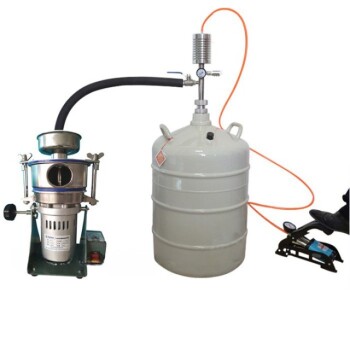
- Small Cryogenic Grinder Cryomill Cryogrinder with Liquid Nitrogen for Laboratory Use
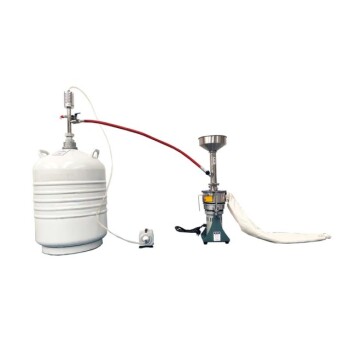
- Liquid Nitrogen Cryogenic Grinder Mill Cryomill Airflow Ultrafine Pulverizer
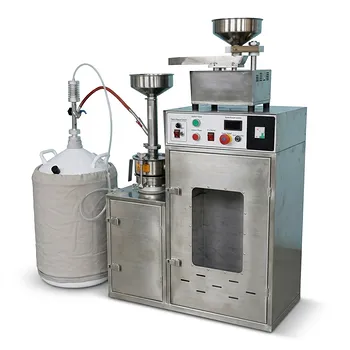
- Liquid Nitrogen Cryogenic Grinder Mill Cryomill with Screw Feeder
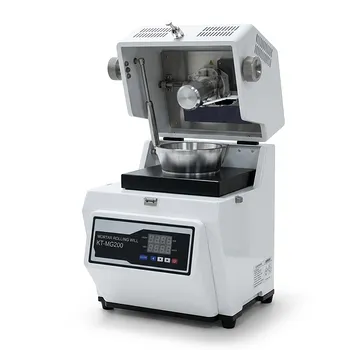
- Laboratory Grinding Mill Mortar Grinder for Sample Preparation
- Laboratory Disc Cup Vibratory Mill for Sample Grinding
People Also Ask
- What are the advantages of using a cryogenic grinder? Achieve Nanoscale Precision for All-Solid-State Battery Cathodes
- Why is a cryogenic grinder required for cured alkyd resin HRMAS NMR? Ensure Structural Integrity & Sample Precision
- What is the role of a cryogenic grinder in PET recycling? Transform Waste into High-Reactive Micron Powders
- What is cryogenic grinding of crumb rubber? Achieve Fine, High-Quality Rubber Powder
- What food is cryogenic grinding? The Ultimate Guide to Preserving Flavor & Aroma