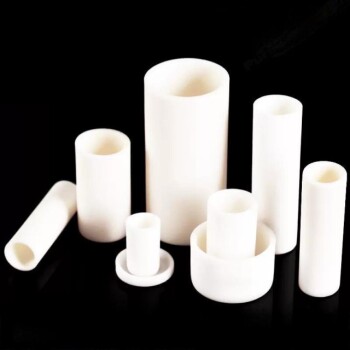
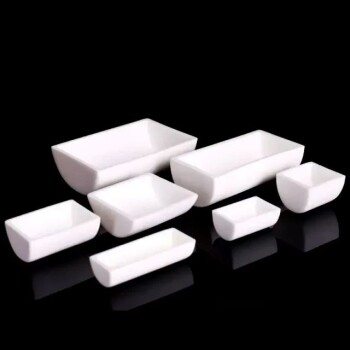
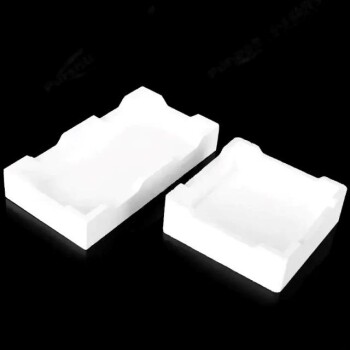
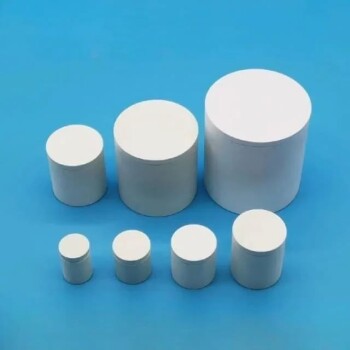
The primary purpose of using individual high-purity alumina crucibles during high-temperature corrosion kinetics studies of Fe–Cr–B coatings is to guarantee the precision of gravimetric data by isolating samples and containing all reaction products. Specifically, these crucibles prevent cross-contamination between different samples and capture any oxide scales that may flake off (spall) during the heating process, ensuring that the mass gain measurements used to calculate corrosion rates are accurate.
Core Takeaway Accurate corrosion kinetics rely entirely on precise mass measurements; alumina crucibles act as a chemically inert barrier that captures falling oxide debris while preventing volatile impurities from altering adjacent samples.
Ensuring Data Integrity in Kinetics Studies
Isolating Samples from Contamination
In high-temperature environments, corrosion products such as volatile chlorides or potassium chloride (KCl) deposits can migrate within the furnace.
If samples are not isolated, these volatile compounds can transfer from one specimen to another. Individual crucibles create a containment zone that prevents this cross-contamination, ensuring that the chemical reactions observed are unique to the specific sample and its immediate environment.
Capturing Spalled Oxide Scales
A critical challenge in corrosion studies is "spallation," where the oxide scale formed on the coating surface cracks and flakes off due to thermal stress.
If these flakes fall away from the sample holder, they are lost to the measurement process, leading to incorrect mass loss data. The crucible acts as a catch basin, collecting every piece of flaked oxide so that the total mass of the reacted material is preserved for accurate kinetic evaluation.
The Role of Material Properties
Chemical Inertness
The validity of a kinetics study depends on the assurance that mass changes are caused solely by the reaction between the metal coating and the corrosive media.
High-purity alumina is chemically inert and does not react with Fe–Cr–B coatings or molten salts like KCl, even at temperatures exceeding 450°C. This ensures that the crucible itself does not contribute to mass gain or loss through unwanted chemical reactions.
Thermal Stability
Kinetics studies often require sustained exposure to extreme heat.
High-purity alumina maintains its structural integrity and constant mass at temperatures often exceeding 1000°C. Because the crucible’s weight remains stable, researchers can be confident that any weight change recorded by the electronic balance is derived exclusively from the oxidation or corrosion of the alloy sample.
Understanding the Trade-offs
The Risk of Impurity Leaching
Not all alumina is created equal; the specific requirement for high-purity (often >99%) material is deliberate.
Lower-purity crucibles may contain binders or trace elements that can leach into the metal melt or coating at high temperatures. This can contaminate the specimen and skew data regarding trace elements or oxide film formation mechanisms.
Handling Volatile Environments
While crucibles are excellent for catching solid debris (spallation), they are open systems.
They effectively collect falling mass, but they do not seal the sample off from the gas phase of the furnace environment. Therefore, while they prevent cross-contamination from solid or heavy volatile deposits, they must still be positioned correctly relative to gas flow to simulate industrial conditions accurately.
Making the Right Choice for Your Goal
When designing your experimental setup for Fe–Cr–B coating analysis:
- If your primary focus is determining accurate corrosion rates: Use individual alumina crucibles to capture all spalled oxides, as missing mass will lead to an underestimation of the corrosion severity.
- If your primary focus is analyzing surface chemical composition: Ensure the alumina purity is >99% to prevent container components from leaching into the sample and creating false chemical signatures.
Ultimately, the crucible is not just a holder; it is an active control measure that preserves the closed-system logic required for precise kinetic calculations.
Summary Table:
| Feature | Importance in Corrosion Kinetics Studies |
|---|---|
| Sample Isolation | Prevents cross-contamination from volatile compounds and salts. |
| Spallation Capture | Acts as a catch basin for flaked oxide scales to maintain mass integrity. |
| Chemical Inertness | High-purity alumina (>99%) won't react with Fe–Cr–B or corrosive media. |
| Thermal Stability | Maintains constant mass and structural integrity at temperatures >1000°C. |
| Data Precision | Ensures weight changes are derived solely from oxidation/corrosion. |
Elevate Your Material Research with KINTEK Precision
At KINTEK, we understand that high-temperature research demands absolute purity and reliability. Our premium high-purity alumina crucibles and ceramics are engineered to provide the inert environment your kinetics studies require, preventing contamination and ensuring every milligram of data is captured.
Beyond consumables, KINTEK offers a comprehensive suite of laboratory solutions, including:
- High-Temperature Furnaces: Muffle, tube, and vacuum systems for precise thermal control.
- Sample Preparation: Advanced crushing, milling, and hydraulic pellet presses.
- Advanced Reactors: High-temperature high-pressure reactors and autoclaves for extreme environments.
- Energy Research: Specialized battery research tools, electrolytic cells, and electrodes.
Ready to optimize your lab's experimental accuracy? Contact our technical experts today to find the perfect equipment and consumables for your specific research goals.
References
- Liam Reddy, Tanvir Hussain. HVOF and Laser-Cladded Fe–Cr–B Coating in Simulated Biomass Combustion: Microstructure and Fireside Corrosion. DOI: 10.1007/s11085-017-9774-9
This article is also based on technical information from Kintek Solution Knowledge Base .
Related Products
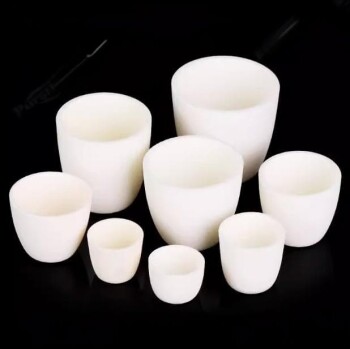
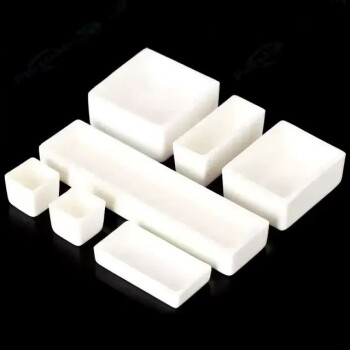
- Arc-Shaped Alumina Ceramic Crucible High Temperature Resistant for Engineering Advanced Fine Ceramics
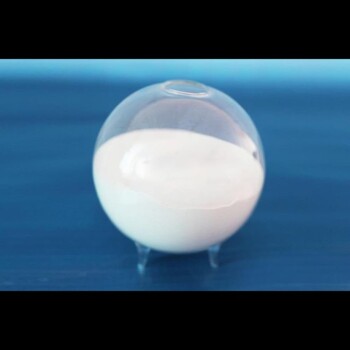
- High Purity Alumina Granulated Powder for Engineering Advanced Fine Ceramics
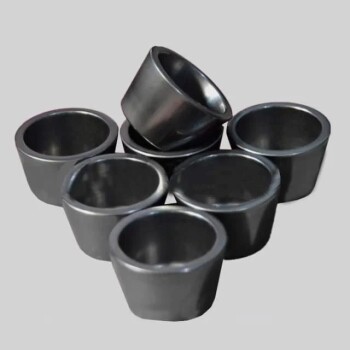
- High Purity Pure Graphite Crucible for Evaporation
- Engineering Advanced Fine Alumina Al2O3 Ceramic Crucible for Laboratory Muffle Furnace
- High Purity Pure Graphite Crucible for Electron Beam Evaporation
People Also Ask
- Why Use Alumina Crucibles & Powder Burial for NaSICON? Ensure Phase Purity and Prevent Elemental Volatilization
- What is the primary purpose of using alumina crucibles for LLTO ceramics? Optimize Your High-Temperature Sintering
- Why are alumina crucibles and mother powder essential for LATP sintering? Optimize Your Solid Electrolyte Performance
- Why are high-purity alumina crucibles used for liquid lead corrosion experiments? Ensure Data Accuracy at 550°C
- Primary considerations for choosing alumina crucibles and quartz tubes in indium intercalation: Ensure Material Purity