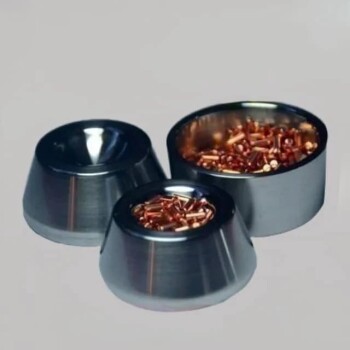
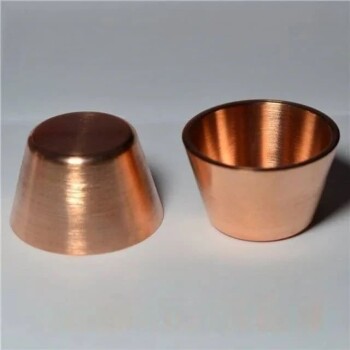
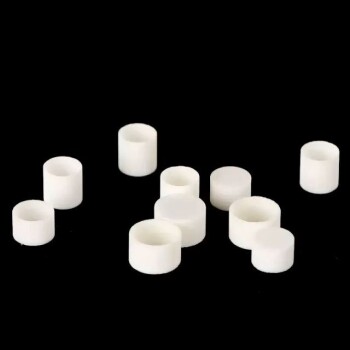
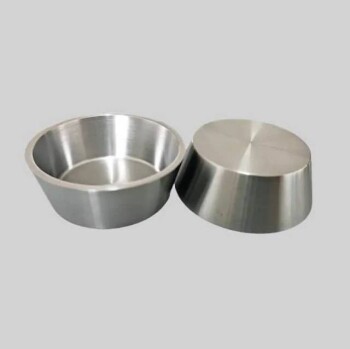
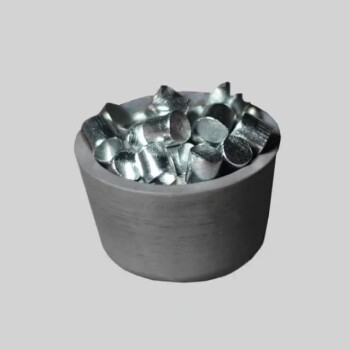
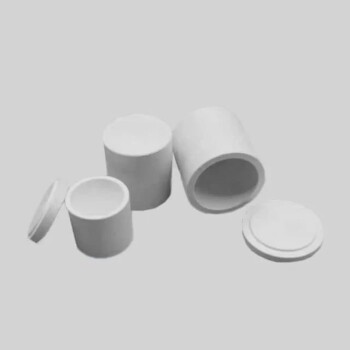
Secondary encapsulation is a critical safety and structural measure. It serves to provide a robust mechanical shield for fragile quartz ampoules and ensures the safety of laboratory personnel during extreme thermal processes. By using a stainless steel crucible with a compression tube cap, researchers can safely manage materials subject to high-temperature gradients and the violent stresses of rapid quenching.
The primary purpose of this dual-layer setup is to decouple chemical stability from mechanical durability. The quartz provides an inert environment for the sample, while the stainless steel "outer shell" protects against mechanical failure and thermal shock risks.
Enhancing Structural Integrity and Safety
Protecting Fragile Quartz
Quartz ampoules are prized for their chemical stability but are inherently brittle and susceptible to cracking under internal pressure or external stress. The stainless steel crucible acts as a rigid external container that absorbs physical impacts and prevents the quartz from shattering during handling.
Ensuring Personnel Safety
High-temperature furnace processing often creates extreme thermal gradients that can lead to catastrophic ampoule failure. Secondary encapsulation ensures that if an internal ampoule fails, the compression tube cap and steel body contain any debris or hazardous materials, protecting the operator and the furnace equipment.
Facilitating Rapid Quenching
Many metallurgical and chemical processes require "water quenching," where a sample is moved instantly from a high-temperature furnace into a cooling medium. The stainless steel exterior provides the necessary mechanical protection to survive this rapid transfer and protects the inner quartz from the immediate shock of the water.
Optimizing the Thermal Environment
Maintaining Atmosphere Integrity
While the inner quartz ampoule holds the sample, the compression tube cap on the secondary container ensures a secure, leak-proof seal during movement. This is vital when working with materials that must remain isolated from the ambient atmosphere even after they are removed from the furnace's inert gas path.
Mitigating Thermal Shock
Quartz is sensitive to thermal shock if cooled or heated too unevenly. The secondary steel container acts as a thermal buffer, slightly moderating the rate of temperature change and providing a more uniform thermal environment for the inner vessel during the transition between heating zones.
Understanding the Trade-offs
Managing Thermal Lag
The primary downside of secondary encapsulation is thermal lag. Because the furnace must heat both the steel crucible and the internal quartz, there is a delay before the sample reaches the set-point temperature, which must be accounted for in your heating profile.
Temperature Limitations
While stainless steel is physically robust, it lacks the extreme temperature resistance of corundum or alumina. If your process exceeds the melting or oxidation point of the steel alloy used, the secondary container may fail or fuse with the furnace components, necessitating careful material selection based on the target temperature.
Potential for Contamination
Stainless steel is not chemically inert at high temperatures. It is essential that the sample remains strictly within the sealed quartz ampoule to prevent reactions with the metallic catalysts or impurities present in the steel crucible.
How to Apply This to Your Project
When deciding on your encapsulation strategy, consider the specific mechanical and thermal demands of your experiment.
- If your primary focus is personnel safety during high-pressure reactions: Utilize a heavy-walled stainless steel crucible with a verified compression cap to ensure total containment in the event of an ampoule burst.
- If your primary focus is sample purity during quenching: Ensure the sample is sealed in a quartz or corundum vessel first, using the stainless steel only as a mechanical carrier to facilitate the move to the quench tank.
- If your primary focus is rapid heating cycles: Minimize the thickness of the secondary container to reduce thermal lag, provided the structural integrity is sufficient to support the quartz ampoule.
By integrating secondary encapsulation into your workflow, you create a fail-safe environment that protects both your research materials and your laboratory staff from the inherent risks of high-temperature processing.
Summary Table:
| Feature | Primary Benefit | Key Consideration |
|---|---|---|
| Structural Shielding | Protects brittle quartz ampoules from mechanical failure | Prevents quartz shattering during handling |
| Personnel Safety | Contains debris and hazardous materials if an ampoule bursts | Vital for high-pressure or volatile reactions |
| Quenching Support | Enables safe transfer from furnace to cooling media | Provides mechanical protection during thermal shock |
| Atmosphere Control | Maintains sample isolation during movement | Requires a secure, leak-proof compression seal |
| Thermal Buffering | Moderates temperature changes for the inner vessel | Must account for thermal lag in heating profiles |
Elevate Your Laboratory Safety and Precision with KINTEK
High-temperature processing demands equipment that balances chemical purity with rugged safety. At KINTEK, we specialize in providing high-performance laboratory solutions, from high-temperature furnaces (muffle, vacuum, and CVD) to specialized high-pressure reactors and autoclaves.
Whether you need durable stainless steel crucibles, precision quartz or ceramic consumables, or advanced crushing and milling systems, our expert team is ready to help you optimize your thermal workflows. Protect your research and your personnel with industry-leading tools designed for extreme conditions.
Ready to upgrade your lab's capabilities? Contact our technical specialists today to find the perfect encapsulation and heating solutions for your specific application.
References
- Duncan H. Moseley, Raphaël P. Hermann. Structure and Anharmonicity of α- and β-Sb2O3 at Low Temperature. DOI: 10.3390/cryst13050752
This article is also based on technical information from Kintek Solution Knowledge Base .
Related Products
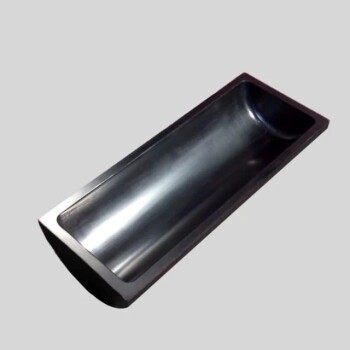
- Carbon Graphite Boat -Laboratory Tube Furnace with Cover
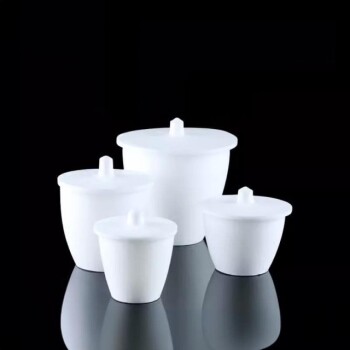
- Custom Machined and Molded PTFE Teflon Parts Manufacturer with PTFE Crucible and Lid
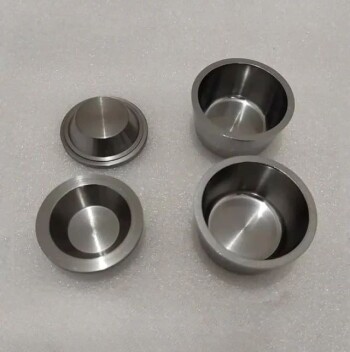
- Electron Beam Evaporation Coating Tungsten Crucible and Molybdenum Crucible for High Temperature Applications
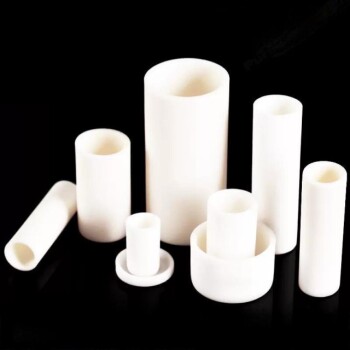
- Engineering Advanced Fine Ceramics Alumina Al2O3 Crucible With Lid Cylindrical Laboratory Crucible
- Electron Beam Evaporation Coating Gold Plating Tungsten Molybdenum Crucible for Evaporation
People Also Ask
- What is the use of graphite furnace? Achieve Extreme-Temperature Processing for Advanced Materials
- Why is graphite used in furnaces? For Extreme Heat, Purity, and Efficiency
- What core conditions do high-temperature graphite tube furnaces provide during the pressureless sintering of Boron Carbide (B4C)?
- What is the use of graphite tube? Essential for Extreme Heat & Corrosive Environments
- What is the disadvantage of graphite furnace? Managing Reactivity and Contamination Risks