Vacuum filtration serves as a mechanism for rapid stabilization. Its primary purpose in the liquid-solid separation stage is to quickly isolate the gallium-rich mother liquor from solid residues immediately after the leaching reaction concludes. By accelerating separation, it prevents the chemical environment from changing as the mixture cools.
The core value of vacuum filtration lies in time management. It separates the liquid from the solid before temperature drops can trigger secondary precipitation or re-adsorption, ensuring the recovered liquid accurately reflects the results of the reaction.
Preserving Chemical Integrity
Preventing Secondary Precipitation
When a leaching reaction finishes, the solution is typically hot and saturated with dissolved metal ions. As the mixture begins to cool, the solubility of these metals decreases.
Vacuum filtration acts fast enough to remove the liquid while the metals are still fully dissolved. This prevents the ions from precipitating (falling out of the solution) and becoming lost in the solid waste.
Avoiding Re-adsorption
Solid residues left over from the reaction can act like sponges for metal ions. This risk increases significantly as the temperature of the slurry decreases.
By using vacuum pressure to force a rapid separation, you physically remove the gallium from the vicinity of the residues. This ensures the solids do not have time to re-adsorb the valuable metal you just worked to extract.
Ensuring Data Accuracy
Precision in Sampling
To evaluate the success of a leaching process, you must analyze the liquid's composition. If the separation process is slow, the chemical makeup of the liquid changes during the delay.
Vacuum filtration "freezes" the state of the liquid by isolating it instantly. This guarantees that any samples taken are truly representative of the reaction's performance.
Accurate Recovery Calculations
Process engineers rely on precise data to calculate metal recovery rates. Losses due to precipitation or re-adsorption skew these numbers, leading to false conclusions about efficiency.
By minimizing these post-reaction losses, vacuum filtration provides the clean data necessary to calculate the true yield of the gallium leaching process.
Understanding the Risks of Delay
The Temperature-Time Sensitivity
The effectiveness of this equipment is entirely dependent on speed. If the vacuum pressure is insufficient or the filter medium clogs, the filtration rate slows down.
The Consequence of Cooling
If the process slows, the mixture effectively begins to revert. The "snapshot" of the reaction is lost, and the recovered liquid will show lower gallium concentrations than were actually achieved during the reaction.
Application for Process Success
If your primary focus is Process Optimization:
- Ensure your filtration equipment is sized to handle the reactor volume instantly to prevent thermal loss during separation.
If your primary focus is Analytical Precision:
- Prioritize the speed of liquid extraction over the extreme dryness of the solid cake to preserve the dissolved ion concentration.
By treating filtration as a time-critical stabilization step rather than just physical separation, you protect the integrity of your yield and your data.
Summary Table:
| Key Function | Primary Benefit | Role in Process Success |
|---|---|---|
| Time Management | Prevents secondary precipitation | Protects metal yield before cooling |
| Chemical Integrity | Minimizes ion re-adsorption | Ensures gallium remains in the mother liquor |
| Analytical Precision | Accurate sampling | Provides a true 'snapshot' of reaction results |
| Data Validation | Precise recovery calculations | Eliminates skewed data from post-reaction losses |
Optimize Your Gallium Recovery with KINTEK Precision Equipment
Maximize your leaching efficiency and ensure chemical integrity with KINTEK’s high-performance vacuum filtration and laboratory systems. From robust crushing and milling systems for feedstock preparation to advanced vacuum filtration and high-temperature high-pressure reactors, KINTEK provides the end-to-end tools needed for critical material extraction.
Our specialized portfolio for metallurgy and battery research includes:
- High-Temperature Reactors & Autoclaves for leaching optimization.
- Hydraulic Presses & Pellet Dies for sample preparation.
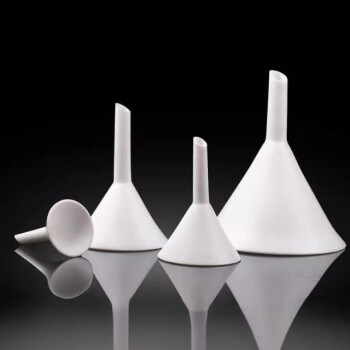
- Durable Ceramics & PTFE Consumables for corrosive chemical environments.
Don't let secondary precipitation compromise your results. Contact KINTEK today to discover how our high-precision lab equipment can streamline your separation processes and enhance your recovery yields.
References
- Benedikt Flerus, Bernd Friedrich. Recovery of Gallium from Smartphones—Part II: Oxidative Alkaline Pressure Leaching of Gallium from Pyrolysis Residue. DOI: 10.3390/met10121565
This article is also based on technical information from Kintek Solution Knowledge Base .
Related Products
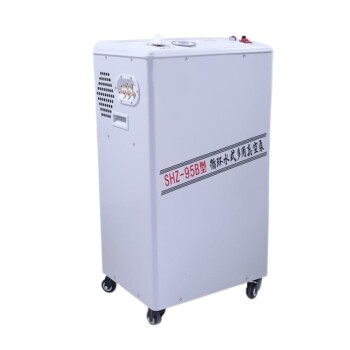
- Laboratory Vertical Water Circulating Vacuum Pump for Lab Use
- Vacuum Cold Mounting Machine for Sample Preparation
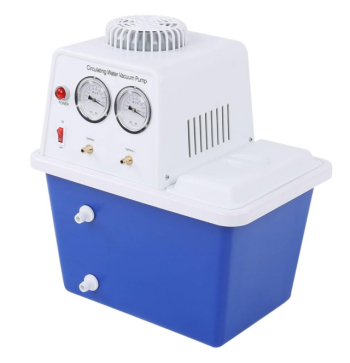
- Circulating Water Vacuum Pump for Laboratory and Industrial Use
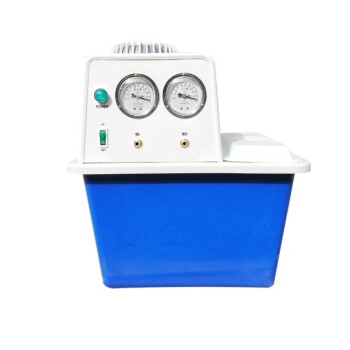
- Laboratory Benchtop Water Circulating Vacuum Pump for Lab Use
- 304 316 Stainless Steel Vacuum Ball Valve Stop Valve for High Vacuum Systems
People Also Ask
- What are the advantages of a water circulating vacuum pump? Superior Durability for Demanding Lab Environments
- How does the impeller rotation affect the gas flow in a water circulating vacuum pump? A Guide to the Liquid Ring Principle
- How is a circulating water vacuum pump utilized for hydrogen production residues? Optimize Your Solid-Liquid Separation
- What determines the vacuum degree achievable by a water circulating vacuum pump? Unlock the Physics of Its Limits
- Why is a water circulating vacuum pump suitable for handling flammable or explosive gases? Inherent Safety Through Isothermal Compression