A 3-dimensional mixer functions as the critical equalization step in the pretreatment of oxide glass raw materials. Its primary role is to utilize multi-axis linkage motion to force a highly uniform spatial distribution of powder components—such as silicon dioxide, aluminum oxide, and zinc oxide—before the heating process begins. This physical uniformity is not merely for arrangement; it serves as the absolute foundation for achieving chemical composition consistency and a stable glass body during high-temperature melting.
The success of the glass-making process is determined before the furnace is ever turned on. The 3-dimensional mixer ensures that physical homogeneity is achieved first, making the subsequent chemical reactions during melting predictable and stable.
The Mechanics of Uniformity
Multi-Axis Linkage Motion
Standard mixers often rely on simple rotation, which can leave "dead zones" where materials do not blend effectively.
A 3-dimensional mixer operates differently by employing multi-axis linkage motion. This complex movement pattern forces the raw materials to move in multiple directions simultaneously, preventing segregation based on particle size or weight.
Achieving Spatial Distribution
The goal of this motion is total spatial distribution.
Whether dealing with silicon dioxide, aluminum oxide, or zinc oxide, the mixer ensures that every cubic centimeter of the batch contains the correct ratio of components. This eliminates pockets of high concentration that could lead to defects later in the process.
The Impact on Glass Quality
The Foundation for Chemical Consistency
Physical mixing is the direct precursor to chemical reactions.
The reference establishes that efficient physical mixing is the foundation for chemical composition consistency. If the powders are not physically close to their reaction partners before melting, the chemical structure of the glass will be inconsistent.
Ensuring a Stable Glass Body
The ultimate output of this pretreatment phase is a stable glass body.
By standardizing the input during the raw material phase, the mixer minimizes variables during the high-temperature melting process. This stability is crucial for producing glass that meets strict structural and optical specifications.
Critical Considerations
The Limits of Melting
A common misconception is that the melting process will "fix" poorly mixed raw materials through heat and convection.
This is a dangerous assumption. The 3-dimensional mixer is essential because the melting phase cannot fully compensate for poor physical distribution. If the pretreatment mixing is inefficient, the chemical consistency of the final product is compromised regardless of the melting temperature.
Dependence on Mechanical Precision
The quality of the final glass is strictly tied to the mechanical efficiency of the mixer.
Any mechanical failure or suboptimal setting in the multi-axis linkage results in immediate inconsistency in the powder distribution. Therefore, the calibration of this equipment is as critical as the temperature controls on the furnace.
Optimizing Your Raw Material Preparation
To ensure you are getting the most out of your pretreatment phase, consider your specific production goals:
- If your primary focus is Chemical Homogeneity: Prioritize the duration and intensity of the multi-axis motion to ensure distinct components like zinc oxide are thoroughly integrated with the silicon dioxide matrix.
- If your primary focus is Process Stability: rigorous verification of the spatial distribution in the dry mix is required to prevent fluctuations during the high-temperature melting phase.
The 3-dimensional mixer transforms a collection of loose ingredients into a unified precursor, defining the upper limit of your glass quality.
Summary Table:
| Feature | 3-Dimensional Mixer Role | Impact on Glass Production |
|---|---|---|
| Motion Pattern | Multi-axis linkage motion | Eliminates dead zones and prevents particle segregation |
| Spatial Distribution | Uniform powder arrangement | Ensures every cubic centimeter has the correct component ratio |
| Pre-Melting Phase | Physical homogenization | Provides the foundation for chemical composition consistency |
| Melting Stability | Reduces batch variability | Minimizes defects and ensures a stable glass body |
| Process Limit | Essential pretreatment | Compels consistency that melting heat alone cannot achieve |
Elevate Your Glass Research and Production with KINTEK
Achieve the highest standards of material homogeneity before you even turn on the furnace. KINTEK specializes in advanced laboratory equipment designed for precision, including high-performance crushing and milling systems and high-temperature furnaces.
Our comprehensive portfolio supports every stage of your workflow:
- Pretreatment Excellence: Optimize your raw material preparation with our robust crushing, milling, and sieving equipment.
- Advanced Thermal Processing: Reliable muffle, tube, vacuum, and atmosphere furnaces for stable glass melting.
- Specialized Lab Tools: From hydraulic presses for sample preparation to high-temperature high-pressure reactors and specialized ceramics and crucibles.
Don't let poor mixing compromise your chemical consistency. Ensure your glass bodies meet strict optical and structural specifications with KINTEK’s precision engineering. Contact our technical experts today to find the perfect mixing and thermal solution for your lab!
References
- Jae Ho Choi, Hyeong Jun Kim. mCharacteristics of Carbon Tetrafluoride Plasma Resistance of Various Glasses. DOI: 10.4191/kcers.2016.53.6.700
This article is also based on technical information from Kintek Solution Knowledge Base .
Related Products
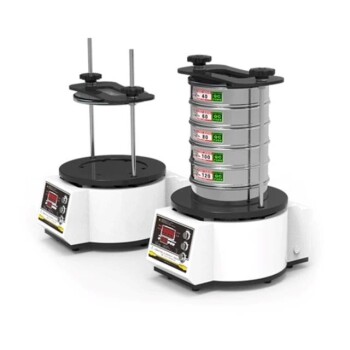
- Laboratory Wet Three-Dimensional Vibratory Sieve Shaker Machine
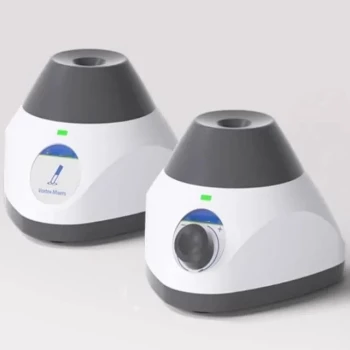
- Laboratory Vortex Mixer Orbital Shaker Multifunctional Rotation Oscillation Mixer
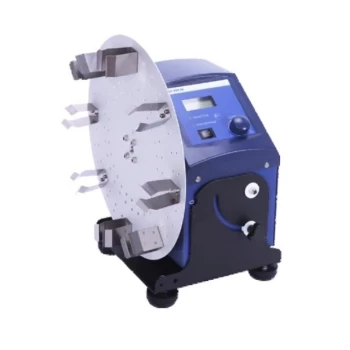
- Laboratory Disc Rotary Mixer for Efficient Sample Mixing and Homogenization
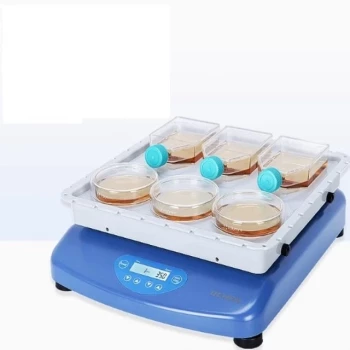
- Laboratory Oscillating Orbital Shaker
- High Performance Laboratory Stirrers for Diverse Applications
People Also Ask
- How does a laboratory vibratory sieve shaker facilitate the microstructural study of gas-atomized alloy powders?
- Why use a vibratory sieve shaker for PET powder? Achieve Precise Particle Size Control for Chemical Research
- How is a vibratory sieve shaker used in the particle size analysis of mechanically alloyed powders? Expert Guide
- What is the principle of vibratory sieve shaker? Achieve Accurate Particle Size Analysis
- What is the function of a vibratory sieve shaker? Achieve Precise Particle Size Analysis