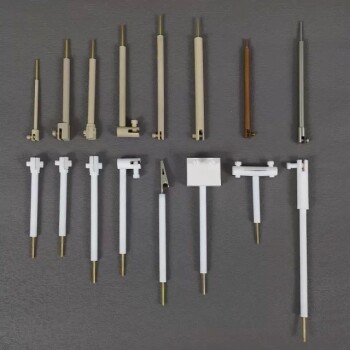
The mercury/mercuric oxide (Hg/HgO) electrode serves as the essential reference point for controlling and measuring potential in alkaline electrochemical systems. In the evaluation of carbon microspheres, it provides a stable, reproducible baseline that allows researchers to accurately quantify specific capacitance, cyclic voltammetry characteristics, and redox behavior within potassium hydroxide (KOH) electrolytes.
Core Takeaway: The Hg/HgO electrode is the gold standard for alkaline-based testing because it maintains potential stability where other electrodes fail. It acts as the "fixed ruler" that ensures measured voltages are accurate, comparable, and convertible to standard scales like the Reversible Hydrogen Electrode (RHE).
The Role of the Reference Baseline in Three-Electrode Systems
Establishing a Fixed Potential Ruler
In a three-electrode setup, the Hg/HgO electrode serves as the Reference Electrode, providing a constant potential against which the carbon microspheres (the Working Electrode) are measured. Because its own potential remains unchanged during the experiment, any shift in voltage can be purely attributed to the electrochemical response of the carbon material.
Enabling Accurate Capacitance Calculations
For supercapacitor applications, determining the specific capacitance of carbon microspheres requires precise knowledge of the voltage window. The Hg/HgO electrode ensures that the potential limits applied during charge-discharge cycles are exact, preventing data distortion caused by potential drift.
Facilitating Cyclic Voltammetry (CV) Precision
When performing CV tests, the Hg/HgO electrode allows for the clear identification of redox peaks and kinetic behavior. This precision is vital for carbon microspheres, as it helps distinguish between double-layer capacitance and any pseudo-capacitive contributions from surface functional groups.
Why Hg/HgO is Critical for Alkaline Environments
Stability in High pH Electrolytes
Most carbon microsphere evaluations for supercapacitors utilize potassium hydroxide (KOH) as the electrolyte. Unlike standard calomel electrodes (SCE), which can become unstable or exhibit liquid junction issues in high-pH environments, the Hg/HgO electrode is chemically optimized for alkaline stability.
Ensuring Scientific Comparability
The Hg/HgO electrode allows researchers to convert measured potentials to the Reversible Hydrogen Electrode (RHE) scale. This conversion is necessary to compare overpotential data and electrochemical performance across different studies and varying pH levels accurately.
Durability and Reproducibility
The internal chemistry of the Hg/HgO cell is designed to resist the corrosive nature of strong bases. This leads to a longer service life and higher reproducibility of results compared to other reference electrodes that might degrade when exposed to 1M or 6M KOH solutions.
Understanding the Trade-offs and Limitations
Toxicity and Environmental Handling
The primary drawback of the Hg/HgO electrode is the use of metallic mercury and mercuric oxide, which are toxic. This requires strict adherence to safety protocols for handling, storage, and disposal to prevent environmental contamination.
Potential Sensitivity to Temperature
While highly stable, the potential of an Hg/HgO electrode can fluctuate with temperature changes. For high-precision research, tests should be conducted in a temperature-controlled environment to maintain the integrity of the baseline potential.
Maintenance and Storage Requirements
These electrodes must be stored correctly in a matching alkaline solution to prevent the internal junction from drying out or becoming contaminated. Failure to maintain the internal electrolyte level can lead to erratic readings and increased electrical noise in the data.
How to Apply This to Your Project
Making the Right Choice for Your Goal
- If your primary focus is high-precision supercapacitor testing in KOH: Always use the Hg/HgO electrode to ensure your capacitance and energy density calculations are based on a stable, alkaline-compatible reference.
- If your primary focus is comparing results with published literature: Use the Hg/HgO electrode and clearly document the conversion to RHE to ensure your data is scientifically comparable to global standards.
- If your primary focus is laboratory safety and environmental impact: Evaluate if your testing can be performed in neutral electrolytes using an Ag/AgCl electrode, as this avoids the toxicity associated with mercury-based systems.
Selecting the Hg/HgO electrode is a technical necessity for any researcher demanding accuracy and reproducibility when characterizing carbon-based materials in alkaline media.
Summary Table:
| Key Role | Benefit for Carbon Microsphere Evaluation |
|---|---|
| Stable Potential Ruler | Provides a fixed reference point to accurately measure working electrode potential shifts. |
| Alkaline Compatibility | Specifically designed for high-pH electrolytes (KOH), preventing potential drift and chemical degradation. |
| Measurement Precision | Ensures accurate specific capacitance and cyclic voltammetry (CV) data for supercapacitor research. |
| Data Comparability | Allows for easy conversion to the Reversible Hydrogen Electrode (RHE) scale for scientific standardization. |
Elevate Your Electrochemical Research with KINTEK
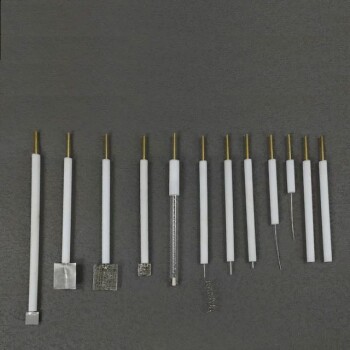
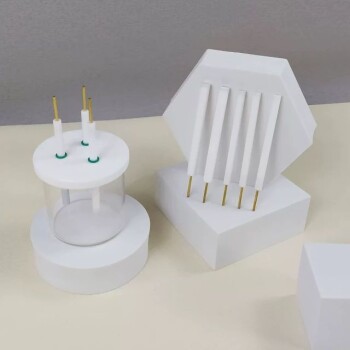
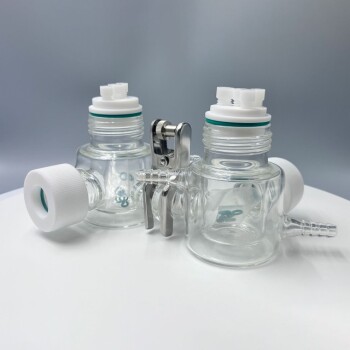
Precision in material characterization starts with the right tools. KINTEK specializes in high-performance laboratory equipment and consumables designed to meet the rigorous demands of advanced research. Our high-quality mercuric oxide (Hg/HgO) electrodes and electrolytic cells provide the stability and accuracy required for elite carbon microsphere and battery research.
Beyond electrochemical tools, KINTEK offers a comprehensive portfolio including:
- High-Temperature Furnaces: Muffle, tube, vacuum, CVD, and PECVD systems for material synthesis.
- Sample Preparation: Precision crushing, milling, sieving equipment, and hydraulic presses.
- Advanced Reactors: High-temperature high-pressure reactors and autoclaves.
- Lab Essentials: ULT freezers, freeze dryers, homogenizers, and high-purity ceramics/crucibles.
Whether you are a researcher seeking reproducible data or a distributor looking for a reliable partner with robust OEM/ODM support, KINTEK is committed to your success. Contact our technical experts today to find the perfect solution for your laboratory needs.
References
- Mannan Yang, Wanqing Lei. Synthesis and Properties of Carbon Microspheres from Waste Office Paper. DOI: 10.3390/molecules28155756
This article is also based on technical information from Kintek Solution Knowledge Base .
Related Products
- Gold Electrochemical Sheet Electrode Gold Electrode
- Gold Disc Electrode
- High Purity Gold Platinum Copper Iron Metal Sheets
- Graphite Disc Rod and Sheet Electrode Electrochemical Graphite Electrode
- Glassy Carbon Electrochemical Electrode
People Also Ask
- What are the disadvantages of gold electrodes? Key Limitations for Your Lab Projects
- What are gold electrodes used for? Achieve Unmatched Sensitivity in Biosensing and Research
- What is the recommended pre-treatment procedure for gold or platinum sheets before use? Ensure a Pristine, Reproducible Surface
- What substances should be avoided to prevent damage to gold or platinum sheets? Protect Your Precious Metals
- How should contamination of a gold plate electrode be prevented and managed? Essential Care for Reliable Data