The application of continuous axial pressure during Spark Plasma Sintering (SPS) is the critical mechanical driver that forces powder particles to undergo plastic deformation and physical rearrangement. This active compression is essential for eliminating voids and achieving high-density consolidation in high-entropy alloys (HEAs).
By mechanically forcing particles to deform and rearrange, continuous axial pressure drives material density above 98.8% and effectively eliminates internal porosity, establishing the necessary foundation for superior mechanical performance.
The Mechanics of Densification
Inducing Plastic Deformation
The primary significance of axial pressure is its ability to force plastic deformation at the particle level.
Under continuous pressure, the powder particles are not merely heated; they are physically compressed until they yield and change shape.
This deformation allows the material to fill the microscopic voids that naturally exist between loose powder particles.
Facilitating Particle Rearrangement
Simultaneously, the applied pressure causes the rearrangement of particles within the sintering die.
As the particles shift and rotate under force, they settle into a more tightly packed configuration.
This mechanical reorganization is a prerequisite for achieving the high levels of densification required for advanced engineering applications.
Achieving Superior Material Integrity
Reaching Near-Theoretical Density
The combination of deformation and rearrangement leads to exceptional densification.
In the specific case of the Al0.5CoCrFeNi high-entropy alloy, this process enables the material to achieve a density exceeding 98.8%.
High density is not just a metric; it is the direct indicator that the sintering process has successfully consolidated the powder into a solid bulk material.
Reducing Internal Porosity
The direct consequence of maximizing density is the drastic reduction of internal porosity.
Porosity acts as a stress concentrator in finished parts, leading to premature failure.
By applying continuous pressure to squeeze out these voids, you establish the structural integrity required for the alloy's superior mechanical properties.
Understanding Process Dependencies
The Requirement for Thermal Precision
While axial pressure is the mechanical driver, it cannot function effectively in isolation.
The primary reference highlights that pressure must be combined with a precise temperature ramp program.
Pressure facilitates the contact, but the thermal energy is required to soften the material sufficiently for that pressure to induce the necessary plastic deformation.
The Trade-off of Complexity
Implementing continuous axial pressure introduces a dependency on synchronization.
If the pressure is applied without the correct thermal profile, the particles may not deform plastically, leading to incomplete sintering.
Success relies on the tight coupling of mechanical force and thermal management; one cannot succeed without the other.
Making the Right Choice for Your Goal
To maximize the potential of High-Entropy Alloys using SPS, align your process parameters with your specific objectives:
- If your primary focus is Maximum Densification: Ensure continuous axial pressure is maintained throughout the cycle to force particle rearrangement and eliminate voids.
- If your primary focus is Mechanical Performance: Calibrate your temperature ramp to coincide perfectly with the applied pressure to ensure plastic deformation occurs uniformly.
Correctly applying axial pressure transforms a loose powder into a dense, high-performance alloy capable of meeting rigorous industrial standards.
Summary Table:
| Mechanism | Impact on HEA Consolidation | Key Outcome |
|---|---|---|
| Plastic Deformation | Forces particles to yield and fill microscopic voids | Near-theoretical material density |
| Particle Rearrangement | Mechanically shifts particles into tightly packed configurations | Structural integrity & consolidation |
| Void Elimination | Squeezes out internal porosity under continuous force | Reduction of stress concentrators |
| Thermal Coupling | Softens material to facilitate mechanical deformation | Optimized sintering efficiency |
Elevate Your Material Research with KINTEK Expertise
Maximize the potential of your high-entropy alloys and advanced ceramics with KINTEK’s premium laboratory solutions. Whether you are optimizing Spark Plasma Sintering (SPS) protocols or scaling up production, we provide the precision tools necessary for superior material integrity.
Our extensive portfolio includes:
- High-Temperature Sintering Systems: Muffle, tube, vacuum, and atmosphere furnaces for precise thermal management.
- Advanced Pressing Solutions: Hydraulic, hot, and isostatic presses designed for maximum densification.
- Specialized Lab Equipment: High-pressure reactors, autoclaves, crushing/milling systems, and high-quality consumables like PTFE and ceramic crucibles.
Ready to achieve 98.8%+ density and eliminate internal porosity in your alloys? Contact our technical specialists today to find the perfect equipment for your lab's rigorous standards.
References
- Ke Xiong, Wei Feng. Cooling-Rate Effect on Microstructure and Mechanical Properties of Al0.5CoCrFeNi High-Entropy Alloy. DOI: 10.3390/met12081254
This article is also based on technical information from Kintek Solution Knowledge Base .
Related Products
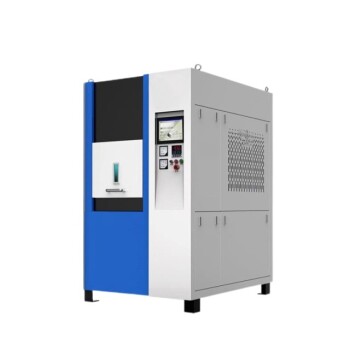
- Spark Plasma Sintering Furnace SPS Furnace
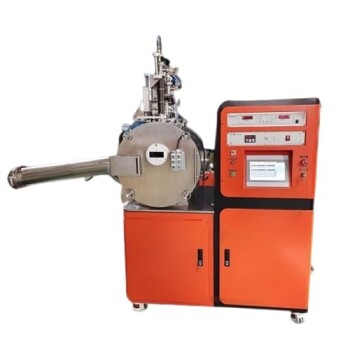
- Vacuum Heat Treat and Pressure Sintering Furnace for High Temperature Applications
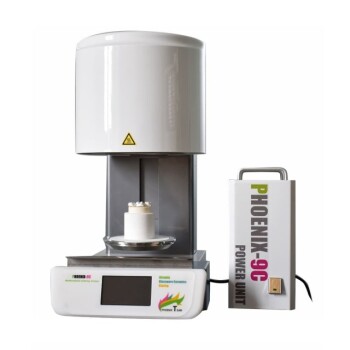
- Vacuum Heat Treat and Sintering Furnace with 9MPa Air Pressure
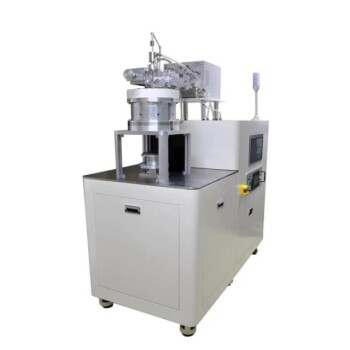
- Small Vacuum Heat Treat and Tungsten Wire Sintering Furnace
- Vacuum Dental Porcelain Sintering Furnace
People Also Ask
- What is SPS sintering method? A Guide to High-Speed, High-Performance Material Fabrication
- Why are Spark Plasma Sintering (SPS) furnaces or hot presses utilized in the preparation of Li3PS4 solid electrolytes?
- What is the difference between spark plasma sintering and flash sintering? A Guide to Advanced Sintering Methods
- What technical advantages does a Spark Plasma Sintering (SPS) furnace offer for LZP ceramics? Enhance Ionic Conductivity
- What is the theory of spark plasma sintering? A Guide to Rapid, Low-Temperature Densification