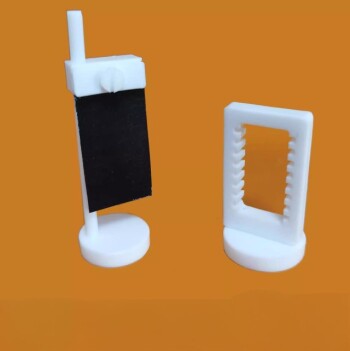
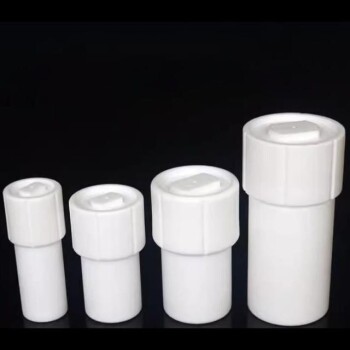
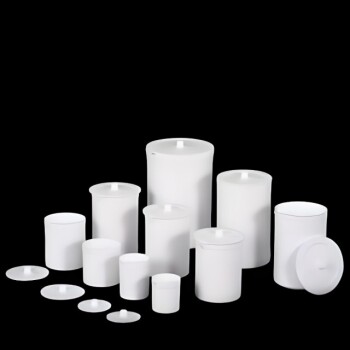
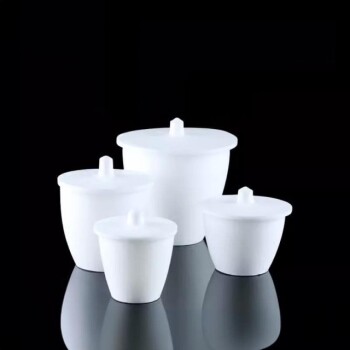
The significance of using a PTFE-lined pressure reactor lies in its dual ability to sustain the necessary thermodynamic conditions for the reaction while strictly preserving chemical purity. The stainless steel shell contains the high pressure and temperatures (over 100°C) required for synthesis, while the Polytetrafluoroethylene (PTFE) liner acts as an inert barrier. This liner prevents the corrosive reaction solution from eroding the vessel walls, thereby ensuring the final Zinc Bis(diphenyl phosphate) (ZnDPhP) product is free of metallic impurities.
Core Takeaway Synthesizing ZnDPhP requires a delicate balance of aggressive reaction conditions and strict contamination control. The PTFE liner serves as the critical interface that allows the reactor to operate at high temperatures and pressures without leaching metallic impurities, ultimately securing the formation of high-purity acicular crystals.
The Necessity of High-Pressure Conditions
To understand the equipment choice, one must first understand the requirements of the chemical reaction itself.
Facilitating TPhP Hydrolysis
The synthesis of ZnDPhP begins with the hydrolysis of Triphenyl Phosphate (TPhP).
This process, along with the subsequent coordination reaction with zinc ions, requires significant thermal energy.
Overcoming Temperature Thresholds
The reaction environment must exceed 100°C to proceed efficiently.
Standard glassware or open vessels cannot safely contain the liquid solvents at these temperatures, as they would boil off. A stainless steel pressure reactor is required to contain the system, raising the boiling point and allowing the reaction to occur in a liquid phase.
The Protective Role of the PTFE Liner
While the stainless steel shell handles the physical stress, the PTFE liner manages the chemical environment.
Exceptional Chemical Inertness
The reaction solution used to synthesize ZnDPhP is chemically aggressive.
PTFE provides a surface with exceptional chemical inertness and corrosion resistance. It effectively isolates the reaction mixture from the reactive metal of the pressure vessel.
Preventing Equipment Erosion
Without a liner, the hot, pressurized reaction solution would attack the reactor walls.
This would lead to the erosion of the stainless steel, compromising the structural integrity of the vessel over time and leading to potential equipment failure.
Ensuring Product Quality and Morphology
The most critical function of the PTFE liner is the preservation of product quality.
Eliminating Metallic Impurities
If the solution were allowed to erode the reactor walls, dissolved metal ions would contaminate the mixture.
The PTFE liner creates a hermetic seal against the metal, ensuring that no metallic impurities are introduced into the synthesis process.
Promoting Acicular Crystal Formation
The goal of this synthesis is to produce ZnDPhP with a specific acicular (needle-like) crystal structure.
The presence of metallic impurities can disrupt crystal nucleation and growth. By maintaining a pristine environment, the PTFE liner directly contributes to obtaining high-purity crystals with the correct physical morphology.
Understanding the Trade-offs
While the PTFE-lined reactor is the superior choice for this specific application, it represents a necessary engineering compromise.
Strength vs. Chemical Resistance
Stainless steel offers high tensile strength but poor chemical resistance to the specific reaction media. Conversely, PTFE offers excellent chemical resistance but lacks the mechanical strength to hold high pressure.
You cannot use PTFE alone because it would deform or burst; you cannot use steel alone because it would corrode and contaminate the product.
The Composite Solution
The significance of this setup is that it decouples mechanical containment from chemical isolation.
The "trade-off" is that you are managing two materials with different thermal expansion rates, but this complexity is required to achieve a result that neither material could accomplish individually.
Making the Right Choice for Your Synthesis
When preparing for ZnDPhP synthesis, your equipment configuration should be dictated by your specific quality and yield requirements.
- If your primary focus is reaction kinetics: Ensure your stainless steel shell is rated for pressures generated well above 100°C to drive the hydrolysis of TPhP efficiently.
- If your primary focus is crystal purity: Inspect the PTFE liner for any scratches or defects prior to use, as even minor breaches can introduce metallic impurities that ruin the acicular crystal structure.
Success in this synthesis depends on utilizing the pressure vessel for power and the PTFE liner for precision.
Summary Table:
| Feature | Function in ZnDPhP Synthesis | Benefit |
|---|---|---|
| Stainless Steel Shell | Provides mechanical strength & pressure containment | Allows reaction temperatures >100°C |
| PTFE Liner | Acts as an inert chemical barrier | Prevents vessel erosion & metal leaching |
| Corrosion Resistance | Isolates aggressive reaction media | Protects equipment integrity & longevity |
| Purity Control | Eliminates metallic ion contamination | Promotes high-quality acicular crystal growth |
Elevate Your Chemical Synthesis with KINTEK Precision
Achieving high-purity Zinc Bis(diphenyl phosphate) requires equipment that balances extreme pressure with absolute chemical inertness. KINTEK specializes in advanced laboratory solutions designed for rigorous research environments. Our premium high-temperature high-pressure reactors and autoclaves, equipped with high-grade PTFE liners, ensure your reactions remain free from metallic impurities while maintaining the thermodynamic stability needed for acicular crystal formation.
From PTFE products and ceramics to sophisticated hydrothermal synthesis reactors, KINTEK provides the tools necessary for precision material science.
Ready to optimize your synthesis workflow? Contact our technical team today for a tailored solution!
References
- Maciej Dębowski, Andrzej Plichta. 1D and 2D hybrid polymers based on zinc phenylphosphates: synthesis, characterization and applications in electroactive materials. DOI: 10.1039/d0ra09493e
This article is also based on technical information from Kintek Solution Knowledge Base .
Related Products
- Custom PTFE Teflon Parts Manufacturer for Hydrothermal Synthesis Reactor Polytetrafluoroethylene Carbon Paper and Carbon Cloth Nano-growth
- Custom PTFE Teflon Parts Manufacturer for Microwave Digestion Tank
- Stainless High Pressure Autoclave Reactor Laboratory Pressure Reactor
- Customizable High Pressure Reactors for Advanced Scientific and Industrial Applications
- Customizable Laboratory High Temperature High Pressure Reactors for Diverse Scientific Applications
People Also Ask
- What is the function of a PTFE reactor in MXene etching? Ensure Safe, High-Purity MAX Phase Conversion
- Why is a PTFE reactor required for titanium-based nano-ceramic coating solutions? Ensure Chemical Inertness & Purity
- Why must a Polytetrafluoroethylene (PTFE) reactor be used for Ti3C2TX MXene etching? Ensure Safety and Purity
- Why are PTFE reactors preferred for silver phosphate glass testing? Ensure Purity and Kinetic Accuracy
- What are the advantages of using polytetrafluoroethylene (PTFE) liners in hydrothermal synthesis reactors? High Purity