Knowledge What is the thermal conductivity of alumina? A Guide to Its Unique Thermal & Electrical Properties
Author avatar

Tech Team · Kintek Solution

Updated 6 days ago

What is the thermal conductivity of alumina? A Guide to Its Unique Thermal & Electrical Properties


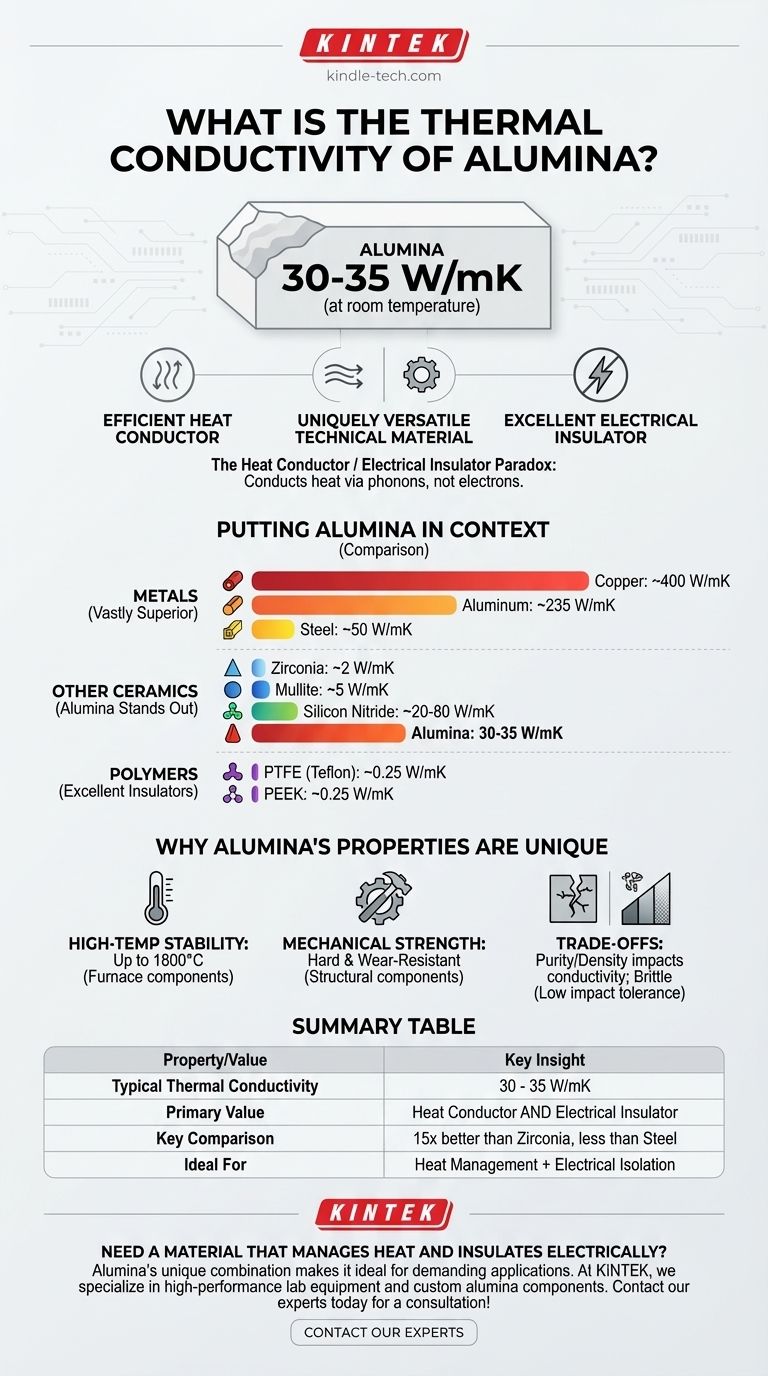
For a ceramic, aluminum oxide (alumina) has a relatively high thermal conductivity, typically cited in the range of 30 to 35 W/mK (Watts per meter-Kelvin) for dense, high-purity grades at room temperature. This property, combined with its excellent electrical insulation and high mechanical strength, makes it a uniquely versatile technical material.

The core takeaway is that alumina occupies a special niche: it efficiently conducts heat for a ceramic while remaining a superb electrical insulator. This combination is rare and is the primary reason it is chosen for demanding thermal management applications where electrical isolation is also required.

What is the thermal conductivity of alumina? A Guide to Its Unique Thermal & Electrical Properties

Putting Alumina's Thermal Conductivity in Context

A value of 30 W/mK is meaningless without comparison. Understanding where alumina sits relative to other common materials is crucial for proper material selection.

Comparison with Metals

Metals are vastly superior thermal conductors due to the free movement of electrons. Alumina is not a replacement for metal where maximum heat transfer is the only goal.

  • Copper: ~400 W/mK
  • Aluminum: ~235 W/mK
  • Steel: ~50 W/mK

As you can see, even common steel conducts heat more effectively than alumina.

Comparison with Other Ceramics

This is where alumina stands out. Most ceramics are designed to be thermal insulators, blocking the flow of heat. Alumina is an outlier.

  • Zirconia: ~2 W/mK
  • Mullite: ~5 W/mK
  • Silicon Nitride: ~20-80 W/mK (highly variable, can exceed alumina)

Compared to insulating ceramics like zirconia, alumina conducts heat more than 15 times better.

Comparison with Polymers

Polymers (plastics) are excellent thermal insulators, exhibiting thermal conductivity values that are orders of magnitude lower than alumina.

  • PTFE (Teflon): ~0.25 W/mK
  • PEEK: ~0.25 W/mK

Why Alumina's Properties Are a Unique Combination

The value of alumina comes from the intersection of its properties. It solves problems where you need to manage heat, electricity, and mechanical stress simultaneously.

The Heat Conductor / Electrical Insulator Paradox

In metals, free electrons conduct both heat and electricity very well. Alumina's rigid crystalline structure has no free electrons, making it an excellent electrical insulator.

Its heat conduction occurs primarily through lattice vibrations (phonons). This mechanism allows it to transfer heat effectively without also conducting electricity.

High-Temperature Stability

Alumina maintains its structural integrity and thermal properties at extreme temperatures, often up to 1800°C. This allows it to be used in applications like furnace components and high-temperature sensors where most metals would fail.

Mechanical Strength and Hardness

Alumina is an extremely hard and wear-resistant material. This allows it to be used as a structural component, not just a thermal interface material, in environments where it might be subject to abrasion or high compressive loads.

Understanding the Trade-offs

No material is perfect. While its combination of properties is powerful, it's essential to understand the limitations.

The Impact of Purity and Density

The 30-35 W/mK value applies to high-purity (>96%) and fully dense alumina. Porosity has a dramatic negative effect on thermal conductivity, as air gaps within the ceramic act as insulators. Lower-purity grades will also exhibit lower conductivity.

Brittleness is a Factor

Like most technical ceramics, alumina is brittle. It has low tolerance for impact and tensile stress. While its thermal shock resistance is good for a ceramic, it can still fracture if subjected to rapid and extreme temperature changes that metals could easily withstand.

Making the Right Choice for Your Application

Selecting the right material depends entirely on your primary engineering goal.

  • If your primary focus is heat dissipation combined with electrical insulation: Alumina is one of the best and most cost-effective choices, ideal for electronic substrates, heat sinks for power electronics, and insulator pads.
  • If your primary focus is pure thermal insulation: You should choose a different ceramic, such as zirconia or mullite, which are specifically designed to block heat flow.
  • If your primary focus is maximum thermal conductivity without electrical constraints: A metal like aluminum or copper will always be the superior choice.

Ultimately, alumina is the material of choice when you face a multi-faceted problem that requires a unique balance of thermal, electrical, and mechanical performance.

Summary Table:

Property Value / Key Insight
Typical Thermal Conductivity 30 - 35 W/mK (at room temperature)
Primary Value Efficient heat conductor AND excellent electrical insulator
Key Comparison Conducts heat 15x better than zirconia, but less than steel
Ideal For Applications needing heat management + electrical isolation

Need a Material that Manages Heat and Insulates Electrically?

Alumina's unique combination of properties makes it the ideal choice for demanding thermal management applications where electrical isolation is critical, such as electronic substrates, furnace components, and high-temperature sensors.

At KINTEK, we specialize in high-performance lab equipment and consumables, including alumina components tailored to your specific requirements. Our expertise ensures you get the right material solution for your laboratory's unique challenges.

Let's discuss how alumina can solve your application needs. Contact our experts today for a consultation!

Visual Guide
What is the thermal conductivity of alumina? A Guide to Its Unique Thermal & Electrical Properties Visual Guide

Related Products

People Also Ask

Related Products

Precision Machined Zirconia Ceramic Ball for Engineering Advanced Fine Ceramics

Precision Machined Zirconia Ceramic Ball for Engineering Advanced Fine Ceramics

zirconia ceramic ball have the characteristics of high strength, high hardness, PPM wear level, high fracture toughness, good wear resistance, and high specific gravity.

Electrode Polishing Material for Electrochemical Experiments

Electrode Polishing Material for Electrochemical Experiments

Looking for a way to polish your electrodes for electrochemical experiments? Our polishing materials are here to help! Follow our easy instructions for best results.

Conductive Boron Nitride BN Ceramics Composite for Advanced Applications

Conductive Boron Nitride BN Ceramics Composite for Advanced Applications

Due to the characteristics of boron nitride itself, the dielectric constant and dielectric loss are very small, so it is an ideal electrical insulating material.

Conductive Carbon Cloth Carbon Paper Carbon Felt for Electrodes and Batteries

Conductive Carbon Cloth Carbon Paper Carbon Felt for Electrodes and Batteries

Conductive carbon cloth, paper, and felt for electrochemical experiments. High-quality materials for reliable and accurate results. Order now for customization options.

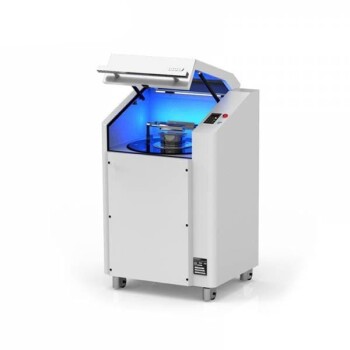
Lab Vibration Mill

Lab Vibration Mill

Vibration Mill for Efficient Sample Preparation, Suitable for Crushing and Grinding a Variety of Materials with Analytical Precision. Supports Dry / Wet / Cryogenic Grinding and Vacuum/Inert Gas Protection.

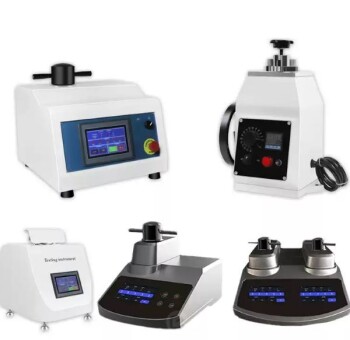
Metallographic Specimen Mounting Machine for Laboratory Materials and Analysis

Metallographic Specimen Mounting Machine for Laboratory Materials and Analysis

Precision metallographic mounting machines for labs—automated, versatile, and efficient. Ideal for sample prep in research and quality control. Contact KINTEK today!

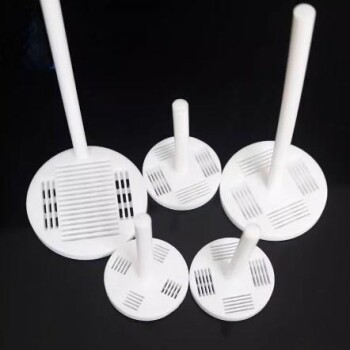
Custom Machined and Molded PTFE Teflon Parts Manufacturer for Laboratory ITO FTO Conductive Glass Cleaning Flower Basket

Custom Machined and Molded PTFE Teflon Parts Manufacturer for Laboratory ITO FTO Conductive Glass Cleaning Flower Basket

PTFE cleaning racks are mainly made of tetrafluoroethylene. PTFE, known as the "King of Plastics", is a polymer compound made of tetrafluoroethylene.

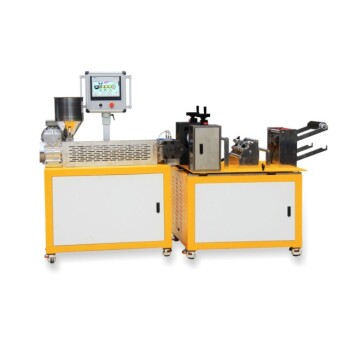
Lab Plastic PVC Calender Stretch Film Casting Machine for Film Testing

Lab Plastic PVC Calender Stretch Film Casting Machine for Film Testing

The cast film machine is designed for the molding of polymer cast film products and has multiple processing functions such as casting, extrusion, stretching, and compounding.

Inclined Rotary Plasma Enhanced Chemical Vapor Deposition PECVD Equipment Tube Furnace Machine

Inclined Rotary Plasma Enhanced Chemical Vapor Deposition PECVD Equipment Tube Furnace Machine

Introducing our inclined rotary PECVD furnace for precise thin film deposition. Enjoy automatic matching source, PID programmable temperature control, and high accuracy MFC mass flowmeter control. Built-in safety features for peace of mind.

Lab-Scale Vacuum Induction Melting Furnace

Lab-Scale Vacuum Induction Melting Furnace

Get precise alloy composition with our Vacuum Induction Melting Furnace. Ideal for aerospace, nuclear energy, and electronic industries. Order now for effective smelting and casting of metals and alloys.

Custom PTFE Teflon Parts Manufacturer for Hollow Cleaning Basket and Rack Carrier

Custom PTFE Teflon Parts Manufacturer for Hollow Cleaning Basket and Rack Carrier

The PTFE hollow cleaning flower basket is a specialized laboratory tool designed for efficient and safe cleaning processes. Made from high-quality polytetrafluoroethylene (PTFE), this basket offers exceptional resistance to acids, alkalis, and organic solvents, ensuring durability and reliability in various chemical environments.

Laboratory Sterilizer Lab Autoclave Herbal Powder Sterilization Machine for Plant

Laboratory Sterilizer Lab Autoclave Herbal Powder Sterilization Machine for Plant

The herbal powder sterilization autoclave machine for Chinese medicine uses saturated steam for effective sterilization. It utilizes the heat and penetrative properties of steam, achieves sterilization after heat preservation, and maintains a good drying effect with a dedicated drying system.

Laboratory Vibratory Sieve Shaker Machine for Dry and Wet Three-Dimensional Sieving

Laboratory Vibratory Sieve Shaker Machine for Dry and Wet Three-Dimensional Sieving

KT-VD200 can be used for sieving tasks of dry and wet samples in the laboratory. The screening quality is 20g-3kg. The product is designed with a unique mechanical structure and an electromagnetic vibrating body with a vibration frequency of 3000 times per minute.

Evaporation Boat for Organic Matter

Evaporation Boat for Organic Matter

The evaporation boat for organic matter is an important tool for precise and uniform heating during the deposition of organic materials.

Graphite Vacuum Continuous Graphitization Furnace

Graphite Vacuum Continuous Graphitization Furnace

High-temperature graphitization furnace is a professional equipment for graphitization treatment of carbon materials. It is a key equipment for the production of high-quality graphite products. It has high temperature, high efficiency and uniform heating. It is suitable for various high-temperature treatments and graphitization treatments. It is widely used in metallurgy, electronics, aerospace, etc. industry.

Laboratory Hydraulic Press Lab Pellet Press for Button Battery

Laboratory Hydraulic Press Lab Pellet Press for Button Battery

Efficiently prepare samples with our 2T Button Battery Press. Ideal for material research labs and small-scale production. Small footprint, lightweight, and vacuum-compatible.

Custom PTFE Teflon Parts Manufacturer for PTFE Containers

Custom PTFE Teflon Parts Manufacturer for PTFE Containers

PTFE container is a container with excellent corrosion resistance and chemical inertness.

Professional Cutting Tools for Carbon Paper Cloth Diaphragm Copper Aluminum Foil and More

Professional Cutting Tools for Carbon Paper Cloth Diaphragm Copper Aluminum Foil and More

Professional tools for cutting lithium sheets, carbon paper, carbon cloth, separators, copper foil, aluminum foil, etc., with round and square shapes and different sizes of blades.

Custom PTFE Teflon Parts Manufacturer for Culture Dish and Evaporation Dish

Custom PTFE Teflon Parts Manufacturer for Culture Dish and Evaporation Dish

The PTFE culture dish evaporating dish is a versatile laboratory tool known for its chemical resistance and high-temperature stability. PTFE, a fluoropolymer, offers exceptional non-stick properties and durability, making it ideal for various applications in research and industry, including filtration, pyrolysis, and membrane technology.

Thermally Evaporated Tungsten Wire for High Temperature Applications

Thermally Evaporated Tungsten Wire for High Temperature Applications

It has a high melting point, thermal and electrical conductivity, and corrosion resistance. It is a valuable material for high temperature, vacuum and other industries.


Leave Your Message