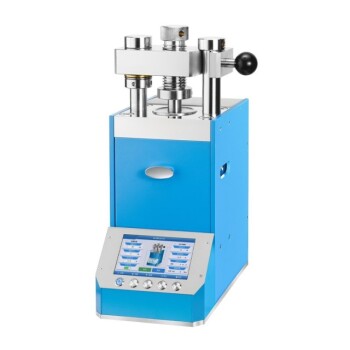
Hot Isostatic Pressing (HIP) primarily addresses the critical issue of internal structural inconsistencies. Specifically, it resolves the presence of residual micro-pores and micro-cracks that persist within Silicon Carbide bodies even after the initial sintering process. By eliminating these microscopic defects, the process transforms a standard ceramic component into a highly reliable, near-zero-defect product.
Core Takeaway While standard sintering creates a hard ceramic, it often leaves behind microscopic voids that act as stress concentrators. HIP resolves this by applying massive, uniform pressure to heal these internal flaws, significantly increasing the material's density, strength, and statistical reliability (Weibull modulus).
Addressing the Hidden Flaws in Silicon Carbide
The final production stages of high-performance ceramics are defined by the pursuit of perfection. HIP is utilized specifically to target defects that are invisible to the naked eye but fatal to performance.
Eliminating Residual Porosity
Even after sintering, Silicon Carbide bodies often contain micro-pores. These are tiny pockets of empty space trapped within the material.
HIP forces these voids to close. By subjecting the material to extreme pressure, the process densifies the ceramic, effectively squeezing out the empty space.
Healing Micro-Cracks
Small fissures, or micro-cracks, can form during the initial forming or cooling stages. These are structural weak points where fractures begin.
The HIP process creates an environment where the material can flow in a solid state. This facilitates diffusion bonding at an atomic level, effectively "healing" these cracks and creating a continuous, solid structure.
The Mechanics of the Solution
To understand how HIP resolves these issues, it is necessary to look at the unique conditions created inside the press.
Uniform Isostatic Pressure
Unlike standard pressing which might apply force from top to bottom, HIP applies pressure isostatically—meaning equally from all directions.
This is achieved using a high-pressure gas, typically argon. Because the gas surrounds the component completely, it compresses the Silicon Carbide uniformly, preventing the deformation that might occur with unidirectional mechanical pressing.
The Role of Inert Gas
Argon is chosen because it is an inert gas.
At the extreme temperatures required for this process, Silicon Carbide could react chemically with oxygen or other gases. Using an inert medium ensures the chemical purity of the ceramic is maintained while the physical structure is densified.
Simultaneous Heat and Pressure
The process does not rely on pressure alone. It combines high pressure with high temperature within a specialized furnace vessel.
This combination allows the ceramic material to reach a state where atomic bonding can occur across the collapsed pores, permanently sealing the internal defects.
The Impact on Performance
Resolving these internal issues leads to measurable improvements in the mechanical properties of the final product.
Increased Flexural Strength
By removing the internal voids that serve as crack initiation sites, the material's resistance to bending (flexural strength) is significantly enhanced.
Improved Weibull Modulus
The Weibull modulus is a statistical measure of the variability in the material's strength. A low modulus means unpredictable failure; a high modulus means consistent performance.
Because HIP removes the random defects that cause premature failure, it raises the Weibull modulus. This makes the Silicon Carbide product much more reliable and predictable in critical applications.
Understanding the Process Requirements
While HIP is a powerful solution for defect elimination, it introduces specific operational requirements that define its role in production.
A "Finishing" Step
HIP is applied to a pre-sintered body. It is generally not used to form the shape from raw powder but rather to refine a shape that has already been created.
Specialized Cycle Control
The process requires a precise cycle of heating, pressurizing, holding, and gradual cooling. This ensures that while defects are removed, no new thermal shock stresses are introduced during the cool-down phase.
Making the Right Choice for Your Goal
Deciding to employ Hot Isostatic Pressing depends on the performance demands of your final application.
- If your primary focus is Maximum Reliability: Use HIP to maximize the Weibull modulus, ensuring the ceramic behaves predictably under stress without random failures.
- If your primary focus is Defect Elimination: Use HIP to achieve a near-zero-defect state by closing residual micro-pores and healing micro-cracks.
Summary: HIP is the definitive solution for converting a sintered Silicon Carbide component into a fully dense, high-strength material suitable for the most demanding engineering environments.
Summary Table:
| Defect Resolved | HIP Mechanism | Performance Improvement |
|---|---|---|
| Micro-Pores | Uniform Isostatic Pressure | Achieves near-zero-defect density |
| Micro-Cracks | Atomic Diffusion Bonding | Enhances flexural strength |
| Internal Voids | Simultaneous Heat & Pressure | Increases statistical reliability |
| Structural Flaws | Inert Argon Environment | Improves Weibull Modulus |
Elevate Your Material Integrity with KINTEK
Don't let microscopic defects compromise your research or production quality. KINTEK specializes in advanced laboratory equipment, offering high-performance hot isostatic presses (HIP) and isostatic presses designed to transform Silicon Carbide into high-reliability, near-zero-defect materials.
Our extensive portfolio—ranging from high-temperature furnaces and hydraulic presses to high-pressure reactors and battery research tools—provides the precision your lab demands. Let our experts help you achieve superior material density and consistent mechanical performance today.
Contact KINTEK for a Consultation
References
- Hidehiko Tanaka. Silicon carbide powder and sintered materials. DOI: 10.2109/jcersj2.119.218
This article is also based on technical information from Kintek Solution Knowledge Base .
Related Products
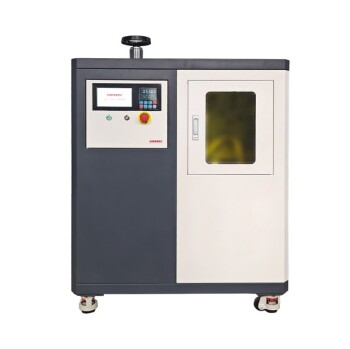
- Warm Isostatic Press for Solid State Battery Research
- Isostatic Molding Pressing Molds for Lab
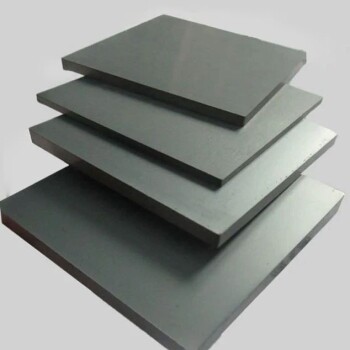
- Silicon Carbide (SIC) Ceramic Plate for Engineering Advanced Fine Ceramics
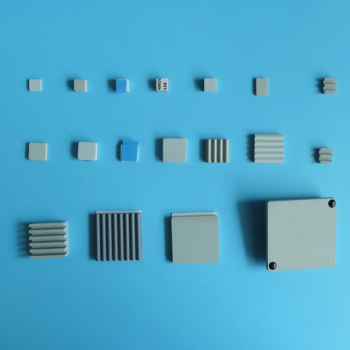
- Silicon Carbide (SIC) Ceramic Sheet Flat Corrugated Heat Sink for Engineering Advanced Fine Ceramics
- 600T Vacuum Induction Hot Press Furnace for Heat Treat and Sintering
People Also Ask
- What is the temperature of a warm isostatic press? Achieve Optimal Densification for Your Materials
- What is the function of a Warm Isostatic Press (WIP) in all-solid-state pouch cells? Optimize Battery Density
- Why are Warm Isostatic Presses (WIP) necessary for solid-state batteries? Achieve Atomic-Level Contact
- What advantages does a warm isostatic press offer over a traditional uniaxial press for Li6PS5Cl electrolyte sheets?
- How do warm isostatic presses improve dry electrode performance? Enhance ASSB Conductivity with Heat & Pressure