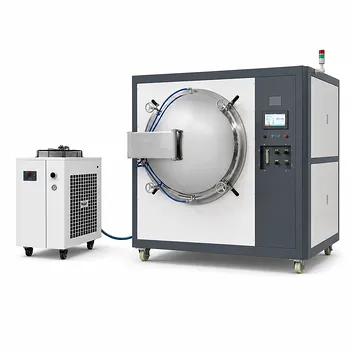
The sintering process produces high-performance components by compacting and heating powdered materials below their melting point to form solid, durable parts. This method is instrumental in creating critical items such as automotive gears, electrical switchgear, industrial cutting tools, aerospace turbine blades, and biomedical prosthetic joints.
Core Insight: Sintering is not merely a forming process; it is a material enhancement technique. By fusing particles via atomic diffusion, it transforms loose powders into dense, high-strength bodies capable of withstanding the extreme environments found in aerospace engines and the biological requirements of medical implants.
Industrial Applications and Component Types
The versatility of sintering allows it to bridge the gap between complex geometry and material integrity. The following sectors rely heavily on sintered components.
Automotive Systems
The automotive industry utilizes sintering to mass-produce parts that require high structural integrity and precision. Key components include gears and actuators, which must withstand constant friction and mechanical stress.
Aerospace Engineering
In aerospace, where material failure is not an option, sintering creates parts capable of surviving extreme thermal and physical loads. Specific examples include fuel valve parts and turbine blades. These components benefit from the enhanced material density and thermal properties achieved through the sintering process.
Manufacturing and Tooling
Sintering is essential for creating robust tooling used in heavy manufacturing. It produces hardened cutting tools designed for milling, drilling, and reaming. The process imparts the necessary hardness and wear resistance required to cut through other metals.
Electrical Components
The process is also utilized in the production of electrical infrastructure. Sintering is used to manufacture switchgear, a critical component in electrical power systems that controls, protects, and isolates electrical equipment.
Biomedical Implants
The medical field leverages sintering for patient-specific solutions. It is used to manufacture prosthetic joints and other implants. The ability to control porosity during sintering can also be advantageous here, as it can mimic bone structure to encourage integration.
Understanding the Material Scope
While often associated with metals, the scope of sintering extends to other material classes, broadening the types of components that can be produced.
Ceramics and Plastics
Beyond metal alloys, sintering is used to consolidate ceramic and plastic powders. This allows for the production of components that require specific properties like electrical insulation (ceramics) or lightweight structural forms (plastics).
Enhanced Material Properties
Regardless of the material, the goal is property enhancement. Sintering improves thermal and electrical conductivity, material strength, and even translucency in certain ceramics.
Understanding the Trade-offs
While sintering creates superior components, the process introduces specific challenges that engineering teams must navigate.
Managing "Green" Fragility
Before firing, the component exists in a "green" state, held together only by a bonding agent (wax or polymer). At this stage, the part is fragile; improper handling before the bonding agent is burned off and fusion occurs can lead to structural defects.
Volume Shrinkage
The fundamental mechanism of sintering involves the reduction of pore spaces and the densification of the material. This leads to volume shrinkage as the particles bond. Engineers must accurately predict this shrinkage during the design phase to ensure the final component meets precise dimensional tolerances.
Making the Right Choice for Your Goal
Sintering is a powerful manufacturing method, but its application should align with your specific material and performance requirements.
- If your primary focus is extreme wear resistance: Prioritize sintering for creating hardened cutting tools and industrial drills.
- If your primary focus is high-temperature durability: Utilize sintering for aerospace components like turbine blades that must retain integrity under thermal stress.
- If your primary focus is biological integration: Leverage the process for prosthetic joints where material purity and density are critical.
Sintering offers a unique pathway to turn powdered potential into solid, high-performance reality.
Summary Table:
| Industry | Key Sintered Components | Primary Material Benefits |
|---|---|---|
| Automotive | Gears, actuators, engine parts | High structural integrity, wear resistance |
| Aerospace | Turbine blades, fuel valve parts | Extreme thermal load & physical stress capacity |
| Manufacturing | Cutting tools, milling bits, drills | Exceptional hardness, durability, and toughness |
| Medical | Prosthetic joints, dental implants | Biocompatibility, controlled porosity, density |
| Electrical | Switchgear, contacts, insulators | Enhanced electrical & thermal conductivity |
Elevate Your Material Manufacturing with KINTEK
Precision in sintering requires high-performance equipment that guarantees consistent results. KINTEK specializes in advanced laboratory solutions designed for the most demanding applications. Whether you are developing aerospace turbine blades or biomedical prosthetics, our comprehensive range of high-temperature furnaces (muffle, vacuum, CVD, and atmosphere) and hydraulic presses provides the control and reliability your research demands.
From crushing and milling systems to essential PTFE and ceramic consumables, KINTEK supports your entire workflow—enhancing material density and structural integrity at every step. Let us help you turn powdered potential into high-performance reality.
Related Products
- Vacuum Heat Treat and Sintering Furnace with 9MPa Air Pressure
- Spark Plasma Sintering Furnace SPS Furnace
- Vacuum Heat Treat and Molybdenum Wire Sintering Furnace for Vacuum Sintering
- Small Vacuum Heat Treat and Tungsten Wire Sintering Furnace
- Dental Porcelain Zirconia Sintering Ceramic Vacuum Press Furnace
People Also Ask
- What is the process of pressure sintering? Achieve Superior Density and Strength for High-Performance Parts
- What is the effect of pressure during sintering? Achieve Higher Density and Finer Microstructures Faster
- Why must green bodies produced via binder jetting undergo treatment in a vacuum sintering furnace?
- What is a vacuum sintering furnace? Unlock Purity and Performance in Advanced Materials
- How does the vacuum environment impact sintering of diamond-copper composites? Protect Against Thermal Damage