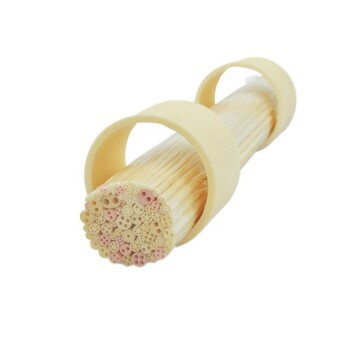
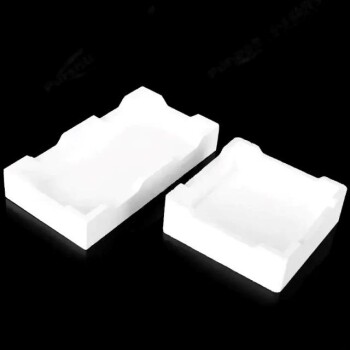
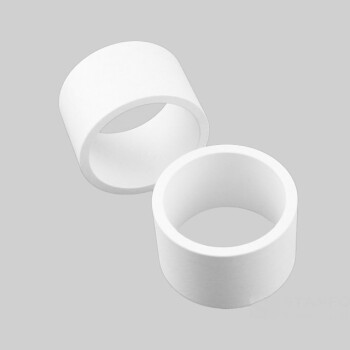
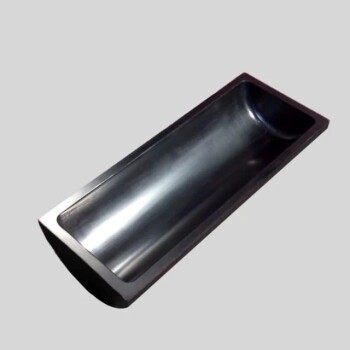
Corundum tubes serve as the critical line of defense for experimental integrity. In high-temperature refractory corrosion tests, these tubes function as high-purity reaction vessel carriers. Their primary role is to physically isolate volatile, active potassium salts (such as KCl and K2CO3) from the furnace's internal heating elements.
The Core Value of Corundum By leveraging exceptional chemical inertness, corundum tubes prevent cross-contamination between the heat source and the test subjects. This isolation guarantees that any gathered data reflects strictly the interaction between the corrosive salts and the refractory samples, rather than impurities from the furnace itself.
Ensuring Analytical Credibility
Isolating the Reaction Environment
The primary challenge in high-temperature corrosion testing is containing aggressive agents. Active potassium salts become highly volatile and reactive when heated.
Corundum tubes act as a physical and chemical barrier. They hold the reaction mixture, ensuring that corrosive vapors are contained within the vessel rather than dispersing throughout the furnace chamber.
Protecting Heating Elements
Furnace heating elements are often sensitive to chemical attack. Exposure to potassium salts can degrade these elements, leading to equipment failure or uneven heating profiles.
By containing the experiment within a corundum tube, you preserve the lifespan and performance of the furnace's heating system. This separation is vital for maintaining a precise, stable thermal field throughout the duration of the test.
The Material Advantages of Corundum
Chemical Inertness
Corundum (crystalline aluminum oxide) is chosen specifically for its resistance to chemical reaction.
Unlike standard ceramic or metallic tubes, corundum does not react with the active potassium salts used in these specific experiments. This ensures the tube itself does not introduce foreign elements into the corrosion products.
Thermal Stability at High Temperatures
Refractory experiments require sustained high temperatures to simulate real-world conditions.
Corundum possesses high refractoriness, meaning it maintains its structural integrity and does not soften or deform under the intense thermal loads required for these tests. This stability ensures that the position of the sample remains constant relative to the thermal center of the furnace.
Understanding the Trade-offs
Material Specificity
While corundum is exceptional for resisting potassium salts, it is not a universal solution for every corrosion test.
For example, experiments simulating lead-cooled fast reactor environments might utilize sealed quartz systems to regulate oxygen activity or specific gas flows.
The choice of tube material—whether corundum, quartz, or another high-alumina variant—must be matched strictly to the chemical compatibility of the corrosive agents involved. Using corundum is a deliberate choice for potassium salt environments; misapplying it in chemically incompatible atmospheres could still lead to contamination or tube failure.
Making the Right Choice for Your Goal
To ensure your high-temperature corrosion data is valid, select your vessel material based on the specific chemistry of your experiment.
- If your primary focus is Data Purity: Utilize corundum tubes to ensure that analyzed corrosion products are free from heating element contamination.
- If your primary focus is Equipment Safety: Rely on corundum carriers to shield expensive furnace heating elements from volatile active salts like KCl and K2CO3.
The integrity of your results depends entirely on the inertness of your containment vessel.
Summary Table:
| Feature | Role in Corrosion Experiments | Benefit to Researcher |
|---|---|---|
| Chemical Inertness | Resists reaction with active potassium salts (KCl, K2CO3) | Prevents sample contamination and ensures data purity |
| Physical Barrier | Isolates volatile agents from furnace interior | Protects expensive heating elements from degradation |
| Thermal Stability | Maintains structure at extreme temperatures | Ensures consistent sample positioning and thermal field |
| High Purity | Aluminum oxide (Al2O3) composition | Eliminates foreign element interference in corrosion products |
Upgrade Your Lab’s Precision with KINTEK Materials
Don't compromise your research integrity with subpar containment vessels. KINTEK specializes in high-performance laboratory equipment, providing the high-purity corundum and ceramic tubes necessary for rigorous high-temperature refractory corrosion experiments.
Whether you are conducting battery research, material synthesis, or complex thermal analysis, our comprehensive range of high-temperature furnaces (muffle, tube, vacuum, CVD) and high-pressure reactors are engineered to withstand the most aggressive chemical environments. From PTFE products and crucibles to advanced crushing and milling systems, KINTEK delivers the durability and precision required by modern researchers.
Secure your equipment and validate your data today. Contact our technical experts to find the perfect solution for your experiment!
References
- Ying Zhao, Jin Zhao. Analysis and Prediction of Corrosion of Refractory Materials by Potassium during Biomass Combustion-Thermodynamic Study. DOI: 10.3390/ma11122584
This article is also based on technical information from Kintek Solution Knowledge Base .
Related Products
- High Temperature Aluminum Oxide (Al2O3) Protective Tube for Engineering Advanced Fine Ceramics
- Advanced Engineering Fine Ceramics Alumina Ceramic Saggar for Fine Corundum
- High Temperature Alumina (Al2O3) Furnace Tube for Engineering Advanced Fine Ceramics
- Boron Nitride (BN) Ceramic Tube
- Rotary Tube Furnace Split Multi Heating Zone Rotating Tube Furnace
People Also Ask
- What is the process of alumina tube manufacturing? From Powder to High-Performance Ceramic
- What is the heating rate for alumina tubes? A Variable Schedule to Prevent Thermal Shock
- How do alumina ceramic tubes address technical challenges in electrochemical devices? Ensure Peak Signal Integrity.
- What is the working temperature of alumina tube? Achieve Safe & Reliable High-Temp Processing
- What is the maximum temperature for alumina tube? Unlock Its Full Potential with High Purity