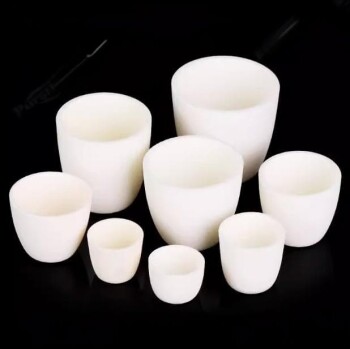
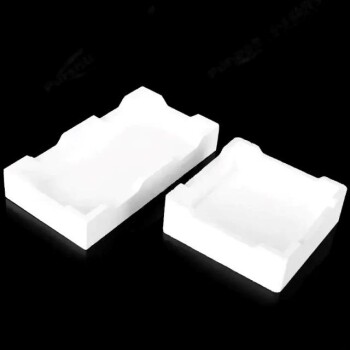
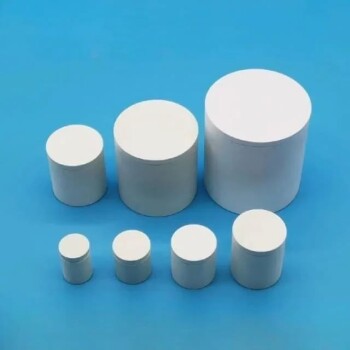
High-purity alumina crucibles are the industry standard for pack cementation because they provide a chemically inert environment capable of withstanding extreme thermal stress. They remain stable above 1000°C and resist reactions with aggressive fluoride or chloride activators, ensuring that the coating process remains free from external contaminants.
Core Takeaway The success of pack cementation depends on isolating the chemical reaction. High-purity alumina acts as a neutral vessel that maintains structural rigidity and chemical inertness at high temperatures, preventing impurity migration that would otherwise compromise protective layers like Mo-Si-B.
The Critical Role of Chemical Inertness
Resisting Aggressive Activators
Pack cementation relies on volatile halide activators to transport metal ions. High-purity alumina does not react with these fluoride or chloride activators.
This non-reactive nature is vital. It ensures the chemical potential of the activator is utilized solely for the coating process, rather than being consumed by the crucible walls.
Preventing Impurity Migration
The primary goal of using high-purity material is to maintain a pristine environment. Alumina prevents impurities from leaching into the coating mixture.
This is particularly critical when forming complex protective layers, such as Mo-Si-B. By eliminating cross-contamination from the vessel, the crucible ensures the final coating composition is accurate and effective.
Structural Integrity at Extreme Temperatures
Withstanding Prolonged Heat
The coating process requires sustained exposure to high heat to facilitate diffusion. Alumina crucibles maintain their strength during prolonged heating above 1000°C.
While some processes operate around 950°C, the material's capability to exceed this threshold provides a safety margin. This thermal stability ensures the vessel does not degrade or collapse over long treatment cycles.
Maintaining Geometric Stability
Beyond resisting heat, the crucible must endure physical stress. High-purity alumina is rigid enough to support the substantial weight of the pack-cementation mixture.
By maintaining its shape without deformation, the crucible guarantees that the internal volume remains constant. This is essential for keeping the aluminizing atmosphere uniformly distributed throughout the container.
Understanding the Constraints
The Necessity of High Purity
The benefits described specifically rely on the alumina being high-purity.
Using lower-grade ceramics is a common pitfall. Impurities in standard crucibles can react with the activators or the aluminum source, leading to vessel degradation and coating contamination.
Thermal Cycle Management
While alumina offers excellent high-temperature strength, it is a ceramic material.
Care must be taken to manage heating and cooling rates. The structural strength described applies to static load-bearing at temperature, but rapid thermal cycling can still pose risks to the vessel's integrity if not managed correctly.
Making the Right Choice for Your Process
To maximize the effectiveness of your pack cementation process, select your equipment based on your specific quality requirements.
- If your primary focus is Coating Purity: Prioritize crucibles with the highest available alumina content to eliminate reactions with fluoride or chloride activators.
- If your primary focus is Process Consistency: Ensure the crucible has sufficient wall thickness and structural grade to maintain its shape and ensure uniform atmosphere distribution.
High-purity alumina is not just a container; it is a critical process variable that safeguards the chemistry of your coating.
Summary Table:
| Feature | Benefit for Pack Cementation | Why It Matters |
|---|---|---|
| Chemical Inertness | Resists fluoride/chloride activators | Prevents activator consumption and contamination. |
| High Thermal Limit | Stable above 1000°C | Ensures safety during long-duration diffusion cycles. |
| Structural Rigidity | Maintains shape under heavy pack loads | Guarantees uniform distribution of the coating atmosphere. |
| Purity Levels | Prevents impurity migration | Crucial for sensitive coatings like Mo-Si-B. |
Elevate Your Coating Precision with KINTEK Materials
Don't let vessel contamination compromise your protective layers. KINTEK provides industry-leading high-purity alumina crucibles and ceramics designed to withstand the most aggressive pack cementation environments.
Whether you are developing advanced Mo-Si-B coatings or standard aluminizing processes, our expert-grade consumables ensure maximum chemical isolation and thermal durability. Beyond crucibles, KINTEK offers a full suite of laboratory solutions—from high-temperature furnaces and vacuum systems to crushing and milling equipment—tailored for material science innovators.
Ready to optimize your process consistency? Contact KINTEK today for expert guidance and high-performance laboratory equipment.
References
- Ranran Su, John H. Perepezko. Phase Stability During High-Temperature Oxidation. DOI: 10.1007/s11837-023-06080-2
This article is also based on technical information from Kintek Solution Knowledge Base .
Related Products
- Arc-Shaped Alumina Ceramic Crucible High Temperature Resistant for Engineering Advanced Fine Ceramics
- High Purity Alumina Granulated Powder for Engineering Advanced Fine Ceramics
- High Purity Pure Graphite Crucible for Evaporation
- Engineering Advanced Fine Alumina Al2O3 Ceramic Crucible for Laboratory Muffle Furnace
- High Purity Pure Graphite Crucible for Electron Beam Evaporation
People Also Ask
- Why Use Alumina Crucibles & Powder Burial for NaSICON? Ensure Phase Purity and Prevent Elemental Volatilization
- What is the primary purpose of using alumina crucibles for LLTO ceramics? Optimize Your High-Temperature Sintering
- Why are alumina crucibles and mother powder essential for LATP sintering? Optimize Your Solid Electrolyte Performance
- Why are high-purity alumina crucibles used for liquid lead corrosion experiments? Ensure Data Accuracy at 550°C
- Primary considerations for choosing alumina crucibles and quartz tubes in indium intercalation: Ensure Material Purity