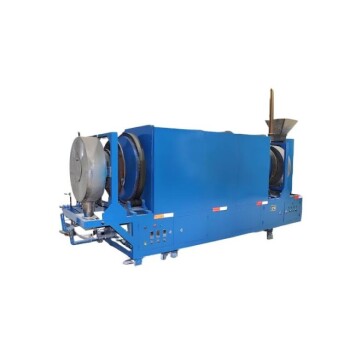
A tube heating furnace and its associated glass reactor work in tandem to establish a controlled thermal and atmospheric environment. The furnace generates precise, programmed thermal energy to drive the cracking of plastic waste. Simultaneously, the glass reactor provides a closed, oxygen-free space to hold the material and catalysts, ensuring the plastic decomposes into hydrocarbon vapors rather than burning.
Plastic pyrolysis relies on the strict isolation of materials from oxygen combined with accurate heat application. This equipment setup ensures solid macromolecules are converted into shorter-chain vapors by maintaining a specific temperature profile within an inert reaction zone.
The Role of the Tube Heating Furnace
Precise Thermal Energy Application
The primary function of the furnace is to provide precise thermal energy to the system. This energy is the driving force required to break the strong chemical bonds within solid plastic waste. Without this targeted heat application, the thermal cracking process cannot initiate.
Programmed Temperature Control
Unlike simple heating elements, a tube furnace utilizes programmed temperature control. This allows operators to define specific heating ramps and hold times. This control is critical for targeting specific reaction kinetics and ensuring reproducible results.
The Function of the Glass Tube Reactor
Creating a Closed Reaction Space
The glass tube acts as the containment vessel for the entire process. It serves as a closed reaction space that physically holds the plastic samples and any catalysts being tested. This containment prevents the release of volatile vapors into the laboratory environment before they can be collected or analyzed.
Supporting a Controlled Atmosphere
The reactor is designed to support a controlled atmosphere, typically an oxygen-free environment. This is the defining factor of pyrolysis. By excluding oxygen, the system ensures the plastic undergoes thermal decomposition (breaking down) rather than combustion (burning).
Facilitating Phase Conversion
Within this specialized environment, the physical state of the material changes. The setup allows solid plastic macromolecules to be efficiently converted into shorter-chain hydrocarbon vapors. This phase change occurs only when the specific temperature ranges provided by the furnace meet the atmospheric protection of the reactor.
Understanding the Trade-offs
Material Limitations
While a glass reactor offers chemical inertness, it has inherent thermal and pressure limits. Unlike metal reactors, glass may not withstand extreme high-pressure pyrolysis scenarios. It is generally best suited for atmospheric or low-pressure operations.
Scale of Operation
The tube furnace configuration is typically designed for batch processing or small-scale continuous flow. It provides high precision for research and analysis but lacks the throughput capacity required for industrial-scale waste management.
Making the Right Choice for Your Goal
To maximize the utility of a tube furnace and glass reactor setup, align your operational parameters with your specific research objectives.
- If your primary focus is Reaction Kinetics: Prioritize the programmed temperature control features to study how different heating rates affect polymer breakdown.
- If your primary focus is Product Purity: Rely on the closed, oxygen-free environment of the glass reactor to prevent oxidation and ensure the hydrocarbon vapors remain uncontaminated.
Success in plastic pyrolysis begins with the precise control of heat and the absolute exclusion of oxygen.
Summary Table:
| Component | Key Process Condition | Primary Function |
|---|---|---|
| Tube Heating Furnace | Precise Thermal Energy | Provides the heat required to break chemical bonds. |
| Programmed Control | Temperature Ramping | Manages reaction kinetics and ensures reproducibility. |
| Glass Tube Reactor | Closed Reaction Space | Contains volatile vapors and holds plastic/catalyst samples. |
| Inert Atmosphere | Oxygen-Exclusion | Prevents combustion, ensuring thermal decomposition. |
| Phase Conversion | Phase Management | Facilitates the change from solid polymers to hydrocarbon vapors. |
Advance Your Pyrolysis Research with KINTEK
Unlock precision in your chemical recycling studies with KINTEK’s specialized laboratory solutions. Whether you are analyzing reaction kinetics or maximizing product purity, our high-performance tube furnaces, glass reactors, and catalyst testing tools provide the stable, oxygen-free environments your research demands.
From high-temperature furnaces and vacuum systems to precision crushing and milling equipment for sample preparation, KINTEK offers the complete ecosystem for plastic pyrolysis and battery research.
Ready to elevate your lab's capabilities? Contact our technical experts today to find the perfect furnace and reactor configuration for your specific application.
References
- Sunday Jatau, Ahsan Hafiz Muhammad. Acidic Influence in Conversion of Hospital Plastic Waste into Liquid Fuel using Kaolin Base-supported Catalysts. DOI: 10.4314/jasem.v27i4.6
This article is also based on technical information from Kintek Solution Knowledge Base .
Related Products
- Rotary Tube Furnace Split Multi Heating Zone Rotating Tube Furnace
- Laboratory Rapid Thermal Processing (RTP) Quartz Tube Furnace
- Multi Heating Zones CVD Tube Furnace Machine Chemical Vapor Deposition Chamber System Equipment
- 1400℃ Laboratory High Temperature Tube Furnace with Alumina Tube
- 1700℃ Laboratory High Temperature Tube Furnace with Alumina Tube
People Also Ask
- What are the process advantages of using a rotary tube furnace for WS2 powder? Achieve Superior Material Crystallinity
- What are the advantages of using a rotary tube furnace for MoVOx catalysts? Elevate Uniformity and Crystallinity
- Why is a rotary tube furnace preferred over a fixed tube furnace for the carbonization of asphaltenes? Superior Quality
- What is a rotary tube furnace? Achieve Superior Uniformity for Powders and Granules
- Why is a rotary tube furnace recommended for the calcination stage of potassium vanadium oxide catalysts? Optimize Purity