The quality of films grown using Plasma Enhanced Chemical Vapour Deposition (PECVD) is determined by the precise control of five specific process variables. These critical factors are the pole plate spacing and reaction chamber size, the operating frequency of the RF power supply, the RF power level, the chamber air pressure, and the substrate temperature.
Optimizing PECVD film quality—specifically its uniformity, denseness, and electrical capacity—requires balancing thermal energy, pressure dynamics, and electromagnetic forces. Adjusting any single parameter necessitates recalibrating the others to maintain stability and minimize defects.
The Role of Thermal Energy
Impact on Density and Structure
Substrate temperature is a dominant factor in determining the structural integrity of the film. Higher temperatures help compensate for suspended bonds on the film's surface, which significantly reduces defect density.
Compositional Integrity
Elevated temperatures enhance surface reactions, leading to improved chemical composition and greater film denseness. While temperature has only a minor effect on the speed of deposition (precipitation rate), its impact on the final quality and electron mobility is profound.
Managing Pressure and Gas Dynamics
The Pressure Balance
Air pressure within the chamber directly governs the deposition rate and the physical structure of the film. Increasing the gas pressure introduces more reaction gas into the system, which generally accelerates the deposition rate.
Density and Step Coverage
This parameter requires careful tuning; if pressure drops too low, the deposition mechanism suffers, leading to decreased film density and the formation of "needle" defects. Conversely, excessive pressure shortens the mean free path of particles, which degrades step coverage and creates irregularities in the growth network.
Electrical Parameters and Chamber Geometry
RF Power Levels
The radio frequency (RF) power level dictates the energy supplied to the plasma. Higher power increases ion energy and the deposition rate up to the point where the reaction gas is fully ionized.
Operating Frequency
The frequency of the power supply is critical for uniformity. Higher frequencies (typically ranging from 50kHz to 13.56MHz) generally produce denser films with better uniformity across the substrate.
Physical Configuration
The geometry of the equipment, specifically the reaction chamber size and the spacing between pole plates, influences the ignition voltage. Proper spacing is essential to ensure deposition uniformity and prevent excessive damage to the substrate.
Navigating Common Process Trade-offs
Deposition Rate vs. Film Integrity
Attempting to maximize speed by raising air pressure often compromises quality. Very high pressure can enhance plasma polymerization, which reduces the regularity of the film's lattice structure and introduces defects.
Energy Intensity vs. Substrate Health
While higher RF frequencies and power levels improve film density, they also increase the energy of ion bombardment. If this energy becomes too intense, it can cause physical damage to the substrate rather than simply coating it.
Making the Right Choice for Your Goal
Achieving the ideal film requires tuning these parameters based on whether your priority is electrical performance, physical coverage, or production speed.
- If your primary focus is Film Density and Low Defects: Prioritize higher substrate temperatures and optimal RF frequencies to reduce local state density and suspended bonds.
- If your primary focus is Step Coverage on Complex Shapes: Maintain moderate air pressure to ensure the particle mean free path is long enough to coat irregular surfaces evenly.
- If your primary focus is Process Stability: Ensure rigorous daily maintenance of the pole plates and chamber, as equipment condition is as critical as the parameter settings.
Success in PECVD relies on a thorough understanding of these principles to diagnose failures and maintain the delicate balance between energy, pressure, and temperature.
Summary Table:
| Process Factor | Key Impact on Film Quality | Recommended Strategy |
|---|---|---|
| Substrate Temperature | Film density and defect reduction | Higher temperatures reduce suspended bonds and defects. |
| Chamber Pressure | Deposition rate and step coverage | Balance pressure to ensure density without creating needle defects. |
| RF Power & Frequency | Ion energy and film uniformity | Use higher frequencies for denser, more uniform films. |
| Chamber Geometry | Ignition voltage and uniformity | Optimize pole plate spacing to prevent substrate damage. |
Elevate Your Thin Film Research with KINTEK Precision
Achieving the perfect balance in PECVD requires not only expertise but also world-class equipment. KINTEK specializes in advanced laboratory solutions, including high-performance CVD and PECVD systems, muffle and vacuum furnaces, and precision crushing equipment. Whether you are focused on improving film density, enhancing electron mobility, or optimizing step coverage, our comprehensive range of high-temperature solutions and laboratory consumables is designed to meet the rigorous demands of your research.
Ready to optimize your deposition process? Contact KINTEK today to discover how our PECVD systems and specialized high-temperature tools can bring unparalleled consistency and quality to your materials science projects.
Related Products
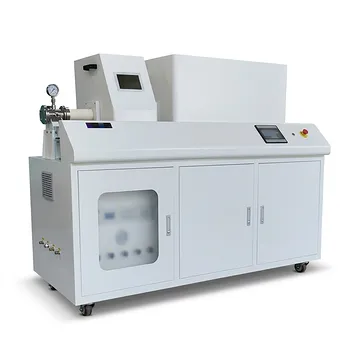
- Inclined Rotary Plasma Enhanced Chemical Vapor Deposition PECVD Equipment Tube Furnace Machine
- Chemical Vapor Deposition CVD Equipment System Chamber Slide PECVD Tube Furnace with Liquid Gasifier PECVD Machine
- Inclined Rotary Plasma Enhanced Chemical Vapor Deposition PECVD Equipment Tube Furnace Machine
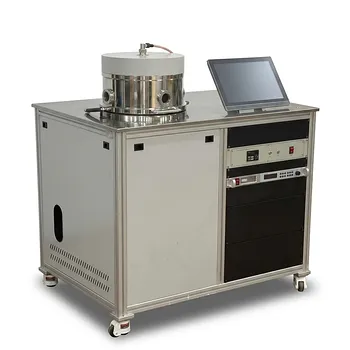
- RF PECVD System Radio Frequency Plasma-Enhanced Chemical Vapor Deposition RF PECVD
- Multi Heating Zones CVD Tube Furnace Machine Chemical Vapor Deposition Chamber System Equipment
People Also Ask
- What is plasma enhanced chemical vapor deposition PECVD equipment? A Guide to Low-Temperature Thin Film Deposition
- What are the core advantages of PE-CVD in OLED encapsulation? Protect Sensitive Layers with Low-Temp Film Deposition
- What is plasma enhanced chemical vapour deposition PECVD used for? Enable Low-Temp Thin Films for Electronics & Solar
- How does PECVD equipment facilitate the directional growth of carbon nanotubes? Achieve Precision Vertical Alignment
- How does PECVD facilitate Ru-C nanocomposite films? Precision Low-Temperature Thin Film Synthesis