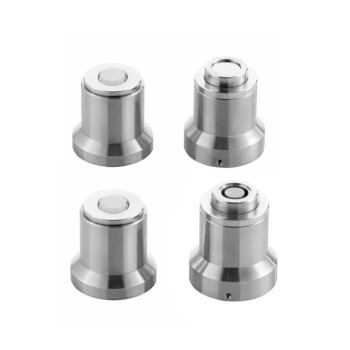
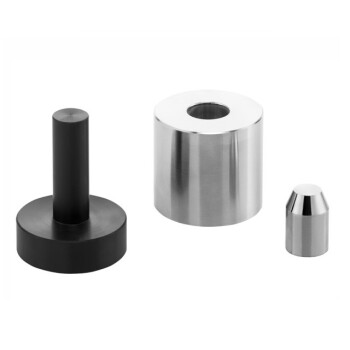
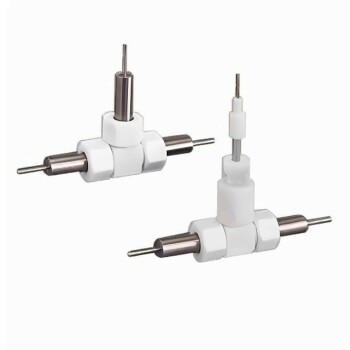
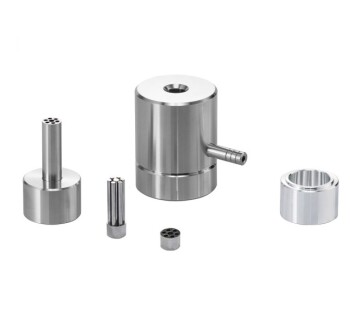
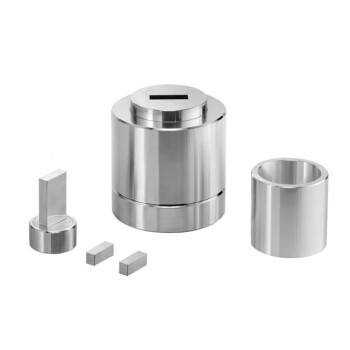
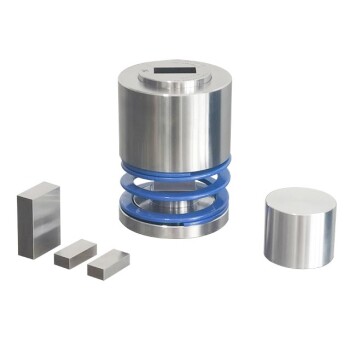
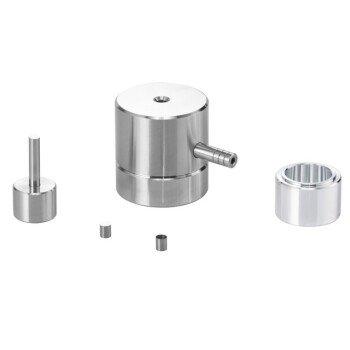
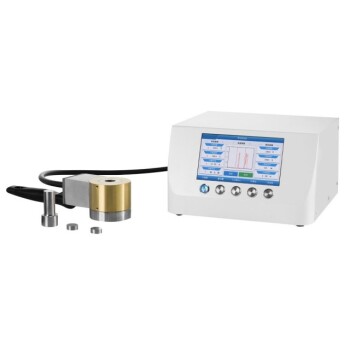
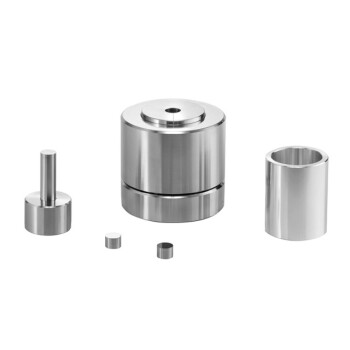
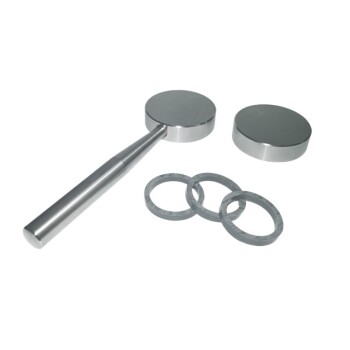
Battery test molds and coin cell cases serve as the critical structural interface for symmetrical Li|PEO/LSTZ|Li cells and all-solid-state batteries. They provide a hermetically sealed environment to protect sensitive components from atmospheric contaminants while applying continuous, uniform mechanical pressure to ensure intimate contact between the solid electrolyte and electrodes.
Core Takeaway: In solid-state systems, physical contact dictates electrochemical performance. Test molds are not passive containers; they are active mechanical components that apply the necessary pressure to minimize interfacial impedance and compensate for volume changes during cycling.
Bridging the Solid-Solid Interface
Minimizing Interfacial Impedance
Unlike liquid electrolytes, solid components (like PEO/LSTZ) do not flow to wet the electrode surface. Test molds must apply external force to press the solid electrolyte against the lithium metal anode and cathode. This pressure closes microscopic gaps, significantly reducing the resistance (impedance) at the junction and enabling efficient ion transport.
Ensuring Data Accuracy
Reliable electrochemical data depends on the uniformity of the assembly. Molds and cases apply continuous and uniform mechanical pressure across the cell stack. This consistency ensures that test results reflect the true performance of the materials, rather than artifacts caused by poor physical contact or assembly errors.
Environmental Isolation and Volume Management
Protecting Reactive Materials
Lithium metal and many solid electrolytes are highly sensitive to atmospheric moisture and oxygen. Standardized coin cell cases and molds provide a sealed environment essential for material stability. This isolation prevents immediate degradation and side reactions that would render the battery non-functional before testing begins.
Compensating for Volume Changes
During charge and discharge cycles, lithium metal undergoes deposition and stripping, causing the anode volume to fluctuate. Without constant pressure, these fluctuations lead to physical separation (void formation) at the interface. Specialized molds maintain constant external stack pressure (often 1.5 MPa to over 10 MPa) to compensate for this movement and maintain connectivity.
Understanding Material Selection and Limitations
The Role of PEEK Molds
For rigorous testing, the material of the mold itself is critical. PEEK (Polyether ether ketone) molds are frequently used due to their excellent electrical insulation and chemical stability. They prevent side reactions between the mold and the active battery components, ensuring that the measured impedance comes solely from the battery cell.
Handling High Compression Forces
Some assembly processes require extreme pressure to densify solid electrolyte powders. PEEK molds are designed to withstand high compression forces, ranging from 200 to 450 MPa. Standard coin cell cases cannot withstand these loads; using them for high-compression assembly risks structural failure and safety hazards.
Making the Right Choice for Your Goal
Selecting the correct hardware is determined by the specific phase of your research or the mechanical requirements of your electrolyte.
- If your primary focus is routine screening and EIS testing: Use standard coin cell cases, as they provide sufficient sealing and moderate stacking pressure for stable interfaces.
- If your primary focus is long-term cycling and stripping/plating efficiency: Choose specialized pressurized molds capable of dynamic volume compensation to prevent interface separation.
- If your primary focus is high-pressure powder densification: Utilize PEEK test molds to ensure electrical insulation and structural integrity under extreme compression loads (up to 450 MPa).
Ultimately, the test mold is the enabler of the solid-solid interface, transforming loose components into a cohesive, functional electrochemical system.
Summary Table:
| Feature | Coin Cell Cases | PEEK Test Molds |
|---|---|---|
| Primary Function | Routine screening & EIS testing | High-pressure densification & long-term cycling |
| Pressure Range | Moderate stacking pressure | High compression (200 - 450 MPa) |
| Material Benefit | Standardized hermetic sealing | Electrical insulation & chemical stability |
| Interface Goal | Environmental isolation | Minimizing impedance & dynamic volume compensation |
| Application | Symmetrical cell assembly | All-solid-state powder densification |
Elevate Your Battery Research with KINTEK Precision
Precision in assembly is the foundation of breakthrough battery performance. KINTEK specializes in high-performance laboratory equipment tailored for the energy sector. We provide professional-grade battery research tools and consumables, including robust coin cell cases and specialized PEEK test molds designed to withstand extreme compression forces and ensure perfect interfacial contact.
From high-temperature furnaces and vacuum systems to our specialized hydraulic presses (pellet, hot, isostatic) and electrolytic cells, KINTEK delivers the structural integrity your solid-state research demands. Ensure your data reflects true material performance by minimizing impedance and managing volume fluctuations with our industry-leading solutions.
Ready to optimize your cell assembly? Contact KINTEK today for a consultation and custom quote!
Related Products
- Button Battery Disassembly and Sealing Mold for Lab Use
- Button Battery Tablet Press Sealing Mold for Lab Use
- Customizable Swagelok Type Test Cells for Advanced Battery Research Electrochemical Analysis
- Battery Lab Equipment 304 Stainless Steel Strip Foil 20um Thick for Battery Test
- Cylindrical Battery Steel Case for Battery Lab
People Also Ask
- What are the parts of a mold assembly? A Guide to Injection Mold Components
- What is a molding tool used for? A Guide to Mass Production Efficiency
- What is a mold assembly? The Critical Final Step to a Functional Injection Mold
- What advantages do standardized laboratory compression-cell molds provide for c-LLZO? Optimize Battery Data Accuracy
- What is the function of a stainless steel battery cell mold? Precision Pressure for LiFePO4 Research