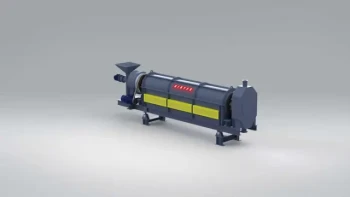
High-temperature furnaces serve as the central processing unit for converting raw biomass or polymer precursors into high-performance electrode materials. These furnaces facilitate the critical physical and chemical transformations—specifically carbonization and activation—required to engineer the material's internal structure for energy storage.
The furnace acts as a precise sculpting tool that eliminates volatile non-carbon components and etches a complex network of pores into the material. This process defines the electrode's specific surface area and conductivity, which are the direct determinants of a supercapacitor's energy capacity and cycle life.
The Mechanisms of Transformation
Carbonization: Building the Conductive Skeleton
The first role of the high-temperature furnace is to drive pyrolysis in an oxygen-free environment. By applying controlled heat to precursors like coconut shells or polymer resins, the furnace thermally decomposes the organic material.
Removal of Volatiles
This thermal treatment effectively strips away volatile components (such as hydrogen and oxygen) from the raw material. This leaves behind a solid, carbon-rich skeleton that serves as the foundation for the electrode.
Activation: Engineering the Pore Structure
Following carbonization, the furnace facilitates activation (either physical or chemical). This step uses high heat to further "etch" the carbon skeleton, creating a vast, interconnected network of voids.
Regulating Micropores and Mesopores
The furnace allows for the precise tuning of the pore size distribution. It balances the creation of micropores (for trapping ions) and mesopores (for ion transport channels), which is essential for maximizing electrochemical performance.
Impact on Supercapacitor Performance
Maximizing Specific Surface Area
The primary output of the furnace's activation process is a massive increase in specific surface area. A larger surface area allows more ions to be adsorbed, directly increasing the energy storage capacity (capacitance) of the supercapacitor.
Enhancing Electrical Conductivity
By converting the polymer or biomass skeleton into a pure carbon structure, the furnace significantly improves electrical conductivity. High conductivity is required to reduce internal resistance, allowing the supercapacitor to deliver high power density.
Ensuring Cycle Stability
The structural stability achieved through high-temperature treatment ensures the electrode does not degrade quickly during repeated charge-discharge cycles. This results in supercapacitors with a long operational lifespan.
Understanding the Trade-offs
Temperature Precision vs. Pore Collapse
While high temperatures are necessary, excessive heat can cause the pore structure to collapse or graphitize too heavily. This reduces the specific surface area, thereby lowering the energy storage capacity.
Atmosphere Sensitivity
Strict atmosphere control is non-negotiable. If the inert atmosphere (e.g., nitrogen) is compromised and oxygen enters the furnace during high-temperature processing, the carbon material will burn away rather than activate, destroying the yield.
Making the Right Choice for Your Goal
To optimize your electrode material, you must tailor the furnace parameters to your specific performance targets:
- If your primary focus is Maximum Energy Storage: Prioritize the activation phase parameters to maximize specific surface area and micropore volume.
- If your primary focus is High Power Density: Focus on the carbonization phase and higher temperatures to maximize the graphitic degree and electrical conductivity.
By precisely controlling the heating curves and atmosphere within the furnace, you can fine-tune the balance between porosity and conductivity to meet specific energy storage requirements.
Summary Table:
| Process Phase | Primary Function | Impact on Supercapacitor Performance |
|---|---|---|
| Carbonization | Pyrolysis & removal of volatiles | Builds conductive carbon skeleton & improves power density |
| Activation | Physical/Chemical etching of pores | Increases specific surface area to maximize energy storage |
| Atmosphere Control | Maintaining inert environments | Prevents material oxidation and ensures high yield |
| Temp. Tuning | Precise thermal curve regulation | Balances pore structure stability with electrical conductivity |
Elevate Your Supercapacitor Research with KINTEK
Precise thermal processing is the key to unlocking superior electrode performance. KINTEK specializes in advanced laboratory equipment designed for the rigorous demands of materials science. Whether you are engineering carbon aerogels or activating biomass, our comprehensive range of high-temperature furnaces (tube, vacuum, atmosphere, and rotary) provides the stability and atmosphere control you need.
From high-performance crushing and milling systems for precursor preparation to high-pressure reactors and PTFE consumables, KINTEK delivers the tools to optimize your laboratory's efficiency. Let us help you achieve maximum specific surface area and cycle stability in your energy storage projects.
Ready to refine your carbonization process? Contact us today to find the perfect furnace for your lab!
References
- Petronela Gheorghe, Adina Mirela Anton. Optical limiting properties of a new class of DNA-based materials functionalized with natural chromophores. DOI: 10.21175/rad.abstr.book.2023.5.7
This article is also based on technical information from Kintek Solution Knowledge Base .
Related Products
- Graphite Vacuum Furnace Bottom Discharge Graphitization Furnace for Carbon Materials
- Large Vertical Graphite Vacuum Graphitization Furnace
- Graphite Vacuum Continuous Graphitization Furnace
- High Temperature Muffle Oven Furnace for Laboratory Debinding and Pre Sintering
- 1400℃ Controlled Atmosphere Furnace with Nitrogen and Inert Atmosphere
People Also Ask
- What is the use of graphite furnace? Achieve Extreme-Temperature Processing for Advanced Materials
- What is the disadvantage of graphite furnace? Managing Reactivity and Contamination Risks
- What gas is used in graphite furnace? Maximize Accuracy with the Right Inert Gas
- What is the function of the graphite furnace? Achieve Extreme Heat for Analysis & Materials Processing
- How does a graphite furnace work? Achieve Extreme Temperatures in a Pure Environment