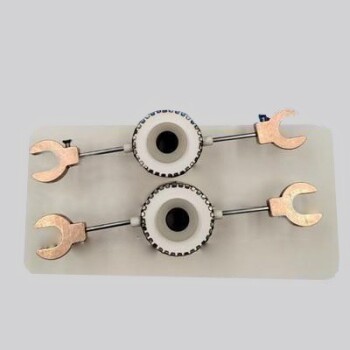
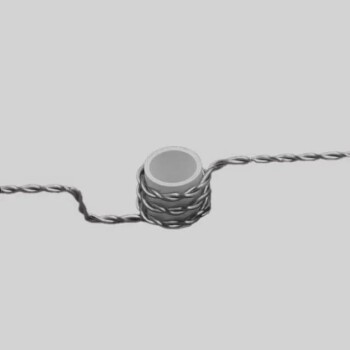
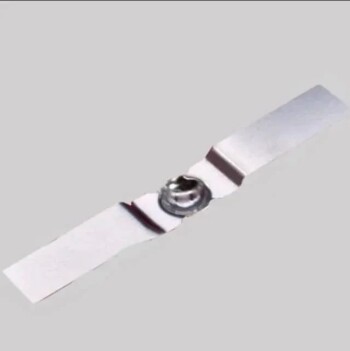
High-purity ceramic boats are the critical foundation for the synthesis of WS2 single crystals. They serve as the primary vessel for solid precursors, maintaining absolute chemical integrity and thermal stability at temperatures reaching 1200°C. Their role is to ensure a steady, uncontaminated supply of vapor for high-quality crystal deposition on the downstream substrate.
High-purity ceramic boats act as chemically inert thermal buffers that regulate precursor sublimation and prevent material contamination. By providing a stable environment for precursors like WS2 powder or WO3, they ensure the consistency and purity required for single-crystal growth.
The Role of Ceramic Boats in Precursor Management
Serving as a Chemically Inert Carrier
In the PVD and CVD processes, ceramic boats act as the physical host for WS2 powder precursors. Their high-purity composition ensures that the boat does not react with the precursor material, even when exposed to aggressive sulfurization environments.
Facilitating Stable Precursor Sublimation
The design of the ceramic boat is optimized to promote uniform heating of the precursor powder. This uniformity is essential for continuous and stable sublimation, providing a controlled material supply that prevents fluctuations in the growth rate of the WS2 crystals.
Maintaining High-Temperature Stability
WS2 synthesis often requires temperatures ranging from 1100°C to 1200°C. High-purity ceramics exhibit excellent thermal stability in this range, maintaining their structural integrity without deforming or outgassing volatile components that could disrupt the vacuum environment.
Ensuring Crystal Purity and Quality
Eliminating Impurity Contamination
The most significant risk in high-temperature synthesis is the introduction of container-derived impurities. High-purity ceramic boats prevent this by remaining chemically stable, ensuring that no foreign elements are incorporated into the lattice of the growing WS2 single crystal.
Promoting Uniform Vapor Concentration
By acting as a reservoir, the boat helps maintain a stable gas flow field around the precursor. This allows for a consistent concentration of vapor to be transported downstream, which is vital for achieving the large-sized, uniform flakes characteristic of high-quality single crystals.
Managing Complex Precursor Mixtures
In some processes, boats are used to hold mixtures of powders, such as WO3 and specific fluxes like NaCl. The boat's corrosion resistance allows it to handle these reactive fluxes at high temperatures without degradation, enabling precise regulation of the volatilization rate.
Understanding the Trade-offs
Material Selection: Ceramic vs. Quartz
While quartz boats offer excellent smoothness and are suitable for lower-temperature synthesis (around 500°C–700°C), they may soften or react at the extreme temperatures (1200°C) required for some WS2 processes. Ceramic boats are preferred for their superior thermal ceiling, though they may be more difficult to clean.
Thermal Mass and Heat Lag
Ceramic boats have a specific thermal mass that can cause a slight delay in reaching the target sublimation temperature. Researchers must account for this thermal lag when programming furnace ramp rates to ensure the precursor reaches the gaseous phase exactly when the substrate is at the optimal temperature.
Reuse and Cross-Contamination
While durable, ceramic boats can absorb trace amounts of precursors over multiple runs. Failure to implement rigorous cleaning protocols or dedicating specific boats to specific materials can lead to cross-contamination, ultimately degrading the electrical properties of the WS2 crystals.
How to Apply This to Your Project
Making the Right Choice for Your Goal
- If your primary focus is extreme purity and high temperature: Use high-purity alumina or specialized ceramic boats to ensure stability above 1100°C without impurity outgassing.
- If your primary focus is precise volatilization control: Select boats with a specific depth-to-width ratio to regulate the surface area of the precursor exposed to the carrier gas.
- If your primary focus is low-temperature synthesis or pre-conversion: Consider quartz boats for their smooth surfaces and ease of substrate placement if temperatures remain below 800°C.
Selecting the appropriate high-purity carrier is the first and most vital step in securing the repeatable growth of high-performance WS2 single crystals.
Summary Table:
| Key Feature | Role in WS2 PVD Process | Impact on Crystal Quality |
|---|---|---|
| Chemical Inertness | Prevents reactions between boat and precursors | Ensures high-purity, uncontaminated lattice |
| Thermal Stability | Withstands temperatures up to 1200°C | Maintains vacuum integrity without outgassing |
| Uniform Heating | Facilitates stable precursor sublimation | Promotes consistent, large-sized flake growth |
| Corrosion Resistance | Manages reactive flux mixtures (e.g., NaCl) | Allows for precise volatilization regulation |
Elevate Your Crystal Synthesis with KINTEK Precision
Achieving the perfect WS2 single crystal requires more than just high temperatures—it demands chemical absolute integrity. KINTEK specializes in high-performance laboratory equipment and consumables designed for the most rigorous material science applications.
Whether you are performing PVD/CVD synthesis in our high-temperature tube or vacuum furnaces or need reliable high-purity ceramic boats and crucibles, our solutions ensure repeatable, high-quality results. Our extensive portfolio also includes:
- Advanced Crushing & Milling systems for precursor preparation.
- High-temperature high-pressure reactors and autoclaves.
- Precision Heating & Cooling solutions (ULT freezers, freeze dryers).
- Essential Consumables including PTFE, ceramics, and specialized electrodes.
Ready to optimize your lab’s efficiency and purity? Contact our experts today to find the ideal equipment for your specific research goals!
References
- Yassine Madoune, Emad A. A. Ismail. Investigating the Fundamental Conditions for Quantitative Growth to Obtain High-Quality WS2 Using a Process of Physical Vapor Deposition. DOI: 10.3390/cryst13091373
This article is also based on technical information from Kintek Solution Knowledge Base .
Related Products
- Aluminized Ceramic Evaporation Boat for Thin Film Deposition
- Ceramic Evaporation Boat Set Alumina Crucible for Laboratory Use
- High Purity Pure Graphite Crucible for Evaporation
- Alumina Al2O3 Ceramic Crucible Semicircle Boat with Lid for Engineering Advanced Fine Ceramics
- Molybdenum Tungsten Tantalum Evaporation Boat for High Temperature Applications
People Also Ask
- What is the source of evaporation for thin film? Choosing Between Thermal and E-Beam Methods
- Why are high-purity ceramic boats used for lignin activation? Ensure Purity & Thermal Stability
- Why is an alumina boat and Ti3AlC2 powder bed necessary for Ti2AlC sintering? Protect MAX Phase Purity
- Why use an alumina boat for high-temperature carbon activation? Ensure Maximum Material Purity & Thermal Stability
- Why is an alumina boat selected for catalyst precursors? Ensure Sample Purity at 1000 °C