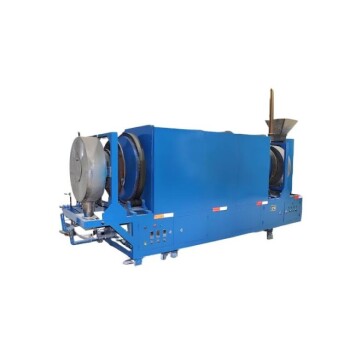
High-temperature tube furnaces and pyrolysis furnaces serve as the central vessels for thermochemical cracking. They provide a strictly controlled, oxygen-free or oxygen-deficient environment—typically starting at 200°C—to fundamentally alter the chemical structure of lignocellulose. By subjecting biomass to this heat without combustion, these furnaces decompose complex organic polymers into gaseous and liquid products, effectively dismantling the material's rigid structure.
The primary function of these furnaces is to induce thermochemical cracking, transforming recalcitrant biomass into active, accessible substrates required for efficient biorefining.
The Mechanics of Thermochemical Deconstruction
Establishing the Thermal Environment
The critical role of the tube or pyrolysis furnace is to maintain a precise thermal atmosphere. The process typically begins at 200°C, a threshold necessary to initiate chemical changes in the biomass.
Crucially, this environment must be oxygen-free or oxygen-deficient. This prevents the biomass from simply burning to ash, forcing it instead to undergo pyrolysis.
Inducing Thermochemical Cracking
Inside the furnace, the lignocellulose undergoes thermochemical cracking. This is the breaking of heavy organic molecules into lighter, simpler molecules through the application of heat.
Rather than just drying or warming the material, the furnace acts as a reactor that severs the chemical bonds holding the complex organic polymers together.
Phase Transformation
As the cracking progresses, the solid biomass is converted into different states of matter. The complex polymers transform into gaseous and liquid products.
This phase change is the physical manifestation of the deconstruction process, turning solid plant matter into flowable, chemically active energy carriers or chemical precursors.
Facilitating Subsequent Biorefining
Structural Deconstruction
The ultimate goal of using these furnaces is the deconstruction of the biomass structure. Lignocellulose is naturally rigid and resistant to degradation; the furnace overcomes this by thermally dismantling its architecture.
By breaking down the dense polymer matrix, the furnace removes the physical and chemical barriers that normally hinder processing.
Creating Active Substrates
The output of the pyrolysis furnace is not merely a byproduct; it is an active substrate.
The gaseous and liquid products generated are chemically reactive and primed for subsequent biorefining steps. The furnace effectively converts raw, passive biomass into a feedstock ready for upgrading into fuels or chemicals.
Understanding the Trade-offs
Chemical Alteration vs. Physical Separation
It is vital to distinguish the role of a pyrolysis furnace from that of a high-pressure reactor used for steam explosion.
While pressure-based systems rely on physical expansion forces (often at lower temperatures around 90°C) to mechanically disrupt cellulose and increase permeability, pyrolysis furnaces utilize thermal degradation.
Process Intensity
Pyrolysis is a high-energy, irreversible chemical modification.
Unlike milder pretreatments that might only swell the fiber or increase surface area for enzymes, pyrolysis fundamentally cracks the chemical backbone of the material. This makes it highly effective for producing bio-oils but potentially too destructive if the goal is preserving specific fiber structures.
Making the Right Choice for Your Goal
To determine if a high-temperature pyrolysis furnace is the correct tool for your lignocellulose processing, consider your end-product requirements:
- If your primary focus is producing liquid bio-oils or chemical precursors: The furnace is essential for converting solid polymers into valuable liquid and gaseous fractions via thermochemical cracking.
- If your primary focus is total structural deconstruction: This method provides a robust solution for breaking down recalcitrant biomass that resists milder physical or biological pretreatments.
The pyrolysis furnace is the definitive tool when you need to transition from physical biomass handling to chemical product generation.
Summary Table:
| Feature | High-Temperature Pyrolysis Furnace | High-Pressure Reactor (Steam Explosion) |
|---|---|---|
| Mechanism | Thermochemical Cracking (Thermal Degradation) | Physical Expansion (Mechanical Disruption) |
| Temperature Range | Starting at 200°C (High Intensity) | Typically ~90°C (Moderate) |
| Atmosphere | Oxygen-free / Oxygen-deficient | High Pressure / Steam |
| Primary Output | Gaseous & Liquid Bio-oils / Precursors | Increased Fiber Permeability / Deconstructed Cellulose |
| Goal | Fundamental Chemical Transformation | Physical Access for Enzymes/Refining |
Elevate Your Biorefining Research with KINTEK Precision
Unlock the full potential of lignocellulosic biomass with KINTEK’s industry-leading thermal technology. Whether you require high-temperature tube, rotary, or vacuum furnaces for precise thermochemical cracking, or high-pressure reactors and autoclaves for physical deconstruction, we provide the robust tools necessary to transform recalcitrant materials into valuable energy carriers.
Why choose KINTEK?
- Advanced Thermal Control: Ensure repeatable results with precise oxygen-deficient environments.
- Comprehensive Lab Solutions: From crushing and milling systems to high-temperature furnaces, we cover every step of your pretreatment workflow.
- Expertise in Biomass: We specialize in equipment designed for the rigors of chemical and energy research.
Contact our laboratory specialists today to find the ideal furnace or reactor system for your specific research goals.
References
- Mamata Singhvi, Beom Soo Kim. Sustainable Strategies for the Conversion of Lignocellulosic Materials into Biohydrogen: Challenges and Solutions toward Carbon Neutrality. DOI: 10.3390/en15238987
This article is also based on technical information from Kintek Solution Knowledge Base .
Related Products
- 1700℃ Laboratory High Temperature Tube Furnace with Alumina Tube
- High Temperature Muffle Oven Furnace for Laboratory Debinding and Pre Sintering
- Vertical High Temperature Graphite Vacuum Graphitization Furnace
- Ultra-High Temperature Graphite Vacuum Graphitization Furnace
- 1400℃ Controlled Atmosphere Furnace with Nitrogen and Inert Atmosphere
People Also Ask
- What functions does a laboratory high-temperature tube furnace perform? Master Catalyst Synthesis & Carbonization
- What roles does a high-temperature tube furnace play in the synthesis of N/O co-doped carbon? Master Precise Doping
- How does a laboratory tube furnace facilitate methane catalyst evaluation & regeneration? Optimize Thermal Performance
- How does a high-temperature tube furnace influence 253MA steel? Master Microstructure & High-Temp Creep Resistance
- Why is a high-temperature tube furnace required for the production of biochar from tobacco straw? Expert Pyrolysis Guide