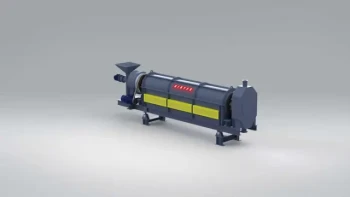
Tube furnaces and quartz reactors function as the precision thermal and atmospheric controls required to transform raw coal tar pitch into high-quality precursors. These tools provide a stable heating environment (typically 200°C to 500°C for pitch processing) and an inert gas shield that removes volatile components and sulfur. This controlled conversion ensures the resulting pitch achieves the chemical stability and purity necessary for advanced applications like electrospinning.
To successfully treat coal tar pitch, you must balance precise temperature gradients with a strictly controlled atmosphere. The tube furnace provides the thermal energy for chemical restructuring, while the quartz reactor isolates the material from oxygen to prevent unwanted combustion.
The Role of the Tube Furnace in Thermal Control
Precise Temperature Regulation
Industrial-grade tube furnaces provide the uniform thermal field necessary for the consistent conversion of coal tar pitch. Because the pitch must be heated within specific ranges (often between 200°C and 500°C), the furnace prevents "hot spots" that could cause uneven polymerization.
Controlled Heating Rates
The furnace allows researchers and engineers to dictate the residence time and heating ramp speeds. Adjusting these rates is critical for managing the kinetics of dehydrogenation and polycondensation reactions, which determine the final microstructure of the pitch.
Simulation of Industrial Pyrolysis
High-temperature tube furnaces can reach much higher temperatures, up to 1400°C, to simulate diverse industrial conditions. This flexibility allows the equipment to be used not just for pitch stabilization, but also for the calcination and thermal decomposition of various coal-derived residues.
The Functional Necessity of the Quartz Reactor
Establishing an Inert Atmosphere
The quartz reactor acts as a sealed vessel that maintains an argon or nitrogen-rich environment. By displacing oxygen, the reactor ensures the coal tar pitch undergoes thermal conversion rather than oxidation or combustion.
Facilitating Volatile and Sulfur Removal
As the pitch is heated, the reactor's design allows for the efficient stripping of volatiles and sulfur. Removing these impurities is a foundational step in producing a "clean" precursor with superior chemical stability.
Material Compatibility and Visibility
Quartz is chosen for its ability to withstand high temperatures and resist thermal shock during the heating cycle. Its transparency also allows for visual monitoring of the pitch's physical state changes during the early stages of thermal treatment.
Understanding the Trade-offs and Limitations
Thermal Gradient Challenges
While tube furnaces offer high precision, the temperature gradient can vary between the center and the ends of the tube. If the quartz reactor is not positioned correctly within the "hot zone," the coal tar pitch may process unevenly, leading to inconsistent batch quality.
Fragility and Maintenance
Quartz reactors are highly susceptible to mechanical failure and can be etched by certain chemical byproducts of coal pyrolysis. Regular cleaning and careful handling are required to prevent contamination of the pitch samples and to avoid costly equipment replacements.
Scaling Constraints
Tube furnaces are ideal for laboratory research and small-batch production of specialized precursors. However, they are difficult to scale for mass industrial production, where continuous flow reactors or larger kiln systems are typically required.
Making the Right Choice for Your Goal
To achieve the best results with coal tar pitch treatment, align your equipment settings with your specific material objectives:
- If your primary focus is electrospinning applications: Prioritize a quartz reactor with high-purity argon protection to ensure maximum chemical stability and minimal sulfur content.
- If your primary focus is producing pyrolysis char: Utilize a vertical tube furnace set between 500°C and 900°C to facilitate deep deoxygenation and polycondensation.
- If your primary focus is analyzing release kinetics: Use a high-temperature furnace capable of 1400°C to accurately simulate the mineral evolution patterns of coal-based materials.
By mastering the intersection of thermal precision and atmospheric isolation, you can effectively engineer coal tar pitch for any high-performance application.
Summary Table:
| Component | Role in CTP Treatment | Impact on Final Precursor |
|---|---|---|
| Tube Furnace | Uniform Thermal Regulation | Ensures consistent polymerization and stable microstructure. |
| Quartz Reactor | Atmospheric Isolation | Prevents oxidation while facilitating sulfur and volatile removal. |
| Inert Gas (Ar/N2) | Protective Shield | Maintains the high chemical purity required for electrospinning. |
| Thermal Ramp Control | Kinetic Management | Allows precise control over dehydrogenation and decomposition. |
Optimize Your Precursor Synthesis with KINTEK
Elevate your laboratory research with KINTEK’s high-performance thermal processing solutions. We specialize in precision tube furnaces and high-purity quartz reactors specifically engineered to handle the rigorous demands of coal tar pitch treatment and advanced material synthesis.
Beyond furnace systems, KINTEK offers a comprehensive range of high-temperature reactors, autoclaves, and ceramic crucibles, ensuring your lab is equipped for everything from small-batch research to specialized precursor production. Whether you are focused on carbon fiber development or electrospinning, our equipment delivers the atmospheric integrity and thermal stability your work requires.
Ready to upgrade your thermal treatment capabilities? Contact us today to discuss your specific application and find the perfect equipment for your laboratory!
References
- Bayan Kaidar, З. А. Мансуров. Pitch/Metal Oxide Composite Fibers via Electrospinning for Environmental Applications. DOI: 10.3390/technologies11060156
This article is also based on technical information from Kintek Solution Knowledge Base .
Related Products
- 1200℃ Split Tube Furnace with Quartz Tube Laboratory Tubular Furnace
- Vertical Laboratory Tube Furnace
- Laboratory Vacuum Tilt Rotary Tube Furnace Rotating Tube Furnace
- Rotary Tube Furnace Split Multi Heating Zone Rotating Tube Furnace
- Vacuum Sealed Continuous Working Rotary Tube Furnace Rotating Tube Furnace
People Also Ask
- What functions does a laboratory high-temperature tube furnace perform? Master Catalyst Synthesis & Carbonization
- What roles does a high-temperature tube furnace play in the synthesis of N/O co-doped carbon? Master Precise Doping
- How does a high-temperature tube furnace influence 253MA steel? Master Microstructure & High-Temp Creep Resistance
- Why is a high-temperature tube furnace required for the production of biochar from tobacco straw? Expert Pyrolysis Guide
- What are the primary applications of muffle and tube furnaces in photocatalysts? Optimize Metal Loading & Support Synthesis